Don't sacrifice health for 'the economy'
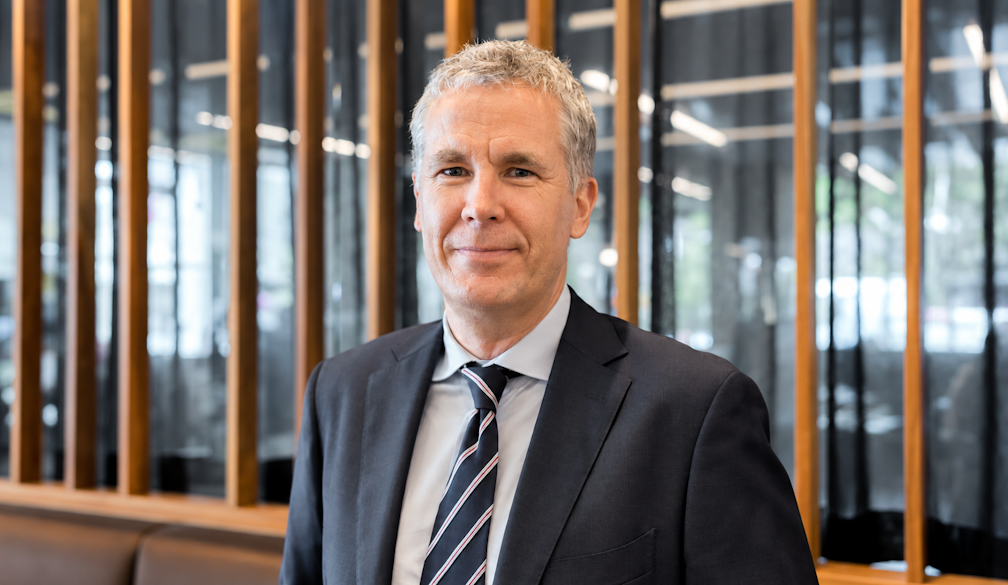
- Written by: Steven Hamilton, Visiting Fellow, Tax and Transfer Policy Institute, Crawford School of Public Policy, Australian National University
In recent weeks a growing chorus of Australian commentators has called for social distancing measures to be eased or radically curtailed.
Some have claimed [1]the lives saved by the lockdowns are not worth the damage they are causing to the economy.
Others have claimed[2] the case for easing is strengthened by the fact many of the hardest hit by COVID-19 are elderly or suffering from other conditions.
Some might expect economists, of all people, to endorse this calculus.
But as economists we categorically reject these views, and we believe they do not represent the majority of our profession.
We believe a callous indifference to life is morally objectionable, and that it would be a mistake to expect a premature loosening of restrictions to be beneficial to the economy and jobs, given the rapid rate of contagion.
Read more: Eradicating the COVID-19 coronavirus is also the best economic strategy[3]
It is wishful thinking to believe we face a choice between a buoyant economy without social distancing and a deep recession with social distancing.
In a world with COVID-19, there are no good choices.
The best we can do is limit the spread of COVID-19 as much as practicable and rely on the strength of the government’s balance sheet to cushion the impact on the workers and businesses hardest hit.
Our success to date is a direct result of the measures taken, but we cannot afford to be complacent.
We recognise there are trade-offs on some margins, but we urge the government to work closely with public health experts to carefully determine at what time, in what ways, and in which sectors, to begin lifting restrictions.
There should be no doubt the cost of getting this wrong is very high.
19 April, 2020
Dear Prime Minister and Members of the National Cabinet,
The undersigned economists have witnessed and participated in the public debate about when to relax social-distancing measures in Australia. Some commentators have expressed the view there is a trade-off between the public health and economic aspects of the crisis. We, as economists, believe this is a false distinction.
We cannot have a functioning economy unless we first comprehensively address the public health crisis. The measures put in place in Australia, at the border and within the states and territories, have reduced the number of new infections. This has put Australia in an enviable position compared to other countries, and we must not squander that success.
We recognise the measures taken to date have come at a cost to economic activity and jobs, but believe these are far outweighed by the lives saved and the avoided economic damage due to an unmitigated contagion. We believe strong fiscal measures are a much better way to offset these economic costs than prematurely loosening restrictions.
As has been foreshadowed in your public remarks, our borders will need to remain under tight control for an extended period. It is vital to keep social-distancing measures in place until the number of infections is very low, our testing capacity is expanded well beyond its already comparatively high level, and widespread contact tracing is available.
A second-wave outbreak would be extremely damaging to the economy, in addition to involving tragic and unnecessary loss of life.
Sincerely,
Professor Alison Booth[4], Australian National University
Professor Jeff Borland[5], University of Melbourne
Professorial Research Fellow Lisa Cameron[6], Melbourne Institute, University of Melbourne
Professor Efrem Castelnuovo[7], University of Melbourne
Professor Deborah Cobb-Clark[8], University of Sydney
Assistant Professor Ashley Craig[9], University of Michigan
Professor Chris Edmond[10], University of Melbourne
Professor Nisvan Erkal[11], University of Melbourne
Professor John Freebairn[12], University of Melbourne
Professor Renée Fry-McKibbin[13], Australian National University
Professor Joshua Gans[14], University of Toronto
Professor Jacob Goeree[15], UNSW Business School
Professor Quentin Grafton[16], Australian National University
Professor Simon Grant[17], Australian National University
Professor Pauline Grosjean[18], UNSW Business School
Distinguished Professor Jane Hall[19], University of Technology Sydney
Assistant Professor Steven Hamilton[20], George Washington University
Professor Ian Harper[21], Melbourne Business School
Professor Richard Holden[22], UNSW Business School
Professor David Johnston[23], Monash University
Professor Flavio Menezes[24], University of Queensland
Professor Warwick McKibbin[25], Australian National University
Assistant Professor Simon Mongey[26], University of Chicago
Professor James Morley[27], University of Sydney
Professor Joseph Mullins[28], University of Minnesota
Professor Abigail Payne[29], Melbourne Institute, University of Melbourne
Professor Bruce Preston[30], University of Melbourne
Emeritus Professor Sue Richardson[31], Flinders University
Professor Stefanie Schurer[32], University of Sydney
Professor Kalvinder Shields[33], University of Melbourne
Professor John Quiggin[34], University of Queensland
Associate Professor Simon Quinn[35], Oxford University
Economic Advisor James Vickery[36], Federal Reserve Bank of Philadelphia
Professor Tom Wilkening[37], University of Melbourne
Professor Justin Wolfers[38], University of Michigan
Professor Yves Zenou[39], Monash University
Full list of signatories available on the economists open letter website[40].
References
- ^ claimed (www.theaustralian.com.au)
- ^ claimed (www.smh.com.au)
- ^ Eradicating the COVID-19 coronavirus is also the best economic strategy (theconversation.com)
- ^ Professor Alison Booth (theconversation.com)
- ^ Professor Jeff Borland (theconversation.com)
- ^ Professorial Research Fellow Lisa Cameron (theconversation.com)
- ^ Professor Efrem Castelnuovo (theconversation.com)
- ^ Professor Deborah Cobb-Clark (theconversation.com)
- ^ Assistant Professor Ashley Craig (scholar.harvard.edu)
- ^ Professor Chris Edmond (theconversation.com)
- ^ Professor Nisvan Erkal (nisvanerkal.net)
- ^ Professor John Freebairn (theconversation.com)
- ^ Professor Renée Fry-McKibbin (theconversation.com)
- ^ Professor Joshua Gans (theconversation.com)
- ^ Professor Jacob Goeree (theconversation.com)
- ^ Professor Quentin Grafton (theconversation.com)
- ^ Professor Simon Grant (www.rse.anu.edu.au)
- ^ Professor Pauline Grosjean (theconversation.com)
- ^ Distinguished Professor Jane Hall (theconversation.com)
- ^ Assistant Professor Steven Hamilton (theconversation.com)
- ^ Professor Ian Harper (theconversation.com)
- ^ Professor Richard Holden (theconversation.com)
- ^ Professor David Johnston (research.monash.edu)
- ^ Professor Flavio Menezes (theconversation.com)
- ^ Professor Warwick McKibbin (theconversation.com)
- ^ Assistant Professor Simon Mongey (economics.uchicago.edu)
- ^ Professor James Morley (theconversation.com)
- ^ Professor Joseph Mullins (www.josephlyonmullins.com)
- ^ Professor Abigail Payne (findanexpert.unimelb.edu.au)
- ^ Professor Bruce Preston (theconversation.com)
- ^ Emeritus Professor Sue Richardson (theconversation.com)
- ^ Professor Stefanie Schurer (theconversation.com)
- ^ Professor Kalvinder Shields (fbe.unimelb.edu.au)
- ^ Professor John Quiggin (theconversation.com)
- ^ Associate Professor Simon Quinn (www.simonrquinn.com)
- ^ Economic Advisor James Vickery (www.philadelphiafed.org)
- ^ Professor Tom Wilkening (tomwilkening.com)
- ^ Professor Justin Wolfers (theconversation.com)
- ^ Professor Yves Zenou (lens.monash.edu)
- ^ website (covid19openletter.net)
Authors: Steven Hamilton, Visiting Fellow, Tax and Transfer Policy Institute, Crawford School of Public Policy, Australian National University