NSW has a new fashion sector strategy – but a sustainable industry needs a federally legislated response
- Written by: Harriette Richards, Senior Lecturer, School of Fashion and Textiles, RMIT University

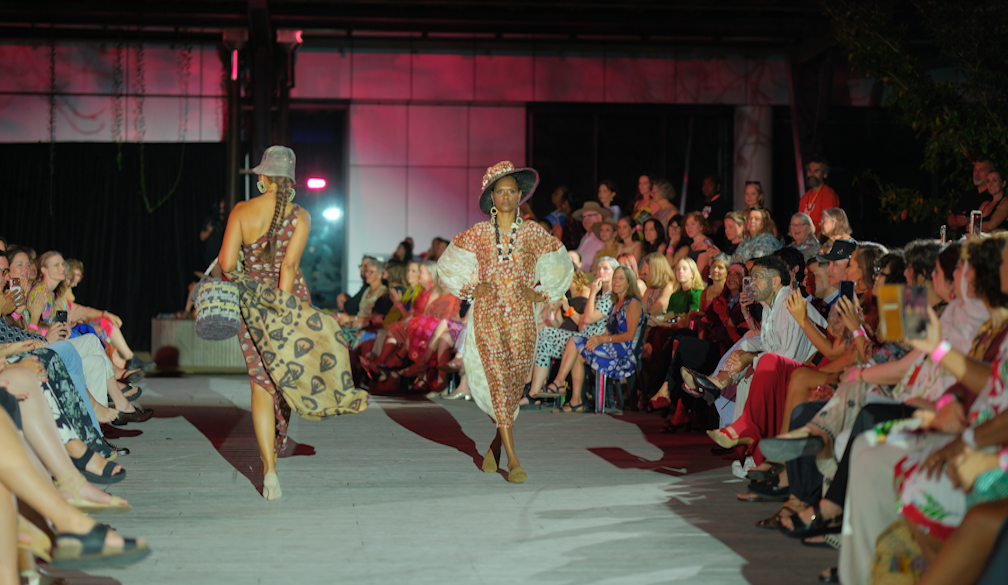
The New South Wales government recently announced the launch of the NSW Fashion Sector Strategy, 2025–28[1]. The strategy, developed in partnership with the Australian Fashion Council, TAFE NSW, University of Technology Sydney and the Powerhouse Museum, promises to “accelerate NSW’s position as a global leader in high-quality, innovative and inclusive fashion”.
This new policy includes A$750,000 in funding[2] to support local designers. It also prioritises smart factories, skills and training, and a fashion hub to incubate emerging talent.
It is a welcome contribution to the local fashion economy. Yet it is also a reminder of the complex challenges facing the industry.
Fashion in Australia
Australia has a global reputation[3] for producing high-quality, sustainable textiles and clothing.
Despite widespread offshoring[4] of manufacturing capabilities since the 1990s, Australian wool and cotton remain in high demand. Local small and medium-sized brands lead the way in sustainable and ethical fashion production.
The sector is also a significant employer of women. The $27 billion fashion industry – encompassing designers, retailers, suppliers and manufactures, among other roles – employs nearly half a million Australians, 77% of whom are women[5].
But recent years have seen the closure[6] of many pioneering local sustainable fashion brands, including Arnsdorf, A.BCH, Nique and Nobody Denim (bought by Outland Denim). These closures are testimony to the difficult retail landscape in Australia.
Despite consumers committed to ethical fashion, the challenges of producing locally and competing with low-cost fast fashion brands often prove insurmountable.
The industry has been flooded with fast fashion since the 2010s, with the arrival of Zara (in 2011), H&M and Uniqlo (both in 2014). This accelerated with the introduction of ultra-fast fashion brands such as Shein from 2021.
Annually, 220,000 tonnes[7] of clothing ends up in Australian landfills.

Legislating against ultra-fast fashion
To combat the dominance of these low-cost brands, France[8] has established new taxes on the import of ultra-fast fashion and bans on influencer promotions of their products.
The legislation aims to protect the French fashion industry from cheap products saturating the market, and to reduce the number of garments going to landfill. It sends a strong message to producers and consumers about the harmful labour conditions that make ultra-fast fashion viable.
This week, the European Union[9] adopted new rules mandating producer responsibility to cover costs of collecting, sorting and recycling of textiles.
Despite being the largest per capita consumer[10] of fashion items globally, Australian approaches to tackling the issues of fast fashion have been either voluntary or toothless.
Read more: Ultra fast fashion could be taxed to oblivion in France. Could Australia follow suit?[11]
Modern slavery in fashion supply chains
The closest Australia currently comes to regulating the fashion industry is at the intersection of fashion and modern slavery.
In 2018, Australia introduced the Modern Slavery Act. The policy[12] requires companies operating in Australia with an annual revenue of more than $100 million to report on the risks of modern slavery in their supply chains.
But Australian fashion brands continue to be implicated[13] in offshore modern slavery practices, largely because there is no requirement to act on risks identified. Furthermore, most fashion brands are not required to report because their revenue falls below the threshold[14].
A recent report[15] from Oxfam Australia looked at continued labour rights abuses in Bangladesh’s garment industry. The report notes reporting on modern slavery under the act “has become a box-ticking exercise for many brands, with little impact for the people making our clothes”.
The report makes for difficult reading, and reinforces concerns[16] around the lack of penalties for non-compliance.
New initiatives to support local fashion
There are calls for further regulation of the industry. Peak industry body, the Australian Fashion Council, launched Seamless[17] in 2023, designed to make brands responsible for the entire life of their products.
Seamless aims to create a circular clothing industry – in which the fashion lifecycle follows a reduce, reuse, recycle model – by 2030.
Labels participating in the voluntary scheme will have a 4 cent levy for each clothing item sold. This levy will fund programs to incentivise durable design and crucial expansion of used (or unsold) clothing collection, sorting and recycling.
In response to the Productivity Commission’s interim report[18] on unlocking the future of a circular economy, Seamless is calling for regulation[19] of the scheme.
Local brands, such as Citizen Wolf and Madre Natura, are advancing innovative onshore manufacturing[20] technologies and radical circular[21] business models.
It is vital we support small businesses if these sorts of approaches to fashion production are to survive.
What next?
The introduction of the NSW Fashion Sector Strategy is a positive sign of much-needed investment in this industry.
However, Australia has the potential to have one of the most creative and sustainable fashion industries in the world.
To live up to this potential, we need a more consolidated approach.
The industry requires a whole-of-government strategy to strengthen legislation that will protect our industry. This must include stronger penalties to prevent modern slavery in supply chains, new taxes on ultra-fast fashion, and stronger regulation for circular-economy business models.
That would be a real game-changer for our industry.
References
- ^ NSW Fashion Sector Strategy, 2025–28 (www.nsw.gov.au)
- ^ A$750,000 in funding (www.ragtrader.com.au)
- ^ global reputation (www.voguebusiness.com)
- ^ widespread offshoring (www.theguardian.com)
- ^ 77% of whom are women (ausfashioncouncil.com)
- ^ closure (www.theage.com.au)
- ^ 220,000 tonnes (www.seamlessaustralia.com)
- ^ France (www.abc.net.au)
- ^ European Union (www.europarl.europa.eu)
- ^ consumer (australiainstitute.org.au)
- ^ Ultra fast fashion could be taxed to oblivion in France. Could Australia follow suit? (theconversation.com)
- ^ policy (www.legislation.gov.au)
- ^ implicated (media.oxfam.org.au)
- ^ below the threshold (www.crimejusticejournal.com)
- ^ recent report (www.oxfam.org.au)
- ^ reinforces concerns (www.tandfonline.com)
- ^ Seamless (ausfashioncouncil.com)
- ^ interim report (www.pc.gov.au)
- ^ calling for regulation (www.seamlessaustralia.com)
- ^ manufacturing (www.ragtrader.com.au)
- ^ circular (fashionjournal.com.au)