What to Expect from Your First Invisalign Treatment Consultation?
Thinking about straightening your teeth but not keen on traditional braces? You’re not alone. A lot of people like the idea, but aren’t quite sure what actually happens at the start.
That’s where the first consultation comes in.
Booking an appointment to explore Invisalign treatment doesn’t lock you into anything. It’s really just a conversation. You get to understand your options, see what’s possible, and decide if it feels right for you.
For many patients on the Sunshine Coast, this first visit quickly clears up all their doubts. Instead of guessing, you walk out knowing what the process could involve, how it might fit into your routine, and what kind of result you can realistically expect.
Why the First Consultation Matters?
This appointment sets the direction for everything that follows.
Rather than jumping straight into treatment, your dentist takes a proper look at your teeth, your bite, and what you actually want to change. That matters more than people think.
You also get a clearer sense of what’s achievable. Not just the ideal outcome, but what makes sense for your situation. That honesty is important, especially if you’ve been delaying this for a while.
Step-by-Step: What Happens During Your Consultation?
1. Initial Smile Assessment
It usually starts pretty simply. No equipment, no pressure, just a conversation.
Your dentist will ask what’s been bothering you about your smile. Some people mention crowding straight away. Others aren’t quite sure how to explain it, just that something feels off.
You might talk about:
- Areas you feel self-conscious about
- Whether you’ve had braces before
- Any timing considerations, like an upcoming event
This part shapes your Invisalign treatment more than you’d expect. It’s not just clinical, it’s personal.
2. Comprehensive Oral Examination
After that, things get a bit more detailed.
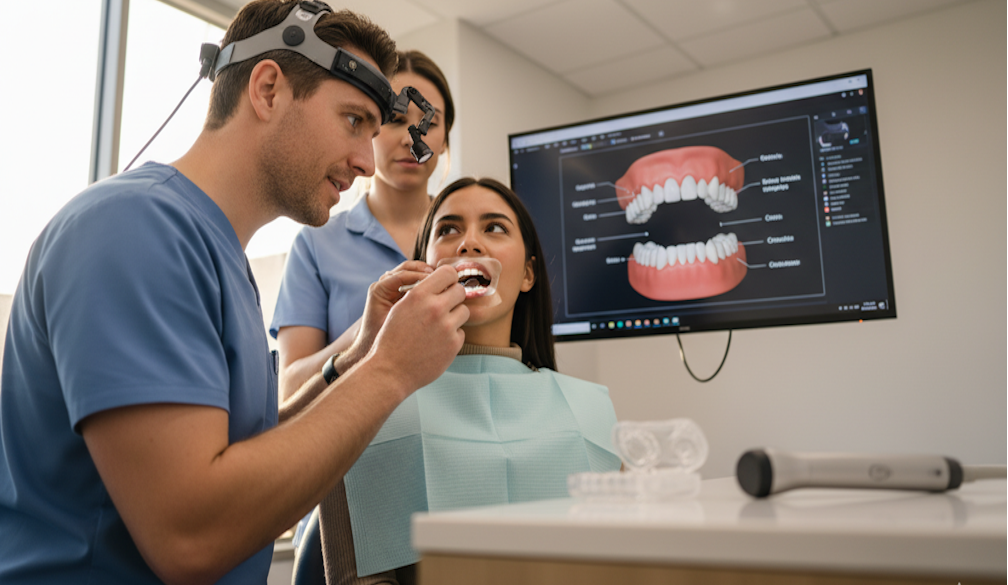
Your dentist will check how your teeth sit together, how your bite works, and whether your gums are healthy enough to support Invisalign treatment.
They’ll usually look at:
- Alignment and spacing
- Bite patterns like overbite or crossbite
- Gum condition
- Any existing dental work
If something needs attention first, it will come up here. Not as a setback, just part of getting things right from the beginning.
3. Digital Scans and 3D Planning
This is where things start to feel more real.
Instead of old-style moulds, a handheld scanner captures a full digital model of your teeth. It’s quick and much more comfortable than people expect.
What’s happening behind the scenes is just as important. These scans allow your dentist to:
- Map how your teeth will move
- Spot potential issues early
- Build a tailored Invisalign treatment plan
You’re no longer talking in general terms. It becomes specific to you.
4. Previewing Your Expected Results
This is often the turning point for patients.
Once the scans are processed, you’ll be shown a simulation of how your smile could change over time. Not a guess, but a planned sequence.
You’ll see:
- How your teeth are likely to shift
- What the result may look like
- A rough timeline
For a lot of people, this is where things click. It stops being abstract and starts to feel achievable.
5. Your Personalised Treatment Plan
Now everything gets pulled together.
Your dentist will explain how your Invisalign treatment would work day to day. Not just the outcome, but the routine.
That usually includes:
- How many aligners will you need?
- When will you switch to the next set?
- How long do you need to wear them each day?
- The overall treatment timeframe.
It’s straightforward, but important. You leave knowing exactly what’s expected from you.
6. Costs and What to Expect Financially
This part is just as important as the clinical side.
You’ll be given a clear idea of what your Invisalign treatment will cost and how payments can be structured.
Typically, this covers:
- Total cost.
- Payment plan options.
- Any health fund rebates.
Nothing vague, no guesswork. Just clear information so you can make a comfortable decision.
Common Questions
Is it painful?
There can be some pressure when switching aligners, but it usually settles quickly. Most people find it manageable.
How long does it take?
It depends on your teeth and what needs to be corrected. Some cases are relatively quick; others take longer.
Will it affect my routine?
Not much. You can take the aligners out to eat and brush. The main thing is wearing them consistently.
Who Might Not Be Suitable?
Not every case is suited to Invisalign treatment, and that’s okay.
If your alignment is more complex or there are underlying issues, your dentist may suggest a different approach. The goal is always the best long-term result, not forcing a particular method.
Consistency also matters. Because aligners are removable, they only work if you wear them properly.
Final Thoughts
Starting Invisalign treatment doesn’t have to feel like a big leap.
The consultation is really just about understanding where you stand and what your options are. No pressure, no commitment, just clarity.
And for most people, that clarity is what makes the decision easier.