What If Our Minds Aren’t Broken? Rethinking Mental Health Through Evolution
- Written by: Times Media
What if some of the experiences we describe as mental health disorders are, in fact, the mind’s attempt to protect us? What if our most difficult emotions follow an underlying logic that becomes clearer when we understand the evolutionary forces that shaped the human brain?
These questions challenge conventional ways of thinking about mental health. They do not diminish the reality of psychological suffering, nor suggest that people do not need treatment or support. Rather, they invite us to consider whether some emotional and behavioural responses we label as disorders may have understandable origins, and whether this understanding could help us improve psychological wellbeing.
The accepted rate of individuals living with a diagnosable mental illness is 20 per cent of the population in any given year according to the National Institute of Mental Health (2023). If this were true it would be an astonishing failure rate. The human brain is the product of 3.5 billion years of life on earth. Evolution rewards successful organisms with ongoing life. Less successful organisms die out. Humans are the most successful of all organisms and we dominate the earth on account of our large brain power. As a result, the human brain is the most evolutionarily successful and complex object in the known universe.
There are further reasons to be suspicious of our current paradigms regarding the causes of mental health conditions. Gene mapping proved to be a boon for all of science, but there is a conspicuous absence of biological markers for any mental illness besides dementia. Have you heard the suggestion that depression is caused by a chemical imbalance in the brain? This myth has been challenged by experts for more than a decade (Davies, 2013) including by those that wrote the international manuals used by practitioners (Frances, 2013). Yet this and other controversies in the field of mental health are not widely known, even among professionals.
What might difficult emotions be trying to tell us?
Evolutionary psychiatrist Randolph Nesse (2013) suggests that depression may be a functional component of our minds. He suggests its purpose is to make us lose interest in projects that are no longer delivering reward. Consider the main activity of a hypothetical cave person. Let’s call him Bill. He hunts and gathers and not much else. He doesn’t have a fully formed logical brain and so he is informed about his environment (and motivated to action) by the emotions he experiences. In the winter Bill hunts antelope, but this winter something has interrupted the antelope’s breeding cycle and they are absent. Experiencing disappointment while hunting indicates a likely lack of resources. Bill needs to lose interest and take a different approach. Lacking a fully formed conscious logic to think this through, he needs to be directed by an emotion. His subconscious sends up despondency to motivate this redirection of behaviour. Bill feels it is time to give up.
Survival in the bush is extremely hard. It is an equation including energy going in the mouth and energy being expended in body movement and maintaining body warmth. Without antelope, Bill now needs to survive the long cold winter without the normal fat and other nutrient stores antelope bring. What should he do to balance the energy equation? One solution is that he could curl up under a bearskin rug and conserve every bit of heat energy he can. He must not waste any energy on excess body movement either. Don’t clean the cave. Don’t clean teeth or waste energy shaving. To motivate this restriction in behaviour Bill’s subconscious makes everything feel like it is too much effort.
We can recognise elements of this picture in depression today: diminished motivation, loss of pleasure, withdrawal and reduced activity. These experiences can be profoundly distressing, sometimes leaving people unable to work, maintain relationships or care for themselves. But they may have served Bill’s purposes in caveman times. There is even a condition labelled Seasonal Affective Disorder (SAD). You can roughly translate affect as meaning mood. People who live in far northern environments with shorter days in winter are prone to depressed mood in that season. This is the brain using the simple signal of light from the environment to predict the likelihood of scant resources and greater energy expenditure to maintain body heat. ‘Disorder’ feels like the wrong term to describe a hardwired functional mechanism.
The evolutionary village – imperatives and algorithms
When we understand the imperatives of the mind then mania, personality conditions, post-traumatic stress disorder, post-natal depression, panic attacks and many other painful human experiences also start to make sense as normal motivators of behaviour; albeit through a series of surprising pathways.
To understand this idea more broadly, I invite clients to imagine the world in which our ancestors evolved. I call it the evolutionary village.
For much of human history, survival depended on belonging to a group. Being excluded could mean losing access to food, protection and potential partners. Our ancestors also had to negotiate status. The consequence of being on the bottom of the mating hierarchy is that somewhere down the generations your descendants would be the back of the herd, culled by whatever resource limiting or other life-threatening event occurred.
Hence the evolutionary village is an ancestral filter that leaves us with a desire to be committed to and belong to, something larger than ourselves. Yet within that tribal environment we needed to be on top of the mating hierarchy at every generation. It is no accident that the structure of team sports reflects these imperatives. We want our team to win overall, and as individual players we seek to optimize our reputation within that team. These are not arbitrary paradigms set up by chance. They are set to match the inherent drives we all hold.
Balancing resources against energy expenditure, managing status and ensuring inclusion in the tribe are examples of imperatives of our minds, but there is an overarching paradigm that is worth illuminating. Most people believe our minds are concerned with the survival of us as an individual person. The reality is slightly different. It is that our minds have evolved to ensure the enduring survival of our genetic lines. We referred to this above when talking of descendants being the back of the herd. This is a subtle but important difference, and yet it remains largely unnoticed in mental health despite having been illuminated 50 years ago in the rest of biology (Dawkins, 1976).
To optimize these imperatives our brains evolved mechanisms that follow rules and patterns we call algorithms. Picture Bill walking down a path with his compatriot Bob. There is a rustling noise ahead in the bush. When the noise turns out to be just a small rodent, Bob laughs at Bill as the rodent reveals itself and runs away. This is all very well and good for Bob today, but eventually the noise predicts a tiger. Bill cannot outrun a tiger, but you don’t need to outrun tigers to survive. You just need to outrun Bob. Because you can never know in advance whether it is a rodent or a tiger, the mechanism needs to be highly sensitive and come online on every occasion. Emotions developed their innate high-sensitivity by responding to an arms race against compatriots rather than an arms race against the true level of threat. The genes that caused Bill to interpret maximum threat in ambiguous signals now inhabit you.
The overarching logic of the algorithms is simple. The subconscious responds to emotional signals, not conscious logic. These mechanisms are over-sensitive like a smoke alarm by nature, and they can become hyper-sensitized by traumatic events as they recalibrate to meet the needs of the environment. All the while, the subconscious believes the world is the same as it was in tribal environments and cannot perceive the modern world.
From diagnosis to understanding
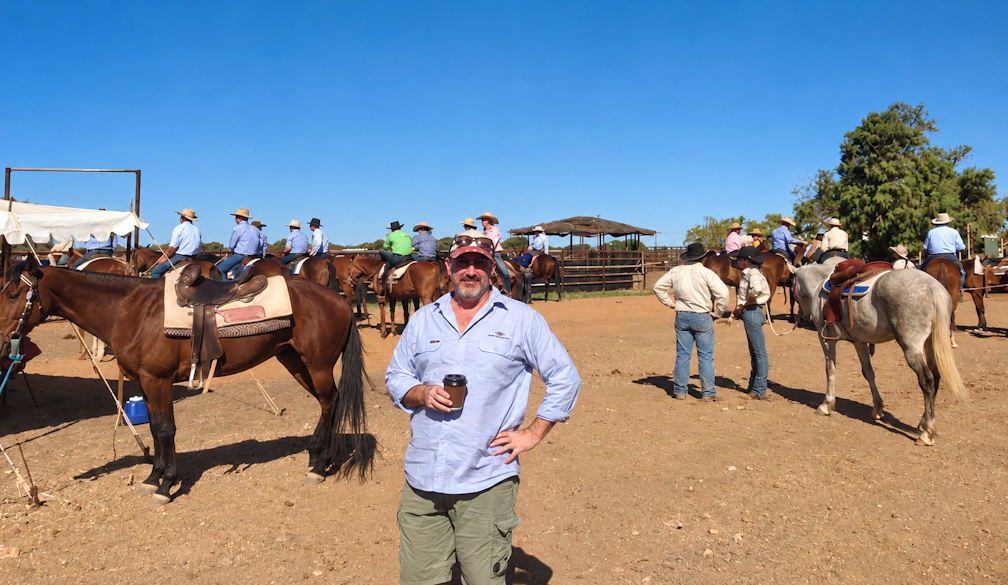
I am a psychologist who uses these evolutionary principles to help clients understand and manage the normal responses of their brains to events. I spent a decade in remote Indigenous communities in Cape York with the Royal Flying Doctor Service. This included being first responder to cyclones, floods, murders and mass casualties. I have been a psychology manager with the Australian Department of Defence, and now work in critical incident response for corporate, mining and construction industries. Through all these circumstances I witnessed common themes that cause distress at greater intensity than seems warranted by a logical review of their consequence in our modern world. This apparent misalignment often leaves clients terrified that they have lost their minds. There is a moment in most of my therapy where my client and I come to the realisation that they have “a normal healthy human mind doing what we expect it to, given the circumstances”. This is the moment the tears of relief flow. Not only is it a very powerful moment, but it also reflects the reality of their experience. One cannot get to this moment with a checklist of symptoms and a diagnosis of ‘disorder’.
This is an edited extract from Your Normal Mind Evolution's Hidden Logic of Suffering... and What to Do About it (Exisle Publishing) by John Hannan. Out now.