Project Sunrise: Qantas Prepares to Change Long-Haul Travel Forever
- Written by: The Times
For decades, travelling from Australia to Europe or the east coast of the United States has almost always meant one thing—a stopover.
Whether it was Singapore, Dubai, Hong Kong or Los Angeles, long-distance travel required passengers to leave one aircraft before boarding another.
Qantas now believes that era is coming to an end.
Under its ambitious Project Sunrise, Australia's national carrier plans to introduce the world's longest scheduled commercial flights using specially designed Airbus A350-1000ULR aircraft. The first destination will be a non-stop service between Sydney and London, with flights expected to begin in October 2027, followed by Sydney to New York. Ticket sales are expected to open in early 2027.
The specially configured aircraft are unlike standard airliners.
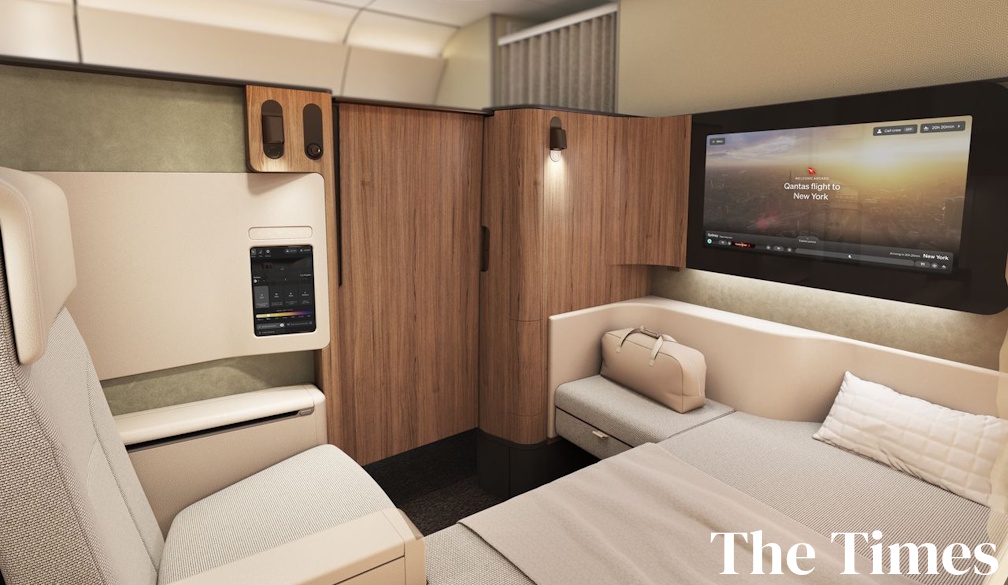
Instead of carrying more than 300 passengers, the Project Sunrise aircraft will seat just 238 travellers across four cabins, including First, Business, Premium Economy and Economy. The lighter passenger load allows room for additional fuel needed to fly for up to 22 hours without refuelling.
Qantas has spent years researching what passengers need during flights that can last almost an entire day.
The airline has worked with sleep scientists, medical researchers and aviation specialists to design cabins that reduce jet lag and improve comfort. Travellers can expect specially timed meals, mood lighting that adjusts throughout the journey, dedicated stretching and movement areas known as the "Wellbeing Zone", improved cabin humidity and additional personal space across all classes.
For Australian travellers, the attraction is obvious.
Removing a stopover can save several hours of total travel time while eliminating the inconvenience of changing aircraft, waiting in transit terminals and the risk of missed connections or delayed baggage.
Not everyone, however, will choose to fly non-stop.
Many travellers enjoy breaking their journey with a day or two in Singapore, Dubai or another international hub. Families with young children may also prefer shorter flight segments rather than spending almost 20 hours continuously onboard.
Qantas recognises that Project Sunrise will offer another option rather than replacing traditional long-haul travel.
The airline also expects passengers to pay a premium for the convenience of flying directly between Australia and some of the world's most important cities, particularly business travellers and those placing a high value on time.
Project Sunrise is about more than a new aircraft.
It represents a shift in how Australia connects with the world.
For generations Australia's distance from Europe and North America has been viewed as an unavoidable disadvantage. Qantas believes advances in aircraft technology can turn that isolation into a competitive advantage by making direct travel practical for routes that were once considered impossible.
After years of planning, research and aircraft development, Project Sunrise is moving from concept to reality.
If all goes according to plan, by late 2027 Australians will be able to board a Qantas aircraft in Sydney, settle into their seat, and step off almost a day later in London—without a single stop along the way.
For a country defined by distance, that will be one of the most significant changes in international travel for a generation.