Australia is out of the top ten in global anti-corruption rankings — why?
- Written by: Adam Graycar, Visiting Professor, Crawford School of Public Policy, Australian National University
The latest global Corruption Perception Index (CPI) rankings places Australia[1] at 11 out of 180 countries.
This is behind countries like New Zealand, Denmark and Germany and on par with Canada, the United Kingdom and Hong Kong.
For almost 20 years, Australia ranked in the top 10 (least corrupt) countries. In 2012, Australia ranked 7th with a score of 85. By 2018, it had fallen to 13th with a score of 77. In the latest 2020 rankings, it has also scored 77.
Being ranked 11th out of 180 is relatively good. But falling by eight points is not good. It is a wake-up call and raises serious questions about the ethical underpinnings of politics in this country.
Australia’s decline should worry us
Unlike citizens in many countries, Australians can go about their daily lives without having to worry they will have to pay a bribe to receive basic services, or that money that should be used for services will find its way into the pockets of politicians.
However, Australia’s decline since 2012 matters because trust in our institutions is fundamental to our functioning as a society. A lower score also sends a note of caution to those likely to invest in Australia.
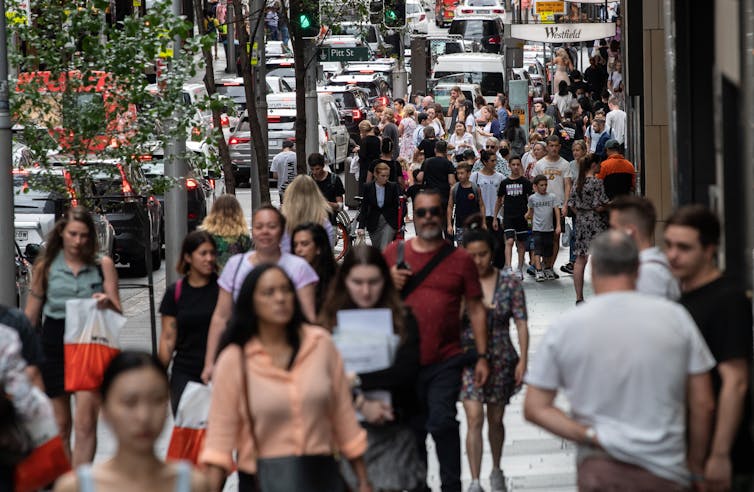 Australia’s global corruption ranking has fallen since 2012.
James Gourley/AAP
Australia’s global corruption ranking has fallen since 2012.
James Gourley/AAP
It is noted the CPI, organised by Transparency International[2], measures perceptions of corruption rather than corruption itself. But it is globally used and respected. It uses a rigorous methodology[3], assessing the perceptions of business leaders and experts, not the general public, to score and rank countries.
Corrupt behaviour occurs across a wide spectrum. It includes the solicitations found in some countries to get a basic service, through to abusing the institutions and support pillars — such as parliaments, electoral bodies and audit commissions — that hold our democracy together.
In Australia, we have seen a significant diminution of standards at the highest levels of government. While these might not match the standard definitions of corruption, it creates a perception that things that are fast and loose.
Sports rorts, Robodebt
Recently, Australian National University professor Mark Kenny discussed this decline[4] in standards. This includes examples such as the A$100 million federal sports grants program[5], the A$30 million Leppington Triangle land purchase[6], the doctored document[7] federal Energy Minister Angus Taylor used to pursue the City of Sydney Council and the Robodebt debacle[8].
Read more: The 'sports rorts' affair shows the need for a proper federal ICAC – with teeth[9]
To this list, we can add questions over other funding schemes such as the community development grants[10] program and irregularities in water allocations[11].
In other examples of questionable standards, we also have Immigration Minister Alan Tudge defying a federal court order[12] and ex-Finance Minister Mathias Cormann looking for a job in Europe using a government VIP jet[13].
These are in addition to senior ministers seeking post-politics employment[14] in fields that overlap with their former portfolios, as well as frequent expenses scandals[15].
Sorry is the hardest word to say
There is no suggestion these incidents amount to corruption.
Nor are they new. Our political history is littered with unsavoury events. What is concerning now, and likely adds to the perception standards have slipped, is that apologies and resignations are so rare. In short, nothing much is done about it.
The standard response is that “no rules have been broken”. Whenever a politician asserts that, a huge red flag unfurls. Occasionally there is an inquiry, such as the investigation into the sports rorts affair. But this cleared the minister[16] of major malfeasance, pinging her for a minor conflict of interest matter instead.
Read more: As Trump exits the White House, he leaves Trumpism behind in Australia[17]
It is also a serious concern that the agency documenting the shortfall in integrity, the Auditor-General, has recently had its budget cut[18]. The Centre for Public Integrity, a body comprising former judges, senior academics and lawyers estimates[19] in the past decade, the Commonwealth government has cut A$1.4 billion from the budgets of accountability agencies that could highlight government deficiencies.
How can we boost our ranking?
We do not have a situation where corruption is out of hand, but one in which integrity seems a low-ranking optional extra in some government processes. There are plans for a Commonwealth integrity agency[20], but there are also deficiencies[21] in the model proposed.
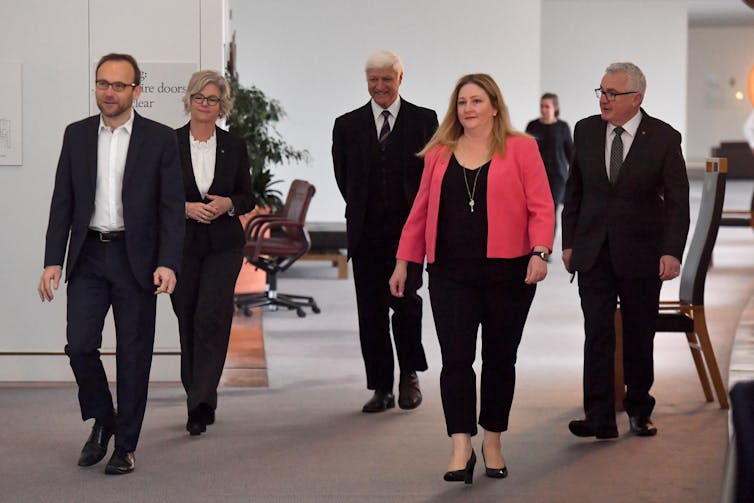 The House of Representatives’ cross bench has been pushing for a federal anti-corruption watchdog.
Mick Tsikas/AAP
The House of Representatives’ cross bench has been pushing for a federal anti-corruption watchdog.
Mick Tsikas/AAP
Tougher anti-corruption laws and a more formidable anti-corruption agency are not a panacea. With offenders asserting no rules were broken it is unlikely a national integrity commission would prevent, or even pick up, the breaches that have dogged the landscape for the past few years.
What is needed is a better commitment to integrity from the top. Not just codes of conduct within government agencies, but leaders who call out bad behaviour. This is conduct that may not be legally corrupt, but that absolutely does not pass the “pub test”.
Read more: The 'sports rorts' affair shows the need for a proper federal ICAC – with teeth[22]
The one attempt by Prime Minister Scott Morrision to do this — the Australia Post Cartier watch case[23] — was a feeble example. If anything, it highlighted the inconsistency that abounds.
We must strive for better standards at the highest levels, and a better way of holding our leaders to account. We should have a national integrity agency that is bold, but above all, we must have a demonstrated commitment to raising the bar.
References
- ^ places Australia (www.transparency.org)
- ^ Transparency International (www.transparency.org)
- ^ rigorous methodology (www.transparency.org)
- ^ Mark Kenny discussed this decline (theconversation.com)
- ^ sports grants program (theconversation.com)
- ^ Leppington Triangle land purchase (www.abc.net.au)
- ^ doctored document (theconversation.com)
- ^ Robodebt debacle (theconversation.com)
- ^ The 'sports rorts' affair shows the need for a proper federal ICAC – with teeth (theconversation.com)
- ^ community development grants (www.theguardian.com)
- ^ in water allocations (www.theguardian.com)
- ^ defying a federal court order (www.abc.net.au)
- ^ government VIP jet (www.smh.com.au)
- ^ post-politics employment (theconversation.com)
- ^ expenses scandals (www.abc.net.au)
- ^ cleared the minister (theconversation.com)
- ^ As Trump exits the White House, he leaves Trumpism behind in Australia (theconversation.com)
- ^ has recently had its budget cut (www.theguardian.com)
- ^ estimates (publicintegrity.org.au)
- ^ Commonwealth integrity agency (theconversation.com)
- ^ deficiencies (theconversation.com)
- ^ The 'sports rorts' affair shows the need for a proper federal ICAC – with teeth (theconversation.com)
- ^ Cartier watch case (www.abc.net.au)