

As New Zealand mobilises to help in Afghanistan, its rescue response faces serious challenges
- Written by: Stephen Hoadley, Associate Professor, University of Auckland
The question of whether New Zealand accepts some moral responsibility to help Afghans who worked with its armed forces has now been answered[1]. But another question remains: will high ideals be brought to earth by political and practical obstacles?
To its credit, the New Zealand government responded quickly to the news that Taliban fighters had entered Kabul and had been photographed sitting at the desk of runaway ex-president Ashraf Ghani.
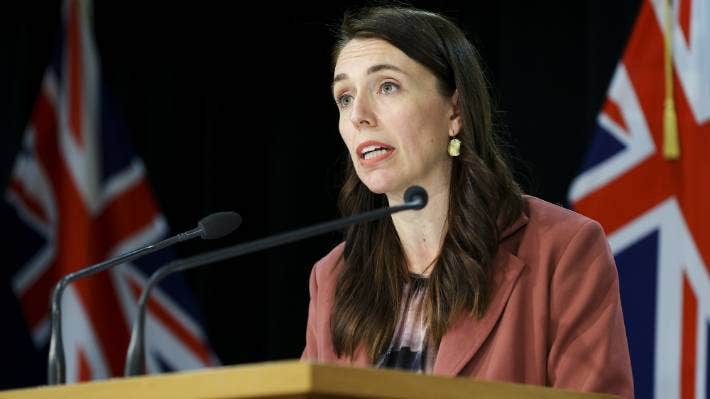
Prime Minister Jacinda Ardern rewrote the agenda for Monday morning’s cabinet meeting. By mid-afternoon, flanked by her minister of defence and chief of defence force, she announced New Zealand’s three main aims:
-
to get an estimated 53 New Zealand citizens out of Afghanistan
-
to assist 37 Afghans who worked for the NZ Defence Force or other NZ agencies, and up to 200 members of their immediate families, to leave Afghanistan and, if they wish, immigrate to New Zealand
-
to consider inducting other Afghans at possible risk.
Three initiatives underpin implementation of the policy:
-
to work with other governments with a presence in Kabul (which New Zealand no longer has) — specifically Australia but likely also the United States, Britain, Canada and others
-
to support the UN High Commissioner for Refugees, the International Committee of the Red Cross and other international agencies and NGOs to help displaced and at-risk Afghans
-
to deploy an air force C-130 transport aircraft to Afghanistan (or a nearby country) to bring New Zealanders and refugees to New Zealand.
Read more: As the Taliban returns, 20 years of progress for women looks set to disappear overnight[2]
The logistical challenge
Special visas will be issued after a cabinet decision to relax previous immigration criteria[3] that had, until now, held up approval of many Afghans’ applications.
But we don’t yet know whether arriving Afghans will be given priority in scarce MIQ hotel rooms for the mandatory 14-day quarantine period, displacing hundreds of New Zealanders queuing to return home from overseas.
Existing spaces are booked until the end of this year and the delta variant has raised the stakes, so accommodating up to 300 arrivals from Kabul will challenge the integrity of the government’s border control regime.
It’s also unclear where the air force will operate from if Kabul airport, already closed to civilian aircraft, is closed by the Taliban to military rescue flights. Related to this, where will the 40-strong air force support crew be accommodated?
And why was a C-130 turbo-prop plane, with a passenger capacity of only 92 and which will take several slow trips to carry the expected numbers of New Zealanders and Afghans, chosen ahead of an air force Boeing 757 with a capacity of 239 passengers and shorter flight times?
Finding and accommodating refugees
We also don’t yet know how applicants will make contact with immigration officials, given New Zealand no longer has a diplomatic post in Afghanistan.
Complicating matters, many former interpreters from Bamiyan Province, where New Zealand’s Provincial Reconstruction Team operated from 2003 till 2013, are hiding from the Taliban[4] in the mountains, far from Kabul airport.
They are ethno-religious Hazara, a Shia minority singled out by the Sunni Taliban for especially harsh treatment, so New Zealand has a uniquely deep obligation to help them.
Read more: How Joe Biden failed the people of Afghanistan — and tarnished US credibility around the world[5]
New Zealand has already inducted 44 former employees and 96 immediate family members from Bamiyan. In 2001 New Zealand took 131 of the Tampa refugees[6], many of them Afghans. New arrivals will find a helpful community of established compatriots, so it’s to be hoped harmonious integration will not be an issue.
But as recently as last month the immigration minister was saying there was no plan to resettle more applicants from Bamiyan – despite a group of 20 former interpreters pleading to the prime minister[7] by cellphone from their mountain hiding place – because they didn’t meet strict immigration criteria.
Because the rules have now been relaxed, there will undoubtedly be more pressure to take wider family groups[8].
Only the beginning
So, practical obstacles may yet test the commendably high ideals announced on Monday. This crisis will challenge the integrity of immigration and refugee programs – with hundreds of prior applicants from around the world already in the queue.
How the New Zealand public reacts, and whether it affects the government’s approval ratings (negatively or positively) is hard to predict. But there is no doubt New Zealand will do its fair share, alongside its larger allies.
Read more: As Afghanistan falls, what does it mean for the Middle East?[9]
With modest resources and fewer diplomatic posts, New Zealand may need help from better-placed governments. But such co-operation is to be expected in the interests of an orderly and humane evacuation before the Taliban take control of Kabul airport.
After the rescue of as many Afghans as possible, it will be time for all of us to reflect on those left behind to face an uncertain future under a harsh Taliban regime. Many will also be pondering the ultimate question: was it worth it?
References
- ^ now been answered (www.nzherald.co.nz)
- ^ As the Taliban returns, 20 years of progress for women looks set to disappear overnight (theconversation.com)
- ^ previous immigration criteria (www.rnz.co.nz)
- ^ hiding from the Taliban (www.stuff.co.nz)
- ^ How Joe Biden failed the people of Afghanistan — and tarnished US credibility around the world (theconversation.com)
- ^ Tampa refugees (www.beehive.govt.nz)
- ^ pleading to the prime minister (www.nzherald.co.nz)
- ^ wider family groups (www.stuff.co.nz)
- ^ As Afghanistan falls, what does it mean for the Middle East? (theconversation.com)