What Causes Food Processing Facilities to Fail Hygiene Inspections Despite Regular Cleaning?
A food processing facility may follow a strict cleaning schedule, maintain daily hygiene records and still receive unsatisfactory findings during an inspection. For production managers and hygiene teams, this can be frustrating, particularly when considerable time and resources are already being spent on keeping the premises clean.
The problem is that regular cleaning does not always mean effective cleaning. An inspection looks beyond whether floors have been washed or equipment has been sanitised. It also considers whether cleaning procedures are suitable, consistently followed and capable of controlling food safety risks.
Understanding why these gaps occur can help food manufacturers improve their cleaning practices and avoid repeated inspection findings.
Why Can a Clean Food Factory Still Fail a Hygiene Inspection?
A facility can appear clean without meeting all the hygiene requirements relevant to its operations. Inspectors may identify problems involving equipment condition, cleaning records, chemical handling, pest control or contamination risks that are not immediately visible.
For example, a production line might be thoroughly washed after every shift, but residues could remain inside equipment joints or beneath conveyor systems. Similarly, a clean processing room may still have damaged flooring that allows moisture and food particles to accumulate.
These issues demonstrate why food factory cleaning needs to address the entire production environment rather than focusing only on visible surfaces.
Cleaning Procedures Do Not Match Actual Production Conditions
One common problem is relying on cleaning procedures that no longer reflect how the facility operates. Production processes may change, new ingredients may be introduced or machinery may be replaced without corresponding updates to cleaning instructions.
Consider a food manufacturer that begins processing products containing different allergens. If the existing cleaning procedure has not been assessed for the new ingredients, the facility may struggle to demonstrate adequate allergen control during an inspection.
Cleaning procedures should reflect the products being manufactured, the equipment being used and the contamination risks associated with each process. Regular reviews help ensure that documented instructions remain relevant to everyday operations.
Difficult to Reach Equipment Areas Are Overlooked
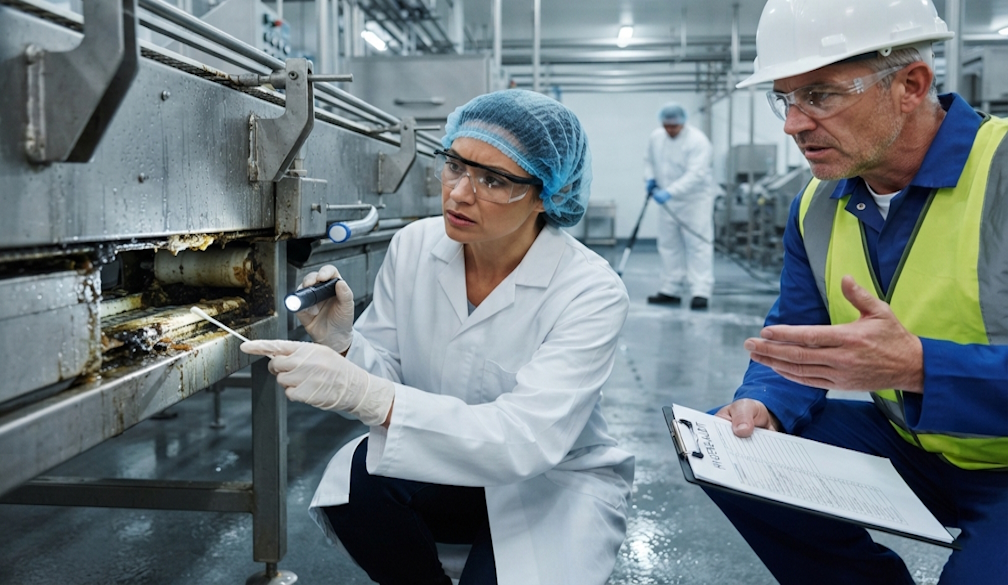
Food processing machinery often contains components that are difficult to access during routine cleaning. Conveyor rollers, equipment frames, seals and enclosed machinery parts can retain food residues even when exposed surfaces appear spotless.
These hidden areas become particularly important when equipment is cleaned without the necessary dismantling. Workers may complete every step listed on a cleaning checklist while contamination remains inside components that the procedure does not adequately address.
During an inspection, accumulated residues or evidence of poor equipment hygiene may raise concerns about cleaning effectiveness. Facilities should identify components requiring special attention and ensure that cleaning instructions explain how they can be accessed safely.
Poor Drainage and Moisture Management
Water plays an important role in many food processing cleaning procedures, but excess moisture can create additional hygiene challenges. Poor drainage, damaged flooring and water collecting beneath machinery may allow contamination to persist.
A facility might wash its production floors thoroughly every evening while leaving standing water around drainage points. If organic material remains in these areas, conditions may support microbial growth and increase contamination risks.
Inspectors may examine drainage systems, floor conditions and areas where water regularly accumulates. Maintaining suitable drainage and addressing damaged surfaces can help prevent problems that routine washing alone cannot resolve.
Cleaning Chemicals Are Not Used Correctly
Using approved cleaning products does not automatically guarantee satisfactory hygiene results. Detergents and sanitisers must be prepared and applied according to their intended purpose and the manufacturer's instructions.
Incorrect chemical concentrations, insufficient contact times or unsuitable application methods can affect cleaning performance. Organic residues left on surfaces may also interfere with certain sanitisers, making thorough cleaning before sanitising essential.
Chemical storage and handling can create further inspection concerns. Containers should be appropriately labelled and chemicals should be stored away from food and packaging materials according to site requirements.
Facilities should regularly check chemical preparation methods and ensure that workers understand the instructions for each product.
Cleaning Records Are Complete but Verification Is Missing
Cleaning checklists are useful for documenting completed tasks, but they do not independently prove that a surface has reached the required hygiene standard. A signed record confirms that an activity was reported as completed, not necessarily that it achieved the intended result.
Some facilities rely heavily on these records without conducting sufficient checks of cleaning effectiveness. During an inspection, this may make it difficult to demonstrate that important contamination risks are being controlled.
Verification methods can include visual inspections, ATP testing and microbiological sampling where appropriate. The methods selected should reflect the facility's products, processes and food safety risks.
Results should also lead to action when problems are identified. Repeated unsatisfactory findings without documented investigation may indicate that the facility is not adequately addressing the underlying cause.
Allergen Cleaning Is Not Properly Controlled
Allergen management is particularly important for facilities manufacturing products with different ingredient profiles. Cleaning procedures need to control the risk of unintended allergen transfer between production runs.
For example, a factory producing both products containing milk and products without milk ingredients must assess how shared equipment is cleaned between relevant production activities. Visible cleanliness alone cannot establish that allergen residues have been adequately removed.
Where necessary, facilities should validate their allergen cleaning procedures and use suitable verification methods. Staff also need clear instructions about production changeovers, equipment handling and the separation of ingredients.
Inadequate allergen controls can result in significant food safety concerns even when the facility maintains an otherwise regular cleaning schedule.
Equipment Maintenance Problems Affect Hygiene
Cleaning teams cannot always compensate for damaged or poorly maintained machinery. Cracked surfaces, worn seals, damaged conveyor materials and corroded components can create spaces where food residues accumulate.
These defects may also make equipment difficult to clean effectively. For example, a damaged rubber seal can retain moisture and organic material despite regular washing of the surrounding surfaces.
Inspectors may identify such conditions as hygiene risks because they affect the suitability of equipment for food production. Preventive maintenance should therefore support cleaning activities rather than operate as an entirely separate responsibility.
When cleaning personnel report equipment defects, maintenance teams should assess whether repairs or replacement components are required.
Cleaning Tools Can Become a Source of Contamination
Brushes, squeegees and other cleaning accessories are used throughout food processing facilities. However, these tools can contribute to contamination when they are poorly maintained, stored incorrectly or transferred between unsuitable areas.
A brush used around a floor drain should not subsequently be used on food contact equipment. Similarly, damaged brushes may be difficult to clean and could create additional hygiene concerns.
Facilities should establish clear rules for cleaning tool use, storage and replacement. Colour coding can help distinguish equipment intended for different hygiene zones or cleaning tasks.
Regular inspections of cleaning accessories can also reveal problems that might otherwise be overlooked during routine hygiene checks.
Staff Training Does Not Reflect Daily Cleaning Challenges
Workers may receive cleaning instructions during induction but encounter situations that were not adequately covered in their training. Production changes, unfamiliar equipment and time pressures can all affect how procedures are carried out.
For example, a worker may understand that a conveyor requires cleaning but may not know which components must be removed to access concealed surfaces. Without clear guidance, the cleaning process may remain incomplete despite the worker following their usual routine.
Training should explain both the required cleaning steps and the reasons behind them. Practical demonstrations, supervision and refresher sessions can help workers recognise contamination risks and report problems.
Facilities should also ensure that cleaning instructions are understandable and accessible to the people responsible for carrying them out.
Production Pressure Can Reduce Cleaning Effectiveness
Food processing facilities often operate within demanding production schedules. When a shift finishes later than expected, cleaning teams may have less time to complete their assigned work before production restarts.
This can lead to shortened cleaning activities, insufficient chemical contact times or reduced opportunities for inspection. Even experienced workers may struggle to maintain consistent standards when the available cleaning window is unrealistic.
Managers should consider whether cleaning schedules provide enough time for equipment dismantling, residue removal, sanitising and verification. Where delays repeatedly affect cleaning, the production schedule may need adjustment.
Treating cleaning time as an essential operational requirement helps reduce the risk of hygiene activities being compromised.
How Can Food Processing Facilities Improve Inspection Readiness?
Improving hygiene inspection outcomes begins with identifying why existing cleaning arrangements are not consistently meeting requirements. Simply increasing cleaning frequency may achieve little if the same equipment defects, inaccessible surfaces or procedural gaps remain.
Facilities should review cleaning instructions against actual production activities and examine recurring findings from internal inspections. Equipment maintenance records, hygiene test results and staff observations can help reveal problems that are not obvious during routine cleaning.
Corrective actions should address the underlying cause of each issue. If contamination repeatedly appears around a conveyor, the solution may involve improving access or replacing damaged components rather than asking workers to clean the same visible surfaces more frequently.
Regular internal reviews also help facilities identify weaknesses before external inspections take place. The aim is to maintain effective hygiene controls throughout normal production rather than preparing only when an inspection is approaching.
Consistent Cleaning Is Only Part of Good Hygiene Management
A food processing facility can invest considerable effort in cleaning and still experience hygiene inspection problems. The difference often lies in whether procedures are suitable for the production environment and whether their effectiveness can be demonstrated.
Equipment condition, drainage, chemical handling, allergen management and staff training all influence hygiene performance. Cleaning records and verification results also need to provide meaningful evidence that identified risks are being controlled.
For food manufacturers, the most useful approach is to examine why problems occur rather than simply repeating existing routines. When cleaning practices are supported by maintenance, practical training and regular verification, facilities are better equipped to maintain hygiene standards and respond confidently to inspection findings.