Steel Toe vs Composite Toe Work Boots: Which Is Better for Your Job?
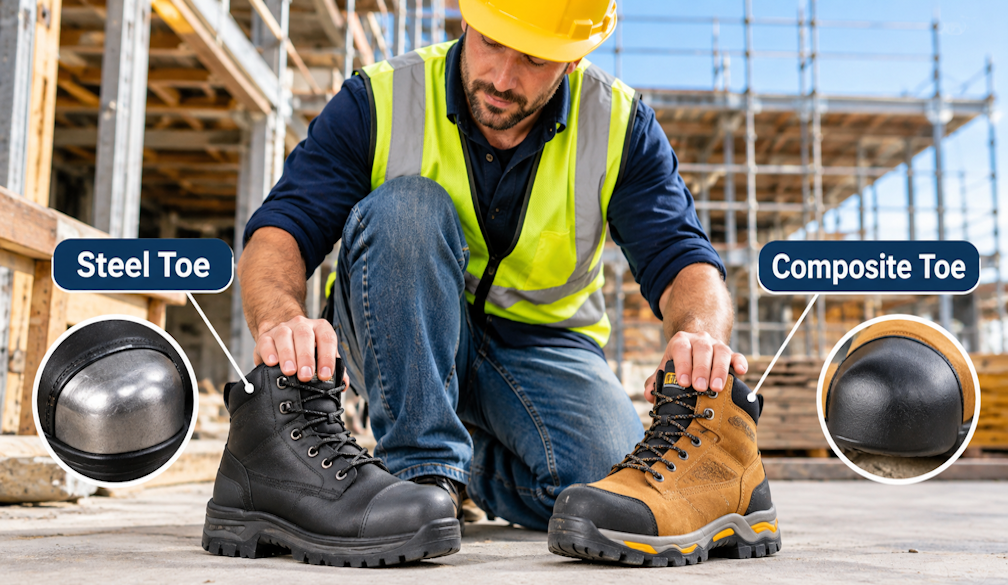
Toe protection is the one feature every safety boot has in common, but not every toe cap is made the same way. Walk into any workwear store in Australia and you’ll find two main options: traditional steel caps and lighter, metal-free composite caps.
Both are designed to protect your feet from falling objects and crushing loads, so the question isn’t which one is safe. It’s which one suits the way you work. Here’s how steel toe safety boots and composite toe work boots compare.
What’s the Difference?
Steel toe caps are made from heat-treated steel moulded into a protective dome over the toes. They’ve been the standard in safety footwear for decades and remain the most common choice on Australian worksites.
Composite toe caps are made from non-metallic materials such as carbon fibre, Kevlar, fibreglass or high-strength plastics. They’re designed to deliver certified toe protection without any metal.
Importantly, certified safety boots must meet AS/NZS 2210.3 and pass the same impact and compression testing, including a toe cap that withstands a 200-joule impact, whether they use steel or composite. So a properly certified composite boot isn’t a weaker option; it’s simply a different material with its own strengths.
The Case for Steel Toe Safety Boots
Proven toughness. Steel is extremely strong and resistant to heavy impacts and crushing loads. For jobs involving heavy materials, machinery or dropped tools, many workers prefer the reassurance of steel.
Slimmer profile. Because steel is so strong, the cap can be thinner than a composite cap offering similar protection. This often means a less bulky toe area and a more natural fit.
Value for money. Steel toe boots are generally more affordable than composite equivalents, which makes them a practical choice for crews buying in bulk or workers who wear through boots quickly.
The trade-offs: Steel conducts temperature, so toes can feel colder on frosty early starts and warmer on hot days. Steel caps are also heavier and will set off metal detectors, which can be inconvenient for workers who pass through security screening.
The Case for Composite Toe Work Boots
Lighter weight. Composite caps are lighter than steel, and that difference adds up over a long shift. For workers who walk long distances, climb stairs or move between sites throughout the day, a lighter boot can reduce leg and foot fatigue.
Metal-free. Composite toe work boots don’t set off metal detectors, which makes them ideal for workers in airports, security-screened facilities, mines and some government sites.
No temperature transfer. Composite materials don’t conduct heat or cold the way steel does. That makes them more comfortable in Australia’s extremes, from hot summer slabs to cold early-morning starts in cool storage or refrigerated environments.
Non-conductive. Because the cap itself contains no metal, composite toes are often preferred by electricians and workers in electrical environments. Keep in mind that electrical protection depends on the whole boot, so always check the boot’s specific ratings rather than relying on the toe cap alone.
The trade-offs: Composite caps are usually slightly thicker than steel to achieve the same level of protection, so the toe area can feel bulkier. They’re also typically more expensive.
Which Is Better for Your Job?
Here’s a simple guide to help you decide:
Steel toe safety boots suit:
- Construction, demolition and heavy civil work
- Manufacturing, fabrication and metalwork
- Warehousing and logistics with heavy loads
- Workers wanting reliable protection at a lower price
Composite toe work boots suit:
- Electricians and electrical maintenance workers
- Airport, mining and security-screened sites
- Workers in very hot or cold conditions
- Anyone who walks long distances or wants a lighter boot
If your employer or site has specific footwear requirements, always check those first. Some workplaces specify metal-free footwear, while others simply require certified safety boots.
Other Features Worth Checking
The toe cap is only part of the picture. Whichever option you choose, look at:
- Penetration-resistant midsoles if nails, screws or sharp debris are common.
- Waterproof or water-resistant uppers for outdoor and wet conditions.
- Slip-resistant outsoles for wet, oily or dusty surfaces.
- Closure style – lace-up, zip-sided or elastic-sided pull-on – based on how often you take your boots off and how much ankle support you need.
- Cushioned footbeds for comfort on long shifts.
When to Replace Your Boots
Any toe cap that takes a significant impact should be replaced, even if it looks fine. Steel caps can dent and composite caps can crack internally, and either way the protection may be compromised. Also replace boots when the soles wear smooth, the uppers split or the toe cap starts to show through.
Where to Buy Safety Boots
Shopping with a specialist workwear supplier makes it easier to compare toe types and find the right fit. Brookvale Workwear, located on Pittwater Road in Brookvale on Sydney’s Northern Beaches, stocks a wide range of steel toe safety boots and composite toe work boots from trusted brands such as Steel Blue, Oliver, Redback, KingGee, Blundstone and Puma. Their range covers lace-up, zip-sided and pull-on styles, with nationwide delivery available.
The Bottom Line
There’s no single winner in the steel vs composite debate. Steel toe boots offer proven toughness, a slimmer fit and better value, while composite toe boots are lighter, metal-free and more comfortable in temperature extremes. Match the toe cap to your job, check your site’s requirements and choose a boot that fits well, and you’ll be protected on every site you walk onto.