What to Pack for Rainy Season in Thailand From May to October
Thailand from May to October is wet, warm and very green, with waterfalls running hard and rice fields in the north at their brightest. A day out with one of the best Thailand tours to a jungle waterfall or a countryside temple is a lovely way to see the country in this season, and the right bag makes those days far more comfortable.
What clothes work when it rains every day?
Fabric matters more than anything else in the wet months, and synthetic or merino pieces that dry overnight beat cotton every time. A cotton T-shirt soaked in a 4 p.m. downpour can still be damp the next morning in a humid guesthouse room. Polyester running tops, nylon travel trousers and lightweight merino tees will be dry by breakfast.
The rain itself tends to come in short, heavy bursts, especially from July to October, rather than as all-day drizzle. That changes what's worth carrying. A thin, packable rain jacket is useful on boat trips and motorbike rides, where the wind makes a soaking feel cold. In town, a cheap umbrella from a convenience store does more, because a jacket in 32°C humidity turns into a sauna within ten minutes.
Pack fewer clothes than seems sensible. Laundry services are everywhere in Thailand, often next door to the hotel, and washing every few days keeps the bag light. Hotels in the rainy months are often cheaper too, which leaves room in the budget for that kind of convenience.
A few practical additions:
- one long-sleeved shirt for air-conditioned buses and trains, which can be startlingly cold
- a swimsuit that doubles as something to wear while everything else is at the laundry
- a couple of mesh laundry bags to keep wet clothes away from dry ones
Denim stays at home. Wet jeans are heavy, slow to dry and miserable on a long-tail boat.
Which shoes and sandals should I bring?
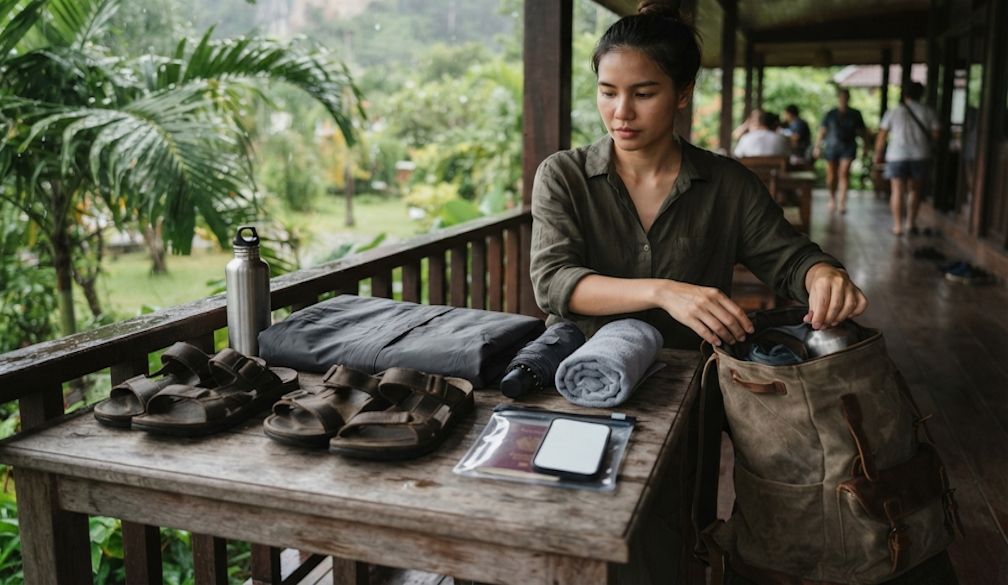
Two pairs cover most trips: a strapped sport sandal and a slip-on shoe or sandal for temples and indoor spaces.
The sport sandal does the heavy lifting. Streets flood briefly after a storm, market lanes turn to puddles, and boat landings are wet by default. A sandal with a heel strap and a grippy sole handles all of that, dries in an hour and doesn't slide off on muddy paths. Leather sandals and suede trainers tend to stay damp and start to smell within a week.
The second pair should come off and go on again in seconds. Shoes are removed before entering temples and many homes, and some shops and guesthouses ask for the same. Laces become tiresome by the third temple of the morning.
Anyone planning a proper jungle hike should add a light trail shoe with mesh uppers, which drains better than a waterproof boot that fills up and stays full. Leech socks are worth the small space in rainforest areas such as the national parks of the south. Flip-flops for hostel showers round things out.
Can I still dress modestly for temples in the heat and wet?
Yes, and lightweight long trousers or a long skirt with a loose top that covers the shoulders handle it comfortably. Modest dress is expected at religious sites, which in practice means covered shoulders and covered knees for everyone, not just women.
The trick in the wet season is choosing modest clothes that also dry quickly. Thin viscose or synthetic wide-leg trousers are cooler than shorts on a hot day and look respectful at the Grand Palace or a village wat alike. A large, light scarf or sarong is the most flexible item in the bag. It covers bare shoulders at a temple gate, works as a beach towel and keeps rain off the neck on a ferry.
Clingy fabrics are worth avoiding here, since a damp, fitted top can end up less modest than intended. Loose cuts solve that.
Bare feet on temple floors are normal. After rain, steps and marble courtyards can be slippery, so a little caution near the entrance helps.
How do I protect my passport, phone and papers from the rain?
Waterproof everything that can't be replaced quickly, starting with the passport. It needs to be valid for at least six months from the date of entry, and it gets asked for more often than many visitors expect, including at currency exchange counters when changing money. That means it travels around more than it would in some countries, so it needs a dry home.
A small roll-top dry bag or a couple of heavy-duty zip bags keeps documents safe on boats and in sudden storms. Inside the day bag, a separate pouch for the passport, cards and cash means one grab in a downpour rather than a hunt through wet pockets.
For phones, a clear waterproof pouch on a lanyard works well on island boat trips and lets the screen still be used for photos. Plenty of travellers buy one at a pier kiosk on arrival.
Keep digital copies too: a photo of the passport data page, the visa or entry stamp, travel insurance details and hotel bookings, saved offline and also emailed to an account that can be opened from any device. A paper photocopy kept separately from the passport is a good backup.
Toss a few silica gel packets into the document pouch. Humidity alone can warp paper and fog a camera lens over a few weeks.
What goes in a small rainy-season health kit?
Mosquito repellent comes first, because the wet months bring more standing water and more mosquitoes. Beyond that, the kit can stay modest, since pharmacies are the recommended first stop for medical advice in Thailand and most staff speak English. Anything forgotten can usually be bought on the same street.
A sensible small kit:
1. Insect repellent with DEET or picaridin, plus an after-bite cream
2. Oral rehydration sachets for heat, sweat or an upset stomach
3. Antifungal powder or cream, since feet and skin folds stay damp all day
4. Blister plasters, which matter more when wet sandals rub
5. Antiseptic wipes and a few plasters for scrapes on slippery paths
6. Any prescription medicines, in original packaging, with enough for the full trip
Sunscreen still belongs in the bag. Cloud cover in the rainy season is thin enough to burn through, and many people get their worst sunburn on an overcast boat day.
Do I need a water bottle or filter?
A reusable bottle is handy, and a filter is optional for most trips. Several guides advise against drinking tap water in Thailand, and in practice it rarely comes up: restaurants and street stalls usually serve bottled water, and it's sold everywhere.
Ice is a common worry, and it shouldn't be. Ice made in Thailand is described as produced from clean water and considered safe in drinks, so an iced coffee or a fruit shake from a market stall is fine.
An insulated bottle earns its place by keeping water cold through a long, sticky afternoon. A filter bottle makes more sense for multi-day treks or remote islands where buying sealed water is less convenient. For a city and beach itinerary, it's extra weight.
What can I leave at home?
Heavy waterproofs top the list. A full rain suit or a thick shell is overkill in tropical warmth and will spend most of the trip balled up at the bottom of the bag.
Leave behind:
- a hairdryer, since humidity undoes the effort within minutes
- full-size toiletries, all of which are easy to buy locally
- eather shoes and boots of any kind
- a large travel umbrella, when a cheap one costs little on arrival
- more than a week of clothes, given how easy laundry is
Expensive jewellery and anything delicate can stay home too. Between rain, sweat, boat spray and shoe removal at every temple, the trip favours things that can get wet, dirty or left at a door without a second thought.