7 Appliance Problems Melbourne Homeowners Should Never Ignore, According to Repair Specialists
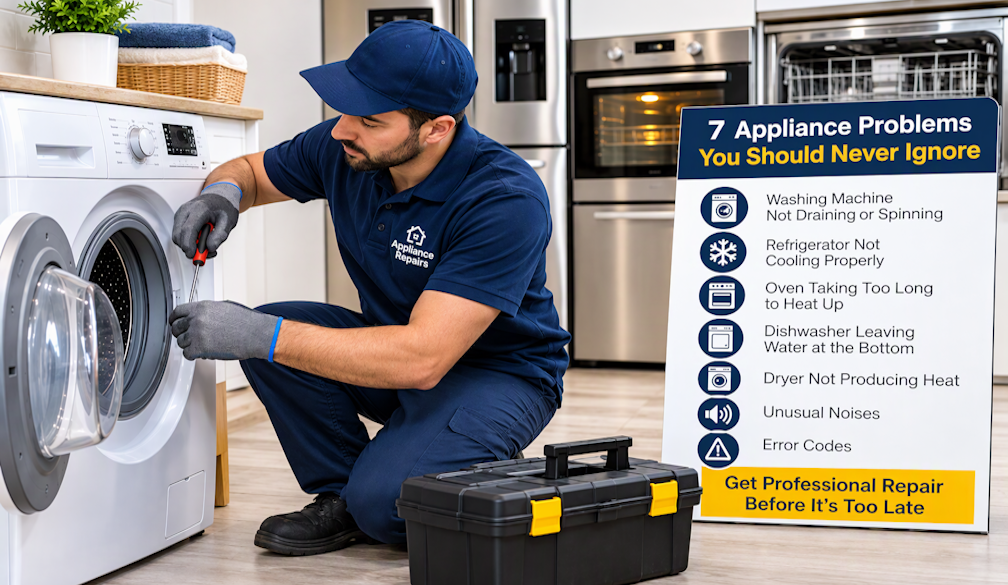
From washing machines that refuse to spin to refrigerators struggling to stay cold, Melbourne appliance repair specialists explain the warning signs that could help households avoid unnecessary replacement costs.
Household appliances rarely break down at a convenient time. A washing machine stops halfway through a cycle, a refrigerator struggles to keep food cold, or an oven fails just as dinner preparations begin.
For Melbourne households managing rising living expenses, an unexpected appliance breakdown can become an unwelcome financial burden.
However, a malfunctioning appliance does not necessarily need replacing. Many common faults can be repaired, particularly when problems are identified before further damage occurs.
The Melbourne-based company Appliance Repairs Online highlights seven warning signs that homeowners should never ignore.
1. A Washing Machine That Won't Drain or Spin
A washing machine that finishes its cycle with water remaining inside the drum is a common household frustration.
Possible causes include blocked drain pumps, damaged drive belts, faulty door-lock mechanisms, obstructed drainage hoses and electronic control faults.
In some cases, the problem may be relatively straightforward to resolve. A blocked filter, for example, may prevent water from draining correctly.
However, a washing machine that repeatedly fails to spin or drain could have a more serious mechanical or electrical issue.
What homeowners should do: Check accessible filters according to the manufacturer's instructions and avoid repeatedly operating a malfunctioning machine. If the problem continues, arrange a professional washing machine repair and inspection.
2. A Refrigerator That Runs Constantly but Isn't Cold Enough
A refrigerator that appears to be operating normally but struggles to maintain a consistent temperature should never be ignored.
Potential causes include damaged door seals, faulty thermostats, temperature sensor problems, fan motor failures or refrigeration system faults.
During Melbourne's warmer months, a poorly performing refrigerator may struggle even more to maintain safe food storage temperatures.
The problem can also become a food safety concern, particularly when perishable items are stored above recommended temperatures.
Homeowners should first check that the refrigerator door closes correctly, ventilation areas are unobstructed and temperature settings are appropriate.
What homeowners should do: If cooling performance continues to deteriorate, arrange an inspection and check whether stored food remains safe to consume.
3. An Oven That Takes Too Long to Heat Up
An oven that takes longer than usual to reach its selected temperature may be developing a fault.
Common causes include deteriorating heating elements, faulty thermostats, temperature sensor problems, fan motor issues and electronic control failures.
Uneven cooking is another warning sign.
If food burns on one side while remaining undercooked on the other, the oven may not be distributing heat correctly.
For homeowners with built-in ovens, replacing the entire appliance can be particularly inconvenient because a new model must fit the existing kitchen cabinetry.
Fortunately, some oven heating faults can be repaired by replacing individual components rather than the complete appliance.
What homeowners should do: If an oven repeatedly fails to heat correctly, have the cause investigated rather than continuing to compensate with longer cooking times.
4. A Dishwasher That Leaves Water at the Bottom
Opening a dishwasher after a completed cycle and discovering dirty water sitting at the bottom can indicate a drainage problem.
Potential causes include blocked filters, obstructed drainage hoses, faulty pumps and internal drainage system faults.
Other warning signs include poor cleaning performance, unusual operating noises, leaking water, and recurring error codes.
Some problems may be resolved through routine cleaning and maintenance.
However, persistent drainage issues may require professional diagnosis to determine whether a component has failed.
What homeowners should do: Clean accessible filters and check for visible obstructions. If water continues to accumulate, avoid further use until the cause has been identified. Book a dishwasher repair today.
5. A Clothes Dryer That Runs but Doesn't Produce Heat
A clothes dryer that tumbles normally but leaves clothes damp may have a heating or airflow problem.
Possible causes include faulty heating elements, defective thermostats, temperature sensor problems and restricted ventilation.
Blocked lint filters and exhaust ducts can also affect drying performance and potentially increase fire risk.
Regularly cleaning the lint filter is one of the simplest ways to maintain dryer performance.
However, if the machine repeatedly overheats, shuts down unexpectedly or fails to generate heat, professional assessment may be necessary.
What homeowners should do: Stop using a dryer that produces a burning smell, overheats or displays signs of electrical failure.
6. Unusual Noises Coming From Household Appliances
Grinding, squealing, rattling and banging noises can indicate that an appliance is developing a mechanical problem.
A washing machine may become unusually loud because of worn bearings, suspension problems or an unbalanced load.
A refrigerator might produce abnormal sounds when a fan motor becomes obstructed or deteriorates.
A clothes dryer may squeal because of worn drum rollers, bearings or drive components.
While some operating noises are normal, sudden changes in sound should not be dismissed.
What homeowners should do: If an appliance begins making an unfamiliar or increasingly loud noise, stop using it if there are signs of damage or danger and arrange an assessment.
7. Appliances That Keep Displaying Error Codes
Modern household appliances increasingly rely on electronic sensors, control boards and digital diagnostic systems.
When something goes wrong, an error code may appear on the display.
These codes can indicate problems involving drainage, water supply, temperature regulation, motor operation or communication between electronic components.
Some errors can be resolved through troubleshooting procedures outlined in the manufacturer's manual.
Others require specialised diagnostic equipment or replacement parts.
Repeatedly resetting an appliance without investigating a persistent fault may delay necessary repairs.
What homeowners should do: Record the exact error code, appliance brand and model number before contacting a technician.
This information can help identify potential causes.
Is It Better to Repair or Replace a Broken Appliance?
One of the biggest decisions Melbourne homeowners face is whether repairing an existing appliance makes financial sense.
The answer depends on the appliance's age, overall condition, repair cost, replacement price and availability of spare parts.
For example, a relatively new washing machine with a faulty drain pump may be a sensible repair candidate.
An older refrigerator requiring extensive refrigeration system repairs may present a different financial calculation.
Before replacing an appliance, homeowners should consider several important factors:
- Repair cost: How much will the required parts and labour cost?
- Replacement cost: What would a comparable new appliance cost?
- Appliance age: How much useful life might remain?
- Parts availability: Are suitable replacement components readily available?
- Reliability: Has the appliance experienced repeated breakdowns?
- Warranty rights: Could the fault be covered by a manufacturer warranty or Australian Consumer Law consumer guarantees?
A professional diagnosis can help homeowners make an informed decision rather than automatically assuming replacement is the only option.