Scaling Your FMCG Business: How Automated Packaging Lines Drive Profitability and Efficiency
- Written by: Times Media
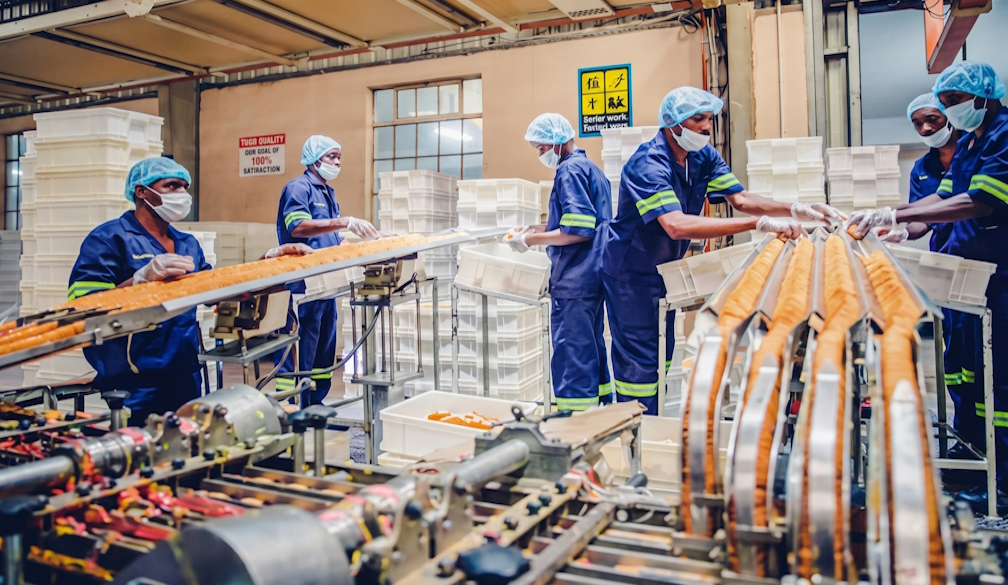
For small and medium-sized enterprise (SME) manufacturers in the fast-moving consumer goods (FMCG) sector, scaling operations is a critical but perilous phase. Transitioning from regional popularity to national or global distribution requires more than just marketing; it requires relentless operational efficiency.
When demand outpaces production capability, facility managers are often forced to choose between delaying orders or compromising on quality. To bridge this gap, operations directors must reevaluate their core manufacturing infrastructure. The true secret to sustainable growth lies in modernizing the factory floor.
The Production Bottleneck: Why Manual Processes Hamper Growth
In the early stages of a food, beverage, or chemical brand, manual packaging might seem like a cost-effective strategy. However, as production volumes increase, these labor-intensive methodologies quickly become the primary constraint.
Relying on human labor for repetitive packaging tasks leads to inconsistent output, fluctuating quality, and significant material waste. Furthermore, manual processes are highly susceptible to hygiene breaches, which can devastate an FMCG brand's reputation overnight.
As consumer demand surges, SME manufacturers quickly realize that manual or semi-automated processes create severe operational bottlenecks. To scale effectively without compromising sanitary requirements, modern facilities are transitioning toward fully automated Levapack that integrate sterilizing, filling, seaming, and labeling into one seamless workflow.
Utilizing equipment equipped with smart servomotor control and safe overload devices ensures that production maintains high precision while drastically reducing the margin for human error. By eliminating these manual bottlenecks, businesses can stabilize their operational throughput.
Key Financial Benefits of Upgrading to Automated Packaging
Shifting from manual labor to an automated line is fundamentally an exercise in maximizing Return on Investment (ROI). The initial capital expenditure is rapidly offset by the compounding daily savings in labor, materials, and reduced downtime.
Automation directly impacts the bottom line by transforming variable labor costs into fixed, predictable operational assets. This transition provides operations directors with accurate forecasting capabilities for both output and margins.
Precision Filling and Waste Reduction
One of the most insidious hidden costs in liquid and powder manufacturing is product giveaway due to overfilling. Without strict volumetric accuracy, companies unintentionally give away thousands of dollars of free product every month to avoid under-fill penalties.
Modern automated fillers utilize advanced sensors to measure product viscosity and weight in real-time. This ensures that every single container receives the exact specified amount, practically eliminating material waste.
Consistent Sealing and Shelf-Life Extension
In the FMCG sector, the integrity of your packaging is just as important as the quality of the product inside. Inconsistent manual sealing introduces oxygen and contaminants, leading to rapid product degradation.
Automated seaming equipment provides perfect hermetic sealing, which prevents oxidation and bacterial contamination. This consistency effectively extends the shelf-life of the product, protects brand equity, and dramatically reduces the risk of costly recalls.
Core Components of a Modern Canning and Packaging Line
A fully optimized manufacturing floor does not rely on isolated machines; it utilizes an integrated, communicative ecosystem. Understanding how these components work together is essential for any scaling startup.
Each phase of the line is engineered to handle specific product viscosities, from fine powders to highly viscous liquids.
- Empty Can Depalletizing & Rinsing: Automated machines safely unload raw materials and use UV or water-based systems to ensure absolute sterility before filling.
- Precision Filling: Configurable nozzle arrays deposit the exact required volume using closed-loop feedback systems to adjust for fluid dynamics on the fly.
- Automated Seaming: High-speed rollers attach and seal the lids with exact pressure, creating a vacuum-tight environment.
- Labeling and Coding: Continuous-feed labelers apply brand graphics perfectly, while laser coders etch expiration dates and batch numbers for traceability.
- End-of-Line Packing: Robotic arms bundle, shrink-wrap, and palletize the finished goods, preparing them immediately for logistics and distribution.
Future-Proofing Supply Chains with Industry 4.0
The next frontier of manufacturing scaling is the integration of Industry 4.0 technologies directly into packaging lines. Smart sensors and automated diagnostics are revolutionizing how facility managers approach preventative maintenance.
By collecting real-time data on machine performance, operators can predict component wear and schedule maintenance before a catastrophic breakdown occurs. This data-driven approach minimizes machine downtime and maximizes overall equipment effectiveness (OEE).
Investing in physical automation is no longer just about speed; it is about building a resilient operational framework. According to recent global manufacturing insights, integrating advanced automation technologies and data-driven systems allows supply chains to withstand market shocks and labor shortages.
This digital integration ultimately provides a definitive competitive edge in a volatile global economy. For companies building out their business logistics optimization strategies, syncing factory floor data with broader ERP systems is non-negotiable. Furthermore, manufacturing startups scaling their operations must view digital integration as a baseline requirement, not an optional luxury.
Key Takeaways
|
Area |
Key Takeaway |
Impact/Data |
|
Scale |
Automate packaging |
Lock labor costs |
|
Waste |
Deploy smart fillers |
Stop free giveaway |
|
Risk |
Use hermetic seaming |
Zero product recalls |
|
Tech |
Integrate ERP & IoT |
Maximize machine OEE |
Conclusion: Making the Right Equipment Investment
Scaling an FMCG business requires a strategic shift from labor-dependency to technology-driven operations. Automated packaging lines are not just mechanical upgrades; they are fundamental drivers of profitability, quality assurance, and market resilience.
Before investing, business owners must thoroughly evaluate their current capacity, anticipated growth, and specific product viscosity needs. Partnering with the right equipment manufacturer ensures that your automated line becomes a scalable asset, ready to meet the demands of tomorrow’s consumer market.