Umm Al Qura bets on a platform model as it launches a five-year strategy and unveils Makkah's next urban frontier
Developer of Masar Destination announces 2026–2030 roadmap and secures 1.2mn sq m Masar Gardens award — signaling a structural shift from single-asset operator to multi-city development platform in the western region
MAKKAH, SAUDI ARABIA - Media OutReach Newswire - 9 June 2026 - Umm Al Qura for Development & Construction has drawn a sharp line under one chapter of its corporate history and opened another, announcing a new five-year strategy and, in the same breath, securing the development rights to a 1.2 million square metre site adjacent to its flagship Masar Destination in Makkah — a juxtaposition that appeared carefully choreographed to demonstrate that the new plan was already in motion before the ink on it had dried.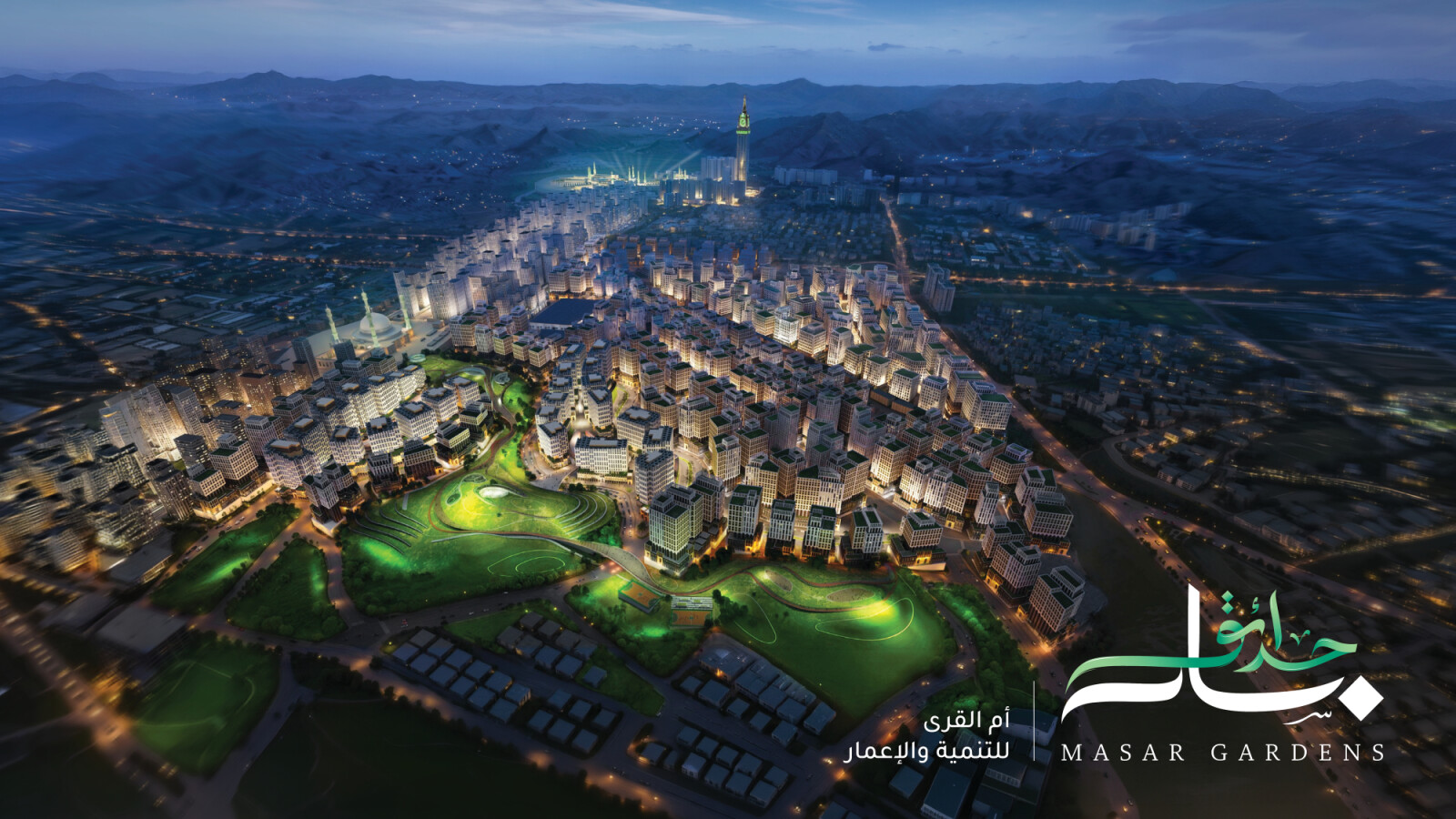
Masar Gardens
The company, which owns, develops, and operates Masar Destination and has been listed on the Saudi Exchange (Tadawul) since completing its institutional transformation over the previous strategy cycle, said on Tuesday that its 2026–2030 plan marks a transition from managing a single flagship project to operating what it described as a "multi-destination urban development platform" across Makkah, Madinah, and Jeddah.
The new site — awarded to a consortium of Umm Al Qura, Makkah Construction and Development Company, and Rajhi United Real Estate Company — will be developed under the name Masar Gardens and encompass the Hindawiya West and Hindawiya South plots. The choice of branding is deliberate: by extending the Masar name to an adjacent precinct rather than launching a standalone product, the company is signaling that its expansion logic begins with deepening what already exists before it spreads outward.
KEY NUMBERS
>60% compound annual revenue growth, 2021–2026 >45% compound annual net profit growth
SAR 2bn+ operating cash flow, most recent fiscal year
SAR 40bn development investment attracted to Masar Destination
30+ strategic partnerships forged
SAR 50bn+ targeted new development pipeline, 2026–2030
SAR 3–5bn incremental capital to be deployed over the strategy period
The question that the 2026–2030 strategy must answer is whether a management team that built one destination on time and on budget can simultaneously direct a portfolio of projects across three cities while maintaining the operational discipline that generated those returns. It is, by any measure, a more complex undertaking — and the company's chosen answer is structural.
'The achievements of the past years have provided us with the confidence, expertise, and readiness to advance toward managing a fully integrated portfolio of urban destinations.' — Yasser Abdulaziz Abuateek, Chief Executive
The strategy adopts what the company terms a "flexible operating model," enabling it to function either as master developer or as partner and development manager depending on project-specific investment criteria. This architecture — in which Umm Al Qura deploys expertise and brand as much as balance-sheet capital — is central to understanding why it believes it can manage a SAR 50 billion-plus development portfolio while committing only SAR 3–5 billion of incremental capital over the strategy period. The mathematics only work if co-investors and consortium partners carry a substantial share of project-level financing, which places premium value on the company's governance framework, track record, and institutional relationships. Yasser Abdulaziz Abuateek, chief executive, framed the moment in terms of sequencing rather than scale alone. "The launch of our new strategy represents a pivotal turning point," he said, "as we move from a phase of capability building to one of considered expansion." The word "considered" appeared to be doing some deliberate work: a reminder, perhaps, that the strategy is explicitly not designed to maximize the number of projects, but to concentrate development activity within a geographically coherent and operationally integrated footprint.
That geographic logic — a tight focus on the western region — is one of the strategy's more analytically interesting features. Makkah, Madinah, and Jeddah together constitute a demand catchment unlike any other in the Kingdom: structurally underpinned by the Hajj and Umrah pilgrimage economy, the subject of sustained Vision 2030-aligned public investment, and the locus of the country's most significant cultural and commercial infrastructure. For a company whose institutional identity is inseparable from Makkah, the western region is not a constraint but a concentration of competitive advantage.
The company also reaffirmed that Masar Destination would remain the "central cornerstone" of its portfolio, with development of approved extensions continuing in parallel with new initiatives. For investors, that commitment matters: it confirms that the platform expansion is additive rather than a dilution of the asset that underpins the company's listed value, and that management is not proposing to harvest the flagship in order to fund growth elsewhere.
The strategy's formal alignment with Vision 2030 objectives — which the company cited explicitly in connection with enhancing quality of life, stimulating investment, and strengthening economic integration — positions Umm Al Qura as a natural counterparty for government-adjacent development mandates across its target cities. In a market where the allocation of major urban development sites is closely connected to institutional credibility and track record, that positioning carries tangible commercial value.
What the strategy does not offer, at least in its public articulation, is a timeline for when the new destinations beyond Masar Gardens will be identified, announced, or initiated. The company's language — "planned and selective expansion" in the service of "sustainable value" — suggests a deliberate pace that prioritizes return quality over speed of deployment. Whether that restraint holds as opportunities emerge will be among the more closely watched questions in Saudi real estate development over the coming years.
Hashtag: #Development #SaudiArabia
https://www.ummalqura.com.sa/en
The issuer is solely responsible for the content of this announcement.