Segway ZT3 Pro All-Terrain Electric Scooter
- Written by: The Times
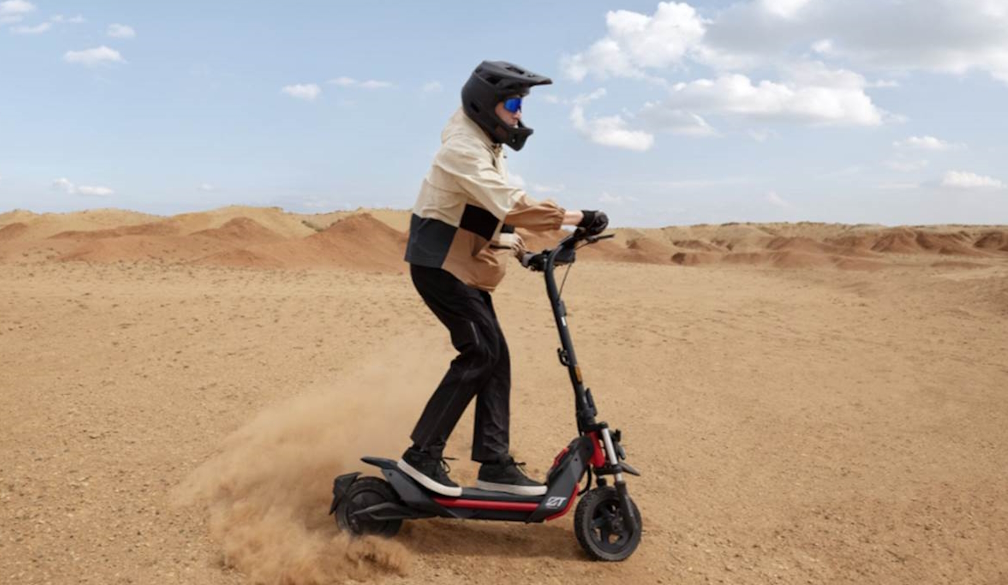
Segway-Ninebot, the global leader in the micromobility transportation solutions and robotic service industries is announcing its brand-new ZT series of electric scooters with the ZT3 Pro in Australia. The Segway ZT3 Pro combines cutting-edge smart technology with outstanding all-terrain performance and signature Segway style. Designed for both city explorations and off-road adventures, the ZT3 effortlessly overcomes any obstacles between riders and their destination, instilling a sense of confidence. Designed for both city explorations and off-road adventures, the ZT3 effortlessly overcomes any obstacles between riders and their destination, instilling a sense of confidence.
Gino Casha, Head of Segway-Ninebot Australia, shared his enthusiasm for the ZT3 Pro highlighting , “The ZT3 Pro represents a significant step forward in our commitment to innovation and user experience. We believe this scooter will not only meet the demands of urban commuters but also cater to adventure enthusiasts looking for an eKickScooter that excels in all-terrains.”
Ride Fearlessly with More Power and More Range
The ZT3 Pro features a brand-new design concept built around a robust full-suspension frame. A telescopic front fork and rear swingarm coil-suspension smooth out rough terrain. Its capability is further bolstered by 152 millimeters of ground clearance and 11-inch all-terrain tubeless tyres. Powered by a 1600-watt high-torque brushless motor, the ZT3 Pro is capable of speeds up to 25 kilometers per hour and a climbing slope of 25 percent. Thanks to Segway’s RideyLong™ range optimization technology, it achieves up to an impressive 70 kilometers on a single charge in Eco Mode and 50 kilometers in Sport Mode.
Stay Secure, Ride Confidently
With safety and stability as key considerations in the design of the ZT3 Pro, Segway’s new patented Segride™ technology offers an innovative approach to scooter geometry and ergonomics, ensuring a comfortable and safe ride even at higher speeds. The Segride™ Stability Enhancement System, working together with the Traction Control System (TCS) offers enhanced control and grip, reducing handlebar shake and wheel slip to ensure a secure ride even on slippery surfaces. The 3-inch hexagonal LCD display provides real-time status updates including speed, charge, mode and more, while remaining clearly visible even in direct sunlight. And the ZT3 Pro’s full lighting system illuminates the rider’s way when the sun sets with a 4-watt front light, front and rear indicators and a signature “X” symbol daytime running light.
Smart Control Anytime: It's a Gateway to Great Adventures
The ZT3 Pro seamlessly blends refinement and ruggedness, offering all-terrain performance alongside advanced smart features, like an AirLock System for autonomous locking and unlocking when paired with the Segway-Ninebot app, a first in the eKickScooter industry. BMS 2.0—an upgraded battery management system—offers three new layers of protection, and the Flash Charge Technology allows for a full charge in only four hours. One of the key features of the BMS 2.0 is that customers receive notifications if the battery overheats, automatically shutting down the scooter to ensure rider safety. Additionally, integration with Apple’s Find My simplifies tracking, enabling riders to locate their Segway eKickScooter effortlessly at any time. In the unfortunate event of theft, this feature becomes invaluable, allowing users to quickly pinpoint the scooter’s location and report it to authorities, increasing the chances of recovery. Riders can feel more secure knowing they have a reliable tool at their disposal to help protect their investment.
Built to Last: Durability and Versatility to Go the Extra Miles in Style
The ZT3 Pro has undergone extensive quality tests, including 5,000 kilometers of human piloted road tests, over 180 quality checks and a 700-kilogram static pressure limitation test, ensuring the integrity of its high-strength steel-tube frame. It has an IPX5 waterproof body and is compatible with various accessories (to be sold separately) to meet the diverse needs of riders.
ZT3 Pro Features & Specs:
- Front and rear suspension
- 152mm ground clearance
- 11” tubeless AT tires
- 1600w motor
- RideyLong™ range optimisation
- Range: 70km (Eco) / 50km (Sport)
- Max Speed: 25km/h
- Max Slope Angle: 25%
- 3” LCD Display
- Segride™ Stability Enhancement System
- TCS (traction control system)
- BMS 2.0 (battery management system)
- Flash Charge (4-hr charge time)
- AirLock (app required)
- Apple Find My compatible
- IPX5
- Weight: 29.7kg
- Payload: 120 kg
Pricing and Availability
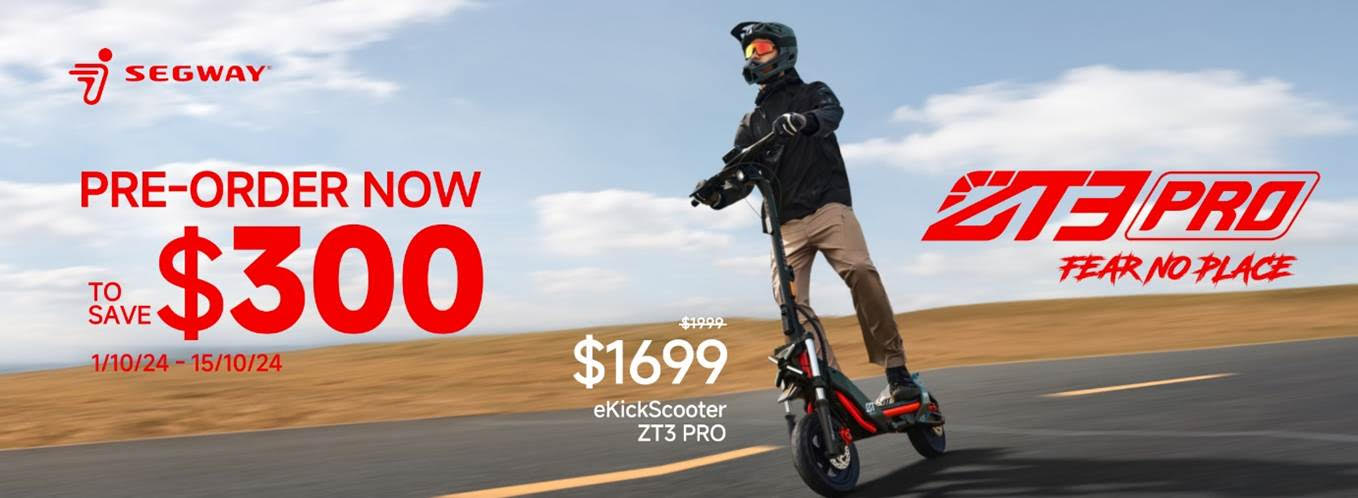
The Segway ZT3 Pro eKickScooter is now available at an introductory pre-order price of $1699 from 1 October – 15 October 2024 (RRP of $1,999). For more information, specifications and pricing details, visit https://au.segway.com/product/kickscooter-zt3pro.html.
The ZT3 Pro is available to purchase on Segway-Ninebot’s online store and through the following retailers:
- Scooter Hut
- 99 Bikes
- Harvey Norman
- JB Hi-Fi
- Bing Lee
- Segway – Ninebot, Parramatta
- Segway- Ninebot, Robina
- Segway-Ninebot, Townsville
- Urban Wheelz
- iScoot
- PEDL
About Segway-Ninebot
With the mission of “simplifying the movement of people and things while making life more convenient and interesting,” the global tech company Segway-Ninebot has been deeply involved in the field of service robots and intelligent short-term transportation. With world-renowned intellectual property, Segway-Ninebot continuously develops and improves its products to respond to new micro-mobility solutions in big cities around the globe. For more information, please visit au.segway.com.
Instagram: @Segwayninebotaus
Facebook: Segway Ninebot Australia
YouTube: @Segway_Ninebot_Australia
TikTok: @segwayninebotaus