David Littleproud Perth press conference
- Written by: The Times
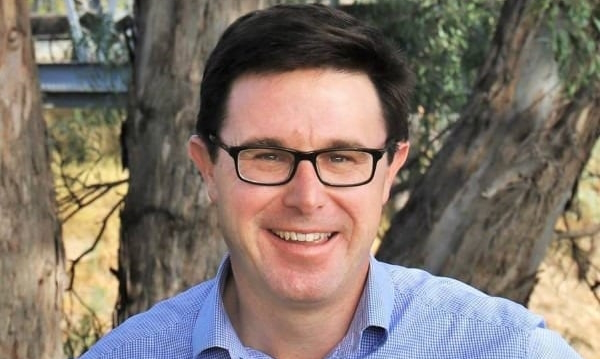
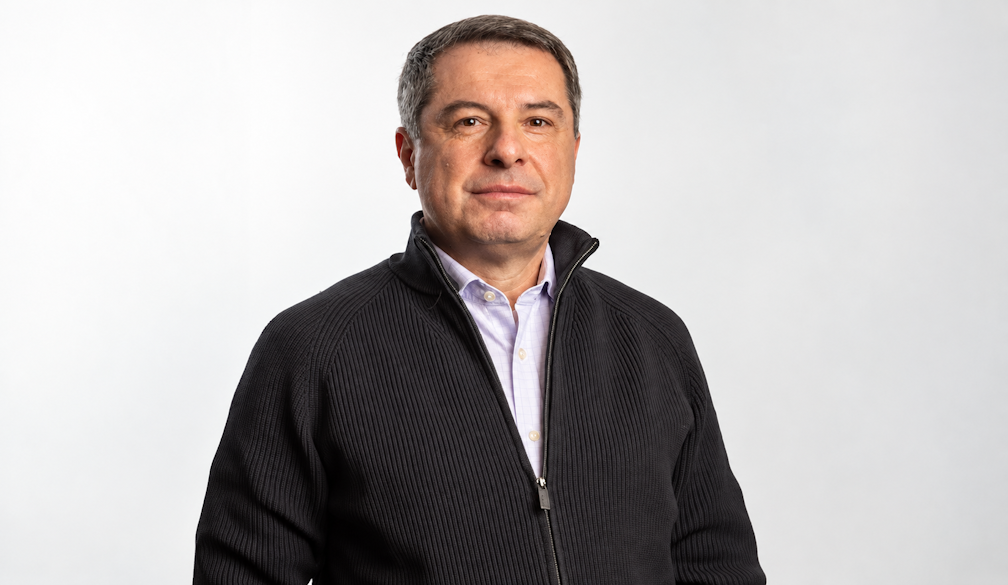
Well, I'm delighted and excited to announce that Mia Davies will be The National Party's candidate in the seat of Bullwinkel. I want to be here today as the Leader of the Federal National Party to show respect and show the people of Western Australia and the people of Bullwinkel how serious The Nationals take this challenge. This is notionally a Labor seat, and it still is. The Coalition's only chance to win this seat is Mia Davies. We've done extensive polling here and understand the opportunity, but the challenge is ahead of us.
We need somebody that will have the courage of their conviction to stand up, for not just the people of Bullwinkel, but also the people of Western Australia. Western Australians need some insurance in Canberra, against the big two parties and to have a national representative sent there. It takes some common sense, to be able to back the Western Australian community, against an Albanese government that has torn apart, not just the live sheep industry, but is forcing up Australians and Western Australians cost-of-living. It's important we have somebody that's there to hold them to account, and Mia Davies has that experience, that passion of representing communities in Western Australia, bringing that common sense to Canberra. We'll be focusing in on what's important to people, not just the live sheep industry.
The Nationals made it very clear. The first action I took as Leader of The National Party was to make it very clear when some of the Liberal party were making comments that they still supported the phase out of the live sheep, I made it very clear, there will be no Coalition The National Party will be part of unless there is a live sheep industry out of Western Australia. But we'll be focusing on telecommunications issues in Bullwinkel, in the infrastructure, getting some proper roads built, just getting back to the basics, but also trying to keep them healthy and safe. And we will be making sure, as a National Party, one of the key planks that we'll be taking in the next election is around health, making sure that Australians, no matter their postcode, get the health care they deserve.
Those are the priorities that a Nationals candidate will bring, and we hope that the people in Bullwinkel, see this as an opportunity that somebody like Mia, Mia’s calibre, with strength of character that has been prepared to stand up for Western Australians here, can come to Canberra and back Western Australians to get their fair share. So Mia, I'm proud to call Mia a mate. We've known each other for a long time. I'm excited that we're going to be over here a lot with Mia.
I think this is a must win seat for us. If we don't win this seat, then we get another three years of Anthony Albanese. And the only pathway for the Coalition to win is with Mia Davies. Well done, mate.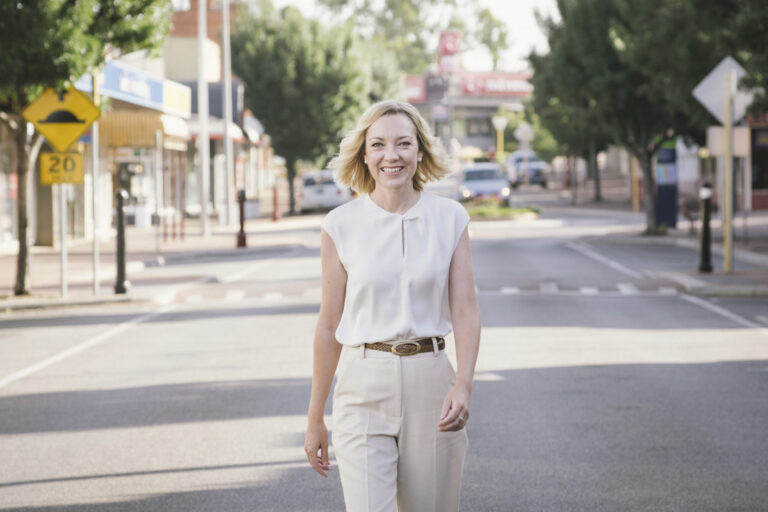
MIA DAVIES
Thanks, David. Thank you. Very humbled and privileged to have been preselected by The National Party's state council this morning, and to now be ready to take up the fight in Bullwinkel. It is a fight that is so very important, and no less so because three years ago, Prime Minister Albanese was handed the keys to the lodge by Western Australians. And since then, we've had nothing but panic.
We've seen policy initiatives and attacks on industry that are the lifeblood and underpinning of our state and national economy. And I can't sit idly by and watch that happen when there's an opportunity to take my experience, and our National Party Western Australia common sense approach to Canberra, to be a part of making sure we get a better future for Western Australians. I can't wait to start earning the trust of the people of Bullwinkel. Part of the electorate knows me very well, others not so much. I'll be on the ground making sure that those communities understand that I have the same values and passion for what they want to achieve, whether it's cost-of-living, looking at childcare, making sure they've got access to aged care, affordable GPs, making sure they can make their budgets meet, all fighting for the infrastructure that they deserve.
Bushfire readiness, particularly when you're talking about the Perth Hills, making sure we've got telecommunications infrastructure. There is a wide number of things that we can be talking about. But first of all, I'm going to go and introduce myself to those that may not know me as well, make sure they understand that I'm ready for the fight.
JOURNALIST
Were there any other candidates?
MIA DAVIES
No. It was just me, and I was preselected this morning by the state council.
JOURNALIST
If I can just hone in on sheep for a minute just to get it clear. I think Peter Dutton has actually said they would reverse the ban on the live sheep export, would that be your number one priority, you know, once you got to Canberra?
MIA DAVIES
With The National Party, it goes without saying that that industry has our full support and always has. That's not the case with other political parties. So The National Party will do everything it can to support that industry, and we will fight until the very end.
JOURNALIST
So to overturn the ban?
MIA DAVIES
Absolutely. There are other issues in the electorate that will also be incredibly important, and I've mentioned some of them. Access to aged care, access to childcare. When we talk about cost-of-living, making sure that communities who have been impacted by investment decisions and funding decisions by this federal government, driving up inflation. That needs to be addressed.
We need to make sure that our brand of West Australian politics, which is common sense, put community first, is sitting with David and his team and making decisions for the development of Western Australia.
JOURNALIST
Would you be the first, I think since Tony Crook in O’Connor wasn’t it in 10/13 from memory? So how important for WA to have a voice in the House of Reps?
MIA DAVIES
My message to the votes to the voters in Bullwinkel is that if you are sick of political parties the put politics and ideology ahead of community and common sense, then this time you've got a chance to vote for myself and The National Party. That's what we do. We put communities and people and good policy before politics and ideology. And they've got the opportunity for the first time to put number 1 next to The Nationals. And I'm very pleased that I'll be given the opportunity as their candidate to take the fight up on their behalf.
JOURNALIST
The impression that was left by Tony Crook is that he couldn’t handle the pressure. Will you be able to handle the pressure?
MIA DAVIES
I've been a Member of Parliament for 16 years. I've been the Leader of the Opposition, the Leader of The National Party. I've been a Minister of the Crown. I've spent significant time representing an electorate, which is over 100,000 square kilometres in 27 communities with many more towns. I don't think there's one person in Parliament on either side of the aisle that would question my work ethic or capability. I am more than qualified and will hit the ground running and I'm ready for the fight, and that's what's needed at this election.
It is high stakes. This Albanese government has attacked the industries and the businesses and the communities of Western Australia and we need to make sure they don’t get another three years to do the same.
JOURNALIST
With Holly Ludeman and her preselection, there is a fear that maybe Keep the Sheep funds will go to a political candidate as opposed to The Nationals candidate, which will be yourself. What is the danger there in terms of financial support?
MIA DAVIES
Keep the Sheep campaign is a community organisation. Quite frankly, I'm focused on making sure that we've got someone in Canberra that can fight on behalf of that very important industry, rather than fundraising or worrying about political donations. My focus is on supporting those hardworking people that have had their livelihoods ripped out from underneath them by the Albanese Government.
JOURNALIST
Just on that point now, I think David made the point that it's a kind of a must win seat as is probably most WA seats for the Coalition to be back in Government. How kind of, is it gloves off when it comes to yourselves and the Liberals in this fight? You're obviously, you'll be part of a Coalition Government if you win, but is your gloves off no matter who the candidate is?
MIA DAVIES
My focus will be on the people and the communities of Bullwinkel. I'm going to do this the same way I've always done it, whether it's a safe National Party seat, which I've managed to serve, for 16 years or whether it's a marginal Labor seat. I'm going to get out there, understand the issues, talk to the communities face to face, and make sure they know that their values, their aspirations are shared by myself and our Party, and that we will always put communities and people before politics and ideology. That is the history of The National Party, and for the first time, they get to put a 1 next to The Nationals at this next election, not only for Bullwinkel but importantly for Western Australia as a whole.
JOURNALIST
You're now officially the candidate, but you've announced your intention earlier. What's the reception been like since you changed your mind to step back into politics?
MIA DAVIES
Uh, very positive. Very positive and quite overwhelming, in fact. And so, that’s buoyed me greatly in my decision making, but I know what I'm getting myself into. It's always a hard task, but I'm not afraid of hard work, never have been, and I'm really looking forward to this new challenge, not only personally, but also for our party to make sure that people understand that The Nationals are someone they can trust in Canberra. And we need them now more than ever.
JOURNALIST
Now let's have a look at the mechanics of it. You’re a WA still MP still, and now a federal candidate for Bullwinkel. Can you explain the mechanics of it?
MIA DAVIES
I’ve been preselected as the candidate for Bullwinkel and I will remain as the Member for Central Wheatbelt. We’ve got eight weeks of Parliament sitting weeks left. As I’ve said previously, I've never been afraid of hard work. I've juggled numerous roles previously. The people of Central Wheatbelt can be assured that my focus is still very much on providing them with a voice in the Parliament. But we have also preselected a very strong candidate for the next state election in Lachlan Hunter who will work alongside me. We will be doing that until Prime Minister Albanese chooses to call the election.
JOURNALIST
What was the tipping point to go into politics at a federal level?
MIA DAVIES
The creation of the new electorate was undoubtedly part of it. It was an opportunity that didn't exist when I made the decision to step away from state politics. The other part of it is the attack by this Labor Federal Government on our state. We've seen nature positive laws. We've seen industrial relations. We've seen attacks on our live sheep industry. This is a state that delivered the Labor Party the keys to the lodge, and yet we are the state that has borne the brunt of so much of what this government has done. I can't sit idly by when you've got experience and capability and, not experience and capability and not weighed into the fight. And in my family, there's a saying, if you think you can make a difference, you should. And so from my perspective, it became a very easy decision to step up and say I want to join David and his team federally and take up that fight for Western Australia.
JOURNALIST
Because I think Northam, that's your hometown. Are you still in Northam or no?
MIA DAVIES
Absolutely. I am living in Northam and intend to continue living in Northam. I very proudly have lived in my electorate for the entire time I've been a Member for Central Wheatbelt. I thoroughly enjoyed representing that part of the state and there is part of the new electorate that will be in that. But there are new areas as well. And it's not going be a walk in the park.
JOURNALIST
Which is the new area that you will reach out to?
MIA DAVIES
So we've got, in the new proposed seat of Bullwinkel the Perth Hills. So we're talking about the Shires of Mundaring, Kalamunda, and you go down into the foothills. There's parts of Armadale, Kelmscott and Forrestfield. So they are not areas that The National Party has traditionally held. I'm very pleased to say that we've got a state candidate for Kalamunda, and we've got Upper House candidates that are contesting a whole of state electorate.
And we'll be working together as a state and federal team to make sure that people understand that they can put number 1 next to The Nationals at the state and federal election.
JOURNALIST
And just the mechanics again. You remain the state MP until the writs are issued or until there's a result?
MIA DAVIES
Until the writs are issue, I will resign from my position when the election is called.
JOURNALIST
If the election is at the end of this year and the state election is next year, could you still be a State MP if you don’t win?
MIA DAVIES
I will resign from my position and at that point, I am no longer the Member for Central Wheatbelt. And that would be then up to the state government as to when they chose to call a byelection to fill that position or whether they allowed it to flow through.
JOURNALIST
Just on The Nationals resourcing. The National Party under Shane Love has committed to a lot of resourcing. What about the federal election?
DAVID LITTLEPROUD
It will be up to the state division, we allow the state division to determine that. Obviously they will seek candidates in other electorates. Obviously they will determine whether they are of the standard that we are prepared to support. We will work with the state division. This is one seat that I can tell you from a federal perspective, is one that the Federal National team will be focusing on.
There are only a couple seats across the country that The Nationals will be focusing on winning. That’s Calare and that's Bullwinkel. So you're going to see a lot of National Party members showing the respect to the people of Western Australia, people of Bullwinkel.
That's why I flew across to be here, for Mia’s preselection today. I want to show the people of Bullwinkel that east coast politicians, there are some of us that actually do care about this in Australia. Then we're going to be here every step of the way. We're going to bring some common sense back to Canberra.
JOURNALIST
Do you believe even against the Liberal candidate, you'll be the best person to deliver as far as you can see? Is that true?
DAVID LITTLEPROUD
We've polled the seat of Bullwinkel in our analysis of those numbers, it's very clear, very clear, the only opportunity for the Coalition to win this seat off Labor, a notional Labor seat, is Mia Davies.
JOURNALIST
Will there be National candidates elsewhere?
DAVID LITTLEPROUD
Again, that'll be up to the state division and where the candidates come forward.
And as I understand, those nominations have been sorted.
JOURNALIST
A couple of days ago you were interrupted by Senator Hanson Young. What is The Nationals position on people coming from Gaza, should there be a ban?
DAVID LITTLEPROUD
Let me just make this clear. The National Party and the Liberal Party still welcome immigrants of Islamic faith in this country. All we are saying is that when you are bringing people from a war zone, there should be increased measures in terms of assessment, their ability to contribute to this country. That's all we've asked for. And for the Greens and the Teals to seek some sort of opportunity to paint Peter Dutton as the bogeyman is just nonsense.
The reality is our primary responsibility is to keep Australians safe, and this is a very fluid situation. The government, under their own admission, have not kept protocols and processes that we had in place in making the assessments of who come to this country. And when you overlay that with the domestic situation here in Australia, where we have communities tearing themselves apart, we need to be extra careful about who we bring into this country. That's nothing outrageous that Peter Dutton and the Coalition have suggested. It's prudent. It's sensible.
And this is all about Anthony Albanese, the Greens and the Teals trying to assassinate Peter Dutton's character. I just say the leadership here has been from the Coalition, and it's Anthony Albanese that needs to show the leadership that he's keeping Australians safe and he's doing everything he should be to keep him safe.
JOURNALIST
Just to clarify, Peter Dutton talked about a blanket, no one should be allowed from Gaza. Right?
DAVID LITTLEPROUD
While this conflict is on?
JOURNALIST
While this conflict is on. Wouldn’t it be just as brutal..
DAVID LITTLEPROUD
Sorry, that’s not correct. He has outlined three measures that need to be put in place that will give us comfort. That is either biometric, a face-to-face interview of these people when they come in. They took away the temporary protection visas, which you now see there is a necessity for. We've got them coming in on holiday visas.
So if the government wanted to work with us instead of digging on things, we could find a solution. But let me tell you that Peter Dutton and the Coalition are prepared for more than what Palestine's own neighbours have agreed. Egypt, Jordan will not take any refugees.
JOURNALIST
So you're happy to take them as long as the measures are improved? That’s what you’re saying?
DAVID LITTLEPROUD
And that's why this whole situation has been escalated by those that are trying to take political advantage of the situation to destroy Peter Dutton's character. They're trying to paint him as a racist, and this abhorrent, absolutely abhorrent. The leadership that we're showing is one of common sense. It was a solution to actually continue to bring people into this country safely and to be able to ensure that we all enjoy the life that we have now.
How can that be racist? How can that? And I just think that this is all show from the Teals and the Greens. I think we want those people to come here to enjoy the life that we have, but we've got to make sure we've got to make a tough decision sometimes, and it's a tough decision. You’ve got to actually do the hard work to make sure we will protect you. That's what we're saying.
JOURNALIST
David, a group of Neo Nazis have crashed a refugee rally in Melbourne. Organisers say it was sparked by Peter Dutton’s visa comments. What is your reaction to the rally and the claim it has been sparked by Peter Dutton?
DAVID LITTLEPROUD
Well, it's exactly why we need to make sure that the people that come to this country have the values we do. And when we've seen 7,000 applications rejected from that area, there is a good reason that, obviously, heightened assessments need to be taking place. This is abhorrent behaviour. And as I said earlier, the reality is when you're seeing these types of instances, you need to make sure the government needs to be able to give the Australian people confidence that the people that we are bringing into this country won’t bringing the hate that they hold from other parts of the world when they come to this country.
We condemn that sort of behaviour. But that's why it's important we show that leadership that, again, this is just political opportunity by those that want to try and take Peter Dutton's suggestion, a suggestion that I don't think anyone could challenge. And the reality is we'll continue to welcome immigrants of Islamic faith in this country. Just at the moment, there are circumstances coming out of Palestine that warrant increased and further measures to protect our nation's safety and security.
JOURNALIST
Just a couple of cost-of-living questions for Canberra. A number of Australians struggle to afford power bills, access hardship programs are increasing. Government rebates are starting to help, but is that enough or, you know, is that a good fix?
DAVID LITTLEPROUD
Well, government rebates are papering over the cracks. The ideology isn’t meeting the practical reality.
JOURNALIST
So power, cost of living?
DAVID LITTLEPROUD
Well this is the lived experience that Australians are feeling, where they can't afford their energy bill because the government's ideology isn't fixing it, what is the fundamentals of how you provide reliable, affordable energy.
An all-renewables approach isn't working, and they demonized gas for over two years, wouldn't allow them to continue to develop more gas fields to increase supply. And so we now have this situation that Chris Bowen made, where over a 100,000 Australians just from two energy providers are on hardship provisions.
Now that's only two energy providers. So you've got to understand that people's cost of living is going up because of the ideology of this government. You got to make the hard decisions, and you got to fix the fundamentals. And it's not just ourselves. It's business.
You won't have the manufacturing sector in this country if you don't have baseload reliable power. There's no country of the industrial size of Australia, anywhere in the world, that has an all-renewables approach. There's a place for renewables. There's a place for gas. A lot more gas is going to be needed.
We'll need a lot more gas in our transition from somewhere, our coal fired power stations to nuclear plants, but we'll do that in a transition. We've got to 2050. We don't need to do all this by 2030. We can do this in an Australian way that takes the pressure off households and gives them some hope.
JOURNALIST
So you support a nuclear reactor?
DAVID LITTLEPROUD
I'm open to a technology agnostic approach. We've said that some of our coal fired power stations will transition to nuclear plants. We'll need a lot more gas with carbon capture storage and we will need renewables. But let me say here in Western Australia, you have a more unique energy grid that I think, some of your forefathers made some very smart decisions around gas in particular, that I think Western Australia should be proud of.
I know as a Queenslander, I look over here with some envy about those decisions that were made some years ago.
JOURNALIST
What is the Opposition's plan to help bring down household costs for the future?
DAVID LITTLEPROUD
Well, firstly, on energy, we're going to have to increase gas supply quickly. Coal fired power stations will need to continue to remain open to give that base load, and that's about making sure that we just can't continue to give subsidies because ultimately, Australian taxpayers money loses out. You don’t solve the nation's problems by spending the Australian taxpayers' money. We need to solve them by fixing the front of them.
So baseload power will be at the heart of what we're trying to do. We're not going to try and do it by 2030. We've got time to do this. We'll be making sure that that then feeds into your food bills. If you look at the increase in food, it's been over 11 per cent since Anthony Albanese, and that's because your energy bills have gone up 22 per cent.
We have been the ones that have the courage, The National Party, to take on the big supermarkets to make sure there's transparency and fairness from farm gate to your plate. We'll be bringing forward divestiture powers in a bill very soon, to demonstrate that.
So we'll be fixing the fundamentals, and that's not spending more money. That's just putting some common sense in place, that pulls the policy levers and doesn’t cost you anything by really long-term savings. And we can get gas into the system really quickly.
It's the quickest way to increase supply, and I'm just a bloke from Western Queensland with year 12 education. Let me tell you Chinchilla State High in grade eight, they told me about demand and supply, about concentration risk.
And all that Chris Bowen has done is reduce the supply of gas into our system, which is driving up prices because they don't have the renewables to be able to take it over. And we've got concentration. We don’t have to put all our energy eggs in one basket.
We are a nation that has sovereignty of all its resources, why would we go down the all renewables approach? Why wouldn’t we look at options, that actually draws on a mix of technologies. That's the commonsense solution.
But in the short term, we’ve got to get some holes drilled real quick, to bring down people's power bills. That's the quickest way that we can do that. Thanks guys.