Google AI
The Times Australia

Times Media Advertising

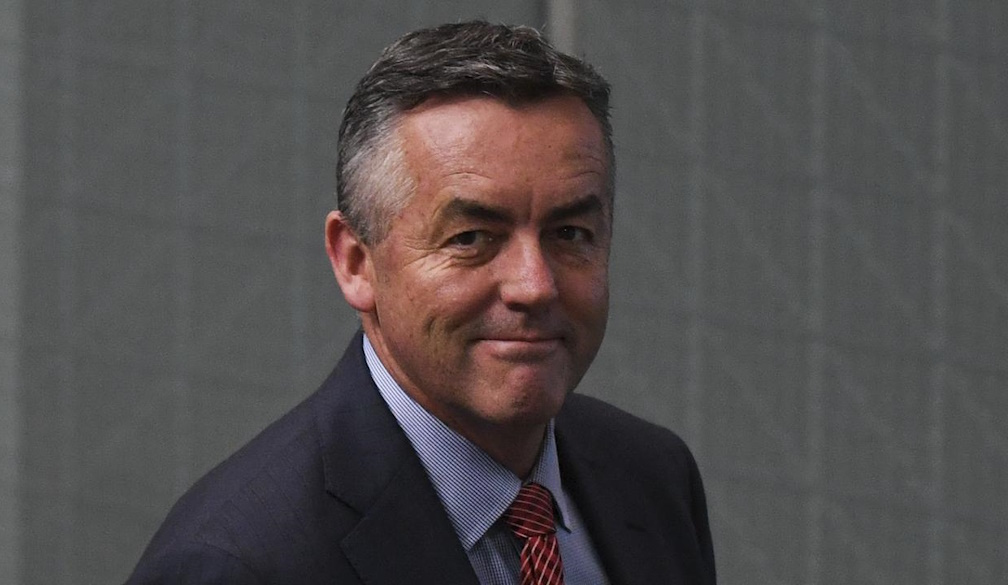
Leader of The Nationals David Littleproud on Regional Sky News

  • Written by: The Times

JAYNIE SEAL

The Queensland Government has announced a new suppression strategy to stop the spread of fire ants into New South Wales. A containment zone is being created in south east Queensland with a 10-kilometre wide belt coated with treatment, three times a year. The strategy aims to suppress and eradicate fire ants by baiting and using dogs to detect future outbreaks. So joining me live is Nationals leader David Littleproud in WA. Thanks for joining us. Nice and early. Let's talk more on the fire ants. How close are they to New South Wales?

DAVID LITTLEPROUD

Yeah, Jaynie, look, good morning, they're less than five kilometres away from the last reports I've seen down near the Gold Coast border there. And this is frightening considering the Australian taxpayer has spent over $500 million in trying to contain this. And in fact it's been an abject failure of the Queensland Government that we've got to this position. In fact, we were very close to a very narrow and small containment area and unfortunately Mark Furner, the Agriculture Minister in Queensland, has unfortunately been unable to do his job despite every state and territory contributing to that $500 million. There was a review back in two years ago that asked him to step up and we as a Federal Government put more money in. Sadly, this Federal Government has taken away what we were putting in, $90 million last year and reduced that to $60 million. So we still have serious concerns because once this breaks containment lines, gets to New South Wales, then it's all open. And what we're also concerned is with now reports that it's up above on the Great Dividing Range up in Toowoomba. Now what that concern should raise is if it gets into the Murray-Darling river system, it will expedite not just through the rest of Queensland but right down through New South Wales, into Victoria, into South Australia. So this is a real critical time and in fact when they're talking about the need for about $200 million to $300 million a year in financial support to keep this contained and to eradicate, I think the Queensland Government and the Federal Government need to rethink. I welcome the new strategy, but I don't know whether it's going to be enough to contain what will be one of the biggest biosecurity risks to our country we've seen in a long time.

JAYNIE SEAL

David let's turn to a different topic now. Live sheep exports and heritage laws were the big topics at that 'Let farmers keep farming' meeting that you spoke at, tell us what was the response?

DAVID LITTLEPROUD

Yeah. Look, over 600 farmers at Katanning in Western Australia whose livelihoods have had a line drawn through them by the Albanese government in an arbitrary way. We had an issue with live sheep in 2018 and the industry reformed to one that is now world leading, one that works on animal welfare rather than mortality. We actually measure the pants per minute of a sheep on a boat. The air that flows through that boat to the particular boat, that it's on the weight of the sheep and even to the millimetre, the length of wool on a sheep, so that we get the right stocking density on these boats. And what the Albanese government, for some ideological views just said, we're going to shut this down despite the science, showing that if we did, all we'd be doing is exporting our animal welfare to countries that don't do what we're doing. In fact they don't do any of that airflow. They simply just put as many sheep as they possibly can on a boat and they send it to the Middle East and they simply get paid for how many are left. That is a perverse animal welfare outcome. And what will also happen is that the processing sector in the Middle East would not have to use Australian standards. So we've seen some of the pictures that where Australian standards aren't used in the slaughtering of these animals and that would happen if we actually vacated the field. Australia is cutting and running and to think that we can actually process them all here and do it all here is folly. It is a cultural issue. They want to have these sheep and want to see them being slaughtered in, to their cultural standard, to their religious standard. And so Australia is simply going to vacate the field all for an ideology of trying to think they can win a few votes in capital cities. This is an abject failure by the Albanese Government and then for Western Australian farmers over here they've been hit with a double whammy, these cultural heritage laws. They effectively mean that if a farmer goes to desilt their dam and he lifts out more than 20k of dirt out of that dam to desilt it, which is nothing, that's half a bucket of a backhoe, you effectively could be in breach of the law unless you get in and get a cultural survey. Those cultural surveys are about $160 to $190 an hour. And when you're talking vast areas and vast distances, particularly like in Western Australia, that's thousands upon tens of thousands of dollars just to desilt a dam or to put a new fence up, because if you dig below 50cm, you have to get a cultural heritage survey. This is insanity. Pastoralists and Indigenous Australians have worked hand in hand and walked hand in hand for generations and all this has done is actually create a big divide that this Western Australian government has created. And sadly Tanya Plibersek has legislation of similar effect ready to be introduced into Parliament for a National Cultural Heritage Act that will come into effect sometime after the Voice referendum.

JAYNIE SEAL

Yes, and tell us more about the Heritage Act in WA and what the situation is there?

DAVID LITTLEPROUD

Well, this is just and I've got to say, this just doesn't go to farmers. This actually goes into the into Perth as well because any property that is more than 1500-metre square, so that's a quarter acre residential block as well. It comes under the same legislation. So even here in urban Perth there are real concerns by people in Perth about the far reaching impacts of this Bill on them and their amenity to be able to do what anyone would think they're able to do on their freehold land. And this is where the Western Australian Government has overreached, not just in urban areas but also in the pastoral areas. And what that means is that it's going to stifle investment. It's going to mean that farmers are going to start to understand that it's going to cost them more to be able to do business, to do their normal business, to be able to produce your food and fibre, and that means you're going to pay more and it's unnecessary. There is no need for this. It's an overreach. And if Tanya Plibersek also brings this legislation in federally, it means it's not confined just to Western Australia. It means we're going to have these laws nationally. And that means that in every city, in every town and every farm across this country, you're going to have far reaching impacts where we're creating an industry where you're going to have to get a cultural survey. Any time you disturb the topsoil, that's insanity. Australia has been able to move forward with Indigenous Australians without that sort of overreach and this will only divide our nation. And we're just saying to not only the Western Australian Government but to the Anthony Albanese government that they stop and they pause and they think sensibly about what they're trying to do here. We get there was a mistake with Rio Tinto, but Rio Tinto are the ones that should pay the bill for that, big business should pay the bill for that, not small farmers, not households, for what Rio Tinto did. And this is a reaction to what was an appalling act by Rio Tinto. But we shouldn't all have to pay the bill for that.

JAYNIE SEAL

And let's turn our attention to the fires, David. Across the northern parts of the continent, we've been continuing to see and read about wildfires. The latest in Rhodes fires have been so intense, more than 20,000 people have been evacuated. It's looking like it's going to be the hottest week of summer for parts of the US. We have a high chance of having an El Nino across Australia, meaning hotter and drier conditions, as you know, across eastern parts of the country. How are we preparing for the fire season?

DAVID LITTLEPROUD

Yeah, and I think it's important we continue to understand that we need to do more and particularly around cool burning in our cooler months, now is the time. And I know in Brisbane last week there was some cool burning by emergency services personnel to the west of Brisbane to make sure that we didn't have a repeat of the Black Summer event and I was the Emergency Services Minister then. My heart goes out to those people, particularly in Europe and the US now, and seeing those tragic pictures of that plane crash, if you cast your mind back, we had three Americans lose their lives here in the Black Summer in an aeroplane crash as well. So they are putting their lives on the line for us. And I think it's important we understand we all have a role. All levels of government have a role to prepare now, ready for the season, but so too do you need to make sure that you've cleaned away the debris, you've taken the precautionary steps and you have a plan to enact if a bushfire comes. So it's important that state and federal governments work very swiftly and collectively together to start to reduce the fuel loads. Now we have come out of some good seasons of rain and that means the fuel loads are a lot higher. So it's important those cool burns take place now and just for those that live in capital cities, just appreciate if you have to put up with a little bit of smoke from these cool burns please just put up with it.

Times Magazine

Victorian Drivers To Receive 20% Rego Rebate From June 1 In Major Cost-Of-Living Measure

Victorian motorists will begin receiving significant registration savings from June 1 as the Allan...

How Australian Businesses Are Using AI To Cut Costs And Improve Efficiency

Artificial intelligence was once viewed by many small business owners as something futuristic, exp...

Quickest Way of Getting Rid of Your Old Cars in Brisbane?

If you are done searching for a practical solution for quickly getting rid of your old car, this w...

The Human Supplement Craze Has Officially Gone to the Dogs (Literally)

Australians’ appetite for supplements is no longer limited to their own vitamin cabinets. New reta...

AI Guilt: It’s Real — But it is irrational

Artificial intelligence is rapidly becoming one of the most powerful tools ever made available to ...

Australians Are Keeping Their Cars Longer — And It’s Changing The Market

Australia’s car market is undergoing a subtle but important transformation. People are keeping th...

Streaming Fatigue: Australians Overwhelmed By Subscriptions

Streaming was once supposed to simplify entertainment. Instead, many Australians now feel overwhe...

Why Shopping Centres No Longer Feel Exciting

There was a time when going to the shopping centre felt like an event. Families spent entire Satu...

Harry And Meghan: Less Powerful As Royals, More Powerful As Content

For all the claims of “Harry and Meghan fatigue”, the world’s media still cannot stop talking abou...

The Times Features

Australia’s Changing Family Dynamic: When Adult Childre…

Australia’s housing affordability crisis is no longer simply an economic issue. It is reshaping t...

ASX Movements Since Labor’s Budget: What Investors Are …

Australia’s share market has spent recent weeks digesting the implications of Labor’s federal budg...

QLD Day

On Saturday 6 June, parkrun events across the state will be a sea of maroon, with communities  str...

NAGNATA: ‘FUTURE = FIBRE’ — Movement 21 at AFW 2026 …

Photography by Cesar OcampoOn Day 3 of Australian Fashion Week 2026, the energy at the runway shifte...

Flu Season in Australia: Why Health Authorities Are Tak…

As winter settles across Australia, so too does the annual flu season — a recurring health challen...

Smart Supermarket Shopping: The Money-Saving Hacks Aust…

Australians are becoming smarter supermarket shoppers. Rising grocery prices, higher mortgage rep...

Kmart’s Homewares Revolution: How a Discount Retailer B…

There was a time when many Australians viewed Kmart as the place to buy low-cost basics, school su...

“People Are Spending Less”: Small Businesses Feel Austr…

Sometimes the real state of the economy is not found in Treasury papers, Reserve Bank statements o...

The Arrival of Winter: More Than Just a Date on the Cal…

Winter arrives quietly in Australia. There is no dramatic wall of snow sweeping across the nation ...