Why a Presilience mindset is crucial for thriving in the new normal
- Written by: Dr G. Schneider
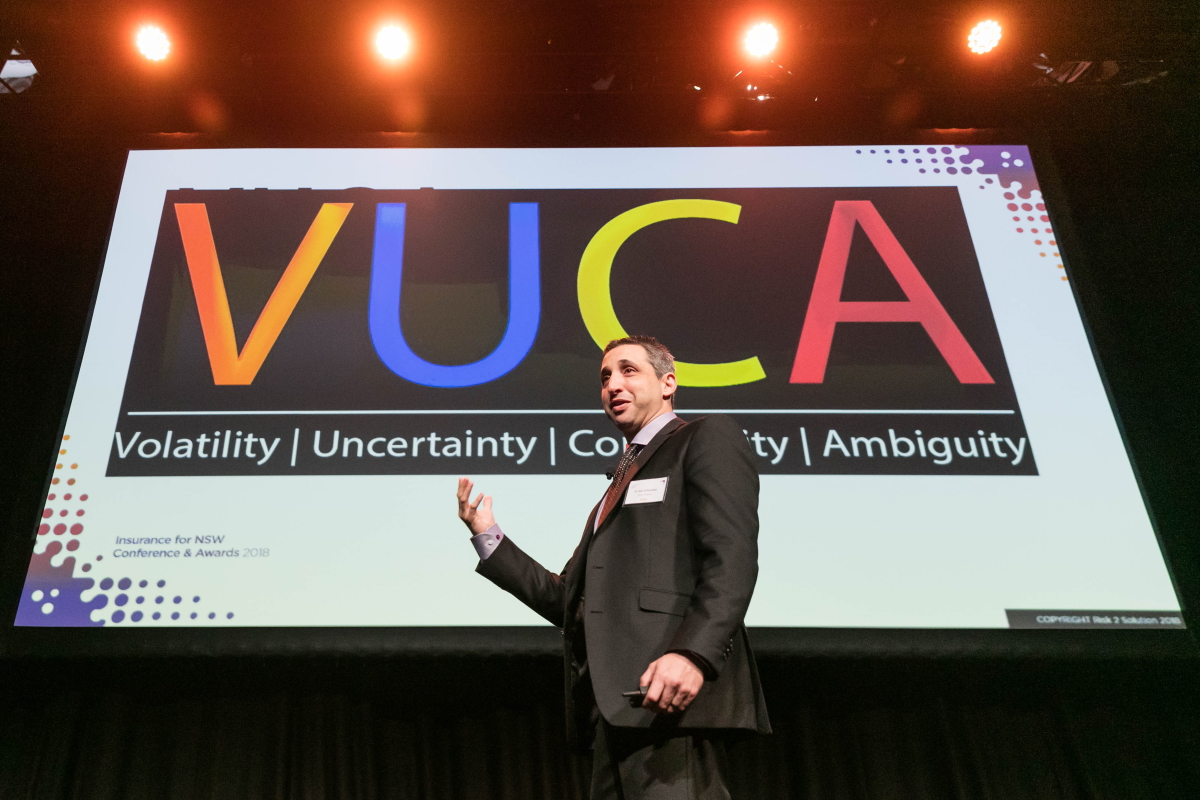
As we have now all experienced, the world we live in is truly Volatile, Uncertain, Complex and Ambiguous (VUCA) – from banking royal commissions, to bushfires and COVID-19, we have seen changes and challenges that have profoundly affected us all. The goal for all of us now needs to be ensuring that we can continue to evolve, grow and develop through these challenges – as who knows what will come next!
I believe there are three states of operation that we need to look at for our businesses to evolve and grow:
-
Compliance – this is the basic minimum we need to operate in any given sector. If an organisation is compliance-focused only, it will be highly vulnerable to rapid changes and be very slow to adapt.
-
Resilience – the next step up is a focus on resilience where it is accepted that things could go wrong, but we are prepared for this, with the aim of trying to return to business as usual as quickly as possible. The resilience mindset is a great step forward from that of compliance but is still defensive and negatively biased by nature.
-
Presilience® – I believe the optimal state is that of Presilience®. This is where we incorporate the best aspects of compliance and resilience. Presilience® focuses not only on the opportunities to bounce back more effectively when things go wrong, but also constantly on positioning ourselves and our businesses to adapt, innovate and improve wherever possible.
The Presilience® mindset starts with working on yourself. If you, as an individual, can’t motivate yourself, then it’s highly unlikely you will be successful and effective at motivating others and leading teams. And if you can’t lead teams, how could you run a business well, or successfully manage an organisation? This is even more important in the VUCA world we live in today and it requires us to evolve as individuals and businesses to a default setting of Presilience®.
So how do we develop Presilience®?
Whilst there are a lot of integrated elements to the evolution and development of an embedded Presilience® approach, here are some key aspects that should be applied:
-
Situational Awareness, Vigilance and Mindfulness
Situational Awareness (SA) and vigilance are very important, not just for personal safety but as a fundamental building block for effective daily personal risk management. It is important to note that situational awareness — being aware of one’s surroundings and identifying potential threats and dangerous situations as well as opportunities — is more of a mindset than a hard skill. Situational awareness is not only important for recognising terrorist threats, but it also serves to identify opportunities, criminal behaviour and other dangerous situations. In short, SA is about knowing and understanding what’s going on around us so we can identify and act on anomalies – it is a continual skill from birth to death and requires continued focus and practice to apply.
-
Risk intelligence
Risk intelligence is about how we understand and respond to a changing environment. It is therefore not a skillset as such, but more an applied attribute based on integrating the key attributes, skills and capabilities.
These can be used as a very basic checklist to determine risk intelligence and risk culture (at a teams and organisational level):
-
Manage uncertainty
-
Achieve objectives
-
Move, think and understand quickly and easily
-
Focus on changing or creating more effective processes, products and ideas
-
Constantly enhance the likelihood of a business succeeding.
-
Better productivity and performance
-
Share information, rewards, and power appropriately and fairly
-
Take initiative and make decisions to solve problems and improve service and performance.
-
Display toughness in the face of adversity and have the capacity to recover quickly and respond to short term shocks
-
Adapt and evolve personally and shape groups and organisational structures to respond to long term challenges
-
Critical thinking and enhanced decision making
The fundamental application of risk intelligence is designed to ensure we can enhance our decision making. This aspect is probably a whole article in its own right, but as a starting point we need to remember that most of our decisions are based on perception, not reality. When we make a decision, it’s important to understand what is truly important and/or urgent, and action those areas first. The majority of our decisions are made using our intuitive and non-rational mind, so it’s really important when making big decisions, to take time to speak to advisors, do pros/cons lists, or use more formal tools like SWOT analyses, to help inform your decision. Good decision making ultimately comes down to our ability to know ourselves, recognise our strengths and weaknesses and focus on managing our own biases.
-
Effective / directive communication
In times of stress, our thinking mind actually functions poorly due to slow and constant adrenal release. One of the side effects is poor communication skills. Take time to ensure you keep working on your communications skills (especially when you are tired and/or stressed) and remember that if people are stressed and/or under pressure, direct communication is often more effective.
When you have the time and there is no stress, remember that whilst building rapport and active listening are very important, in many cases it’s less about what is said or written, and more about how the person on the other end receives and translates the message. Take time now to build good habits around effective, direct communication, and confirming that your message is received as you intended it to be received.
-
Persistence
Developing a default attitude of Presilience® takes time and consistent effort. Don’t rush things but do stay consistent in developing and applying the key skills sets and attributes, until they become habitual. This requires persistence and discipline. If there was ever a time to develop Presilience® as your default setting, it’s right now.
Dr. Gavriel (Gav) Schneider FIRSM, FGIA, CPP, FIS (SA), FIML, FARPI
Dr Gav is an acknowledged leader in the field of human-based risk management and the psychology of risk and is the creator of the concept of Presilience®. He is a highly experienced security, safety, emergency and risk specialist, with decades of experience. As a leading academic in his field, he heads up the Post Graduate Psychology of Risk program at the Australian Catholic University (ACU). His highly acclaimed book, ‘Can I See your Hands: A Guide to Situational Awareness, Personal Risk Management, Resilience and Security’ is available for purchase here.
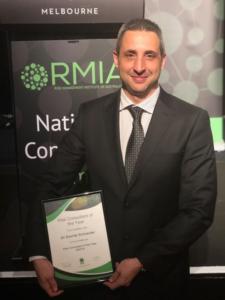
Professionally, Dr Gav was recognised as RMIA’s Risk Consultant of the Year 2019 and one of the top twenty global thought leaders in the IFSEC Global Security & Fire Influencer Awards. He is the CEO of the Risk 2 Solution Group, whose member companies focus on delivering innovative and cutting-edge solutions in the Risk, Intelligence, Safety, Security, Medical & Emergency response sectors – see www.risk2solution.com for more information.