Offshore vs Inshore Centre Console Boats: Which One Should You Buy?
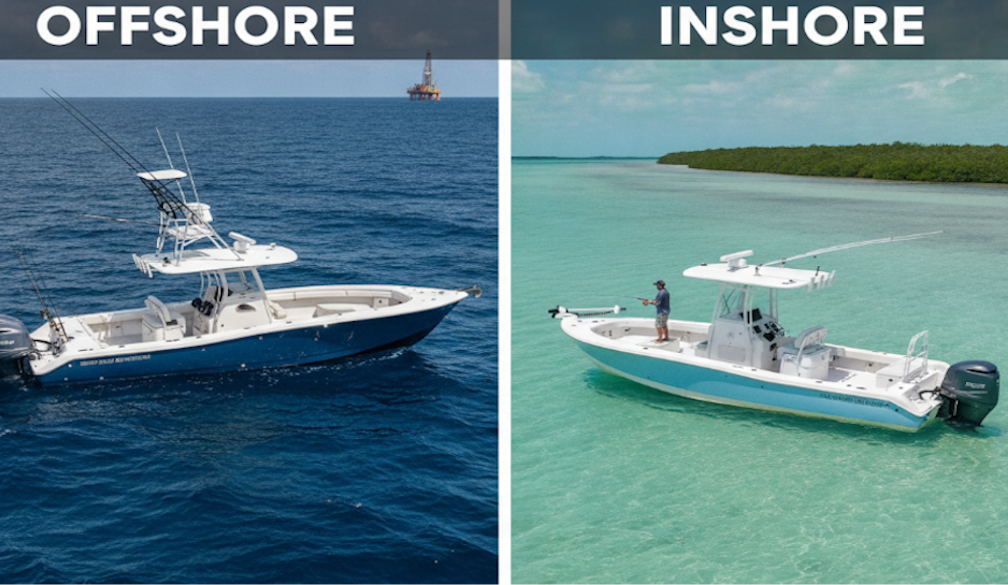
Centre console boats have become one of the most popular choices among modern anglers. Their open layout, 360-degree fishability, and versatile design make them suitable for everything from estuary fishing to offshore game fishing.
However, not all centre console boats are built for the same purpose. Some are designed to navigate shallow inshore waters efficiently, while others are engineered to handle offshore swells, long-distance runs, and demanding sea conditions.
If you're researching centre console boats for sale, understanding the differences between offshore and inshore models can help you choose a boat that matches your fishing style rather than your aspirations.
The right boat is not necessarily the biggest or most expensive one. It is the one that suits where, how, and how often you fish.
What Makes Centre Console Boats So Popular Among Anglers?
Centre console boats place the helm in the middle of the vessel, creating unrestricted movement around the entire perimeter.
This design delivers several advantages:
Key Benefits
✓ 360-degree fishability
✓ Excellent visibility
✓ Open deck space
✓ Easy movement during fish fights
✓ Flexible storage options
As per the (NMMA) National Marine Manufacturers Association 2025 Recreational Boating Reports, centre console boats remain one of the fastest-growing segments in the recreational fishing market due to their versatility and fishing-focused layouts.
How Inshore Centre Console Boats Are Designed For Shallow Water Fishing
Inshore centre consoles are purpose-built for protected waterways.
Typical environments include:
- Estuaries
- Rivers
- Coastal bays
- Mangrove systems
- Shallow flats
Typical Characteristics
|
Feature |
Inshore Centre Console |
|
Hull Depth |
Shallower |
|
Draft |
Minimal |
|
Weight |
Lighter |
|
Fuel Capacity |
Moderate |
|
Beam |
Often wider for stability |
Why This Matters
A shallower draft allows anglers to access fishing grounds that larger offshore boats cannot reach.
Main Differences Between Offshore And Inshore Marine Layouts
The operational environments require contrasting deck configurations to maximise safety and fishing efficiency. While an open ocean boat prioritises water shedding and passenger containment, an estuary boat optimises castability and minimal drag.
|
Operational Feature |
Offshore Centre Console |
Inshore Centre Console |
|
Primary Hull Geometry |
Deep-V with fine entry bow lines |
Shallow-V, cathedral, or flat-bottom hull |
|
Typical Length Range |
6.0 metres to over 10 metres |
4.0 metres to 5.8 metres |
|
Water Drainage Setup |
Self-draining decks with scupper networks |
Bilge-dependent sump drainage systems |
|
Stability System |
Passive water ballast chambers at the keel |
Wide-beam hull footprint with shallow draft |
According to design guidelines tracked in the YachtBuyer Centre Console Awards, modern open-water hulls also incorporate advanced T-tops and heavy-duty structural outriggers. These elements add weight, requiring the hull to have superior displacement characteristics compared to simple bay skiffs.
Why Fuel Capacity And Range Matter More Offshore
Many anglers underestimate how important range becomes once they leave sheltered waters.
Offshore fishing often requires:
- Longer travel distances
- Variable weather conditions
- Larger safety margins
Offshore boats typically include:
- Larger fuel tanks
- Additional storage
- Enhanced battery systems
- Offshore safety equipment
According to the (AMSA) Australian Maritime Safety Authority Boating Safety Guidelines 2025, fuel planning remains one of the most important factors in offshore trip preparation.
Which Centre Console Boat Is Better For Fishing Performance?
The answer depends entirely on your target species and preferred fishing locations.
A) Inshore Fishing Advantages
Perfect for:
- Bream
- Flathead
- Barra
- Whiting
- Mangrove jack
Benefits include:
- Easy casting access
- Shallow-water manoeuvrability
- Lower operating costs
B) Offshore Fishing Advantages
Ideal for:
- Snapper
- Tuna
- Kingfish
- Mackerel
- Marlin
Benefits include:
- Better rough-water performance
- Greater range
- Larger deck space
Neither option is universally better. Each excels in different environments.
What Questions Should You Ask Before Choosing A Centre Console Boat?
Before evaluating centre console boats for sale, ask yourself:
Key Questions
- Where do I fish most often?
- How far offshore do I travel?
- How many passengers do I carry?
- Do I prioritise range or shallow-water access?
- Will I tow and store the boat regularly?
The answers often make the decision surprisingly clear.
Why A Sea Trial Reveals More Than Specifications Ever Can
Specifications tell you what a boat should do. A sea trial reveals what it actually does.
During A Sea Trial, Assess:
✓ Ride comfort
✓ Stability
✓ Visibility
✓ Deck layout
✓ Storage access
✓ Rough-water behaviour
Many buyers discover their ideal boat only after spending time on the water.
Final Thoughts: Offshore Vs Inshore Centre Console Boats
The decision between offshore and inshore centre consoles ultimately comes down to where you fish most frequently.
If your adventures revolve around estuaries, bays, and shallow waterways, an inshore design may offer everything you need. If offshore reefs, pelagic species, and long-distance runs dominate your fishing calendar, an offshore model is likely the better investment.
When comparing centre console boats for sale, focus less on marketing claims and more on practical usage. Hull design, fuel range, deck layout, and intended operating conditions should always guide your decision.
Choose the boat that matches your real-world fishing style, and you'll enjoy far more days on the water.