Anatomy texts should show sex as a spectrum to include intersex people
- Written by: Theresa Larkin, Senior Lecturer Medical Sciences, University of Wollongong

Scientists are learning more and more about human biological variation, including of sex characteristics. But images of the human body in anatomy[1] remain mostly muscular, white, and male with limited diversity, including of sex.
Intersex people represent just under 2% of the population[2] – a comparable percentage to people born with red hair. Yet anatomy textbooks used in Australian medical schools[3] almost completely stick to the male-female sex binary. In our earlier research we found intersex was included in only five of 6,004 images across 17 texts. This marginalises intersex people, who have been persistently discriminated[4] against within the health-care system.
The intersex community[5] is the often forgotten “I” in LGBTQI+. Intersex Human Rights Australia[6] highlights the need for increased visibility and to prevent unnecessary surgeries[7]. Now there are fresh calls for health and medical students to learn about sex characteristics as a continuum[8] rather than as male or female.
Read more: Marriage equality was momentous, but there is still much to do to progress LGBTI+ rights in Australia[9]
Development of sex in utero
Sex development in utero is complex, involving at least 70 different genes[10].
Our sex is defined by our genes (Y or X chromosome), gonads (ovaries or testes), reproductive tract, and external genitalia.
Whether a foetus develops female, intersex or male characteristics is determined by four key elements. These are the Y chromosome and its sex-determining gene (SRY gene[11]), and two hormones (anti-Mullerian hormone and testosterone).
A foetus with all four elements will develop male sex characteristics.
At 6–7 weeks gestation, the SRY gene on the Y chromosome signals the gonads to develop into testes. About 2–3 weeks later, secretion of two hormones by the testes directs further sex development. Anti-Mullerian hormone stops female sex characteristic development. Testosterone stimulates development of the male reproductive tract and external genitalia.
When all four elements are absent, female sex characteristics develop.
Without a Y chromosome and its SRY gene, the gonads develop into ovaries. Without anti-Mullerian hormone or testosterone production, the female reproductive tract and external genitalia develop.
The presence of some but not all of these elements results in the development of intersex characteristics.
The spectrum of sex variation
Intersex can include both or a combination of male and female sex characteristics, depending on variations in chromosomes, genes or hormones. This represents the continuum of the sex spectrum[12] between the male and female binaries.
Known variations[13] in the Y and X chromosomes include XY (genetic male), XXY (Klinefelter syndrome), X (Turner syndrome), XX (genetic female). Variations in the gonads include the presence of both ovaries and testes, or only partial development of either. Other intersex variations include a combination of male and female genitalia, and external genitalia that differs in sex to the genetic sex.
Intersex traits are not always visible at birth[14]. Individuals may not realise they are intersex until puberty, or only if they undergo assessment for infertility or genetic testing.
‘When I first went through puberty, a lot of things went a little different to what most people expect …’Lingering stigma
There is a tragic history of irreversible surgical interventions in intersex infants and children. This was often without their consent, or with parents coerced to consent[15].
These surgeries have been to “normalise” external genitalia to a male or female binary. The impact of these procedures[16] may violate human rights. They can be devastating for intersex people’s lifelong physical and mental well-being[17].
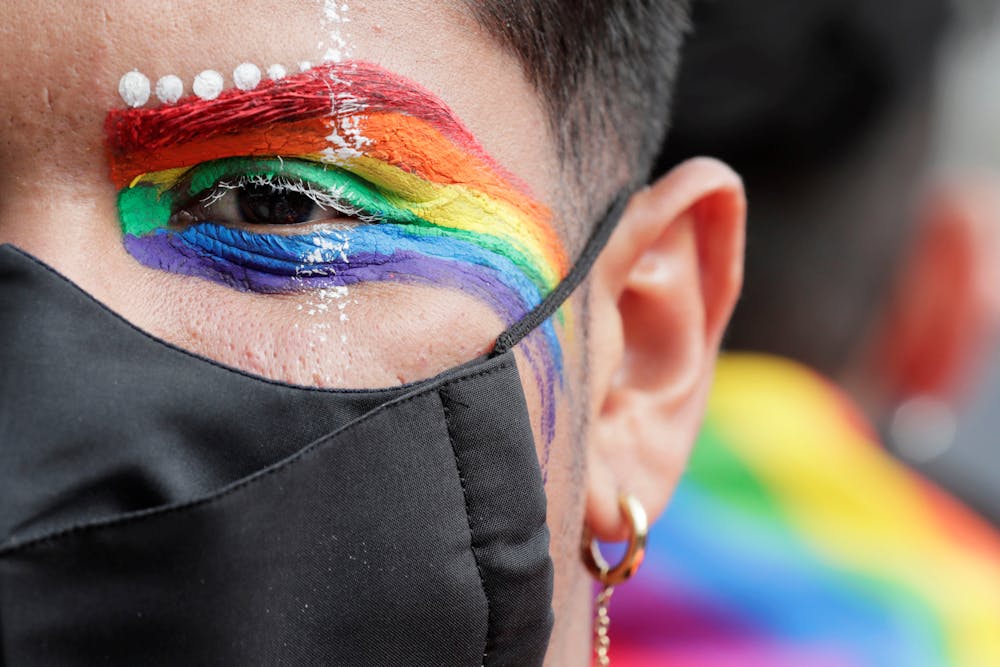
The UN Office of the High Commissioner for Human Rights[19] description of intersex is having sex characteristics that “do not fit typical binary notions of male or female bodies”. But even this pathologises intersex by indicating that intersex people “do not fit”.
Normalisation of sex variation and increased visual representation of intersex in anatomy is necessary to reduce stigma.
The minimal visual representation of intersex people in anatomy textbooks can affect students’ attitudes towards this. We have previously found viewing gender-biased images of anatomy is associated with higher implicit gender bias[20]. Today’s students are our next generation of doctors and health-care workers.
Read more: What are gender pronouns and why is it important to use the right ones?[21]
Teaching the continuum
Teaching sex characteristics based on a male-female binary is inaccurate and outdated. We’ve also shown it negatively influences[22] the healthcare of intersex individuals.
Both the University of Wollongong and the University of New South Wales are developing inclusive anatomy curricula within their medicine and health degrees. Harvard Medical School[23] and University of British Columbia[24] are also developing online, accessible resources to promote inclusive anatomical representation in medical education.
Inclusive teaching and knowledge of sex variation can be transformative beyond anatomy.
Teaching sex characteristics as a continuum will increase the visibility and understanding of intersex. Removing the stigma associated with sex (and other) variations in anatomy, and medical and health education is essential for optimal health, well-being, belonging and connection for everyone.
An international group – that includes people of different academic disciplines and generations, seeks to address anatomical representation bias.References
- ^ images of the human body in anatomy (youtu.be)
- ^ 2% of the population (www.amnesty.org)
- ^ anatomy textbooks used in Australian medical schools (www.sciencedirect.com)
- ^ persistently discriminated (humanrights.gov.au)
- ^ intersex community (intersexday.org)
- ^ Intersex Human Rights Australia (ihra.org.au)
- ^ prevent unnecessary surgeries (www.abc.net.au)
- ^ sex characteristics as a continuum (pubmed.ncbi.nlm.nih.gov)
- ^ Marriage equality was momentous, but there is still much to do to progress LGBTI+ rights in Australia (theconversation.com)
- ^ 70 different genes (www.ncbi.nlm.nih.gov)
- ^ SRY gene (theconversation.com)
- ^ continuum of the sex spectrum (theconversation.com)
- ^ variations (sitn.hms.harvard.edu)
- ^ not always visible at birth (www.apa.org)
- ^ parents coerced to consent (www.abc.net.au)
- ^ these procedures (theconversation.com)
- ^ well-being (www.headtohealth.gov.au)
- ^ EPA/Carlos Ortega (photos-cdn.aap.com.au)
- ^ UN Office of the High Commissioner for Human Rights (www.ohchr.org)
- ^ is associated with higher implicit gender bias (journals.sagepub.com)
- ^ What are gender pronouns and why is it important to use the right ones? (theconversation.com)
- ^ negatively influences (anatomypubs.onlinelibrary.wiley.com)
- ^ Harvard Medical School (edib.harvard.edu)
- ^ University of British Columbia (www.youtube.com)