'Off-label' use is common in medicine – a bioethicist and legal philosopher explain why the COVID-19 vaccines are different
- Written by: Elizabeth Lanphier, Assistant Professor of Philosophy and Bioethicist, University of Cincinnati
Kids ages 5 to 11 can now be vaccinated against COVID-19 following the Food and Drug Administration’s emergency use authorization of the Pfizer Bio-NTech vaccine for this age group[1] and the Centers for Disease Control and Prevention’s endorsement[2] in early November 2021.
Some parents remain hesitant[3] about vaccinating their kids. But many around the country are enthusiastically signing up[4] and lining up[5] to get their elementary schoolers vaccinated. Yet parents of children under 5 are still left wondering[6] when their children will be vaccinated. Experts suggest[7] it may not be before next year.
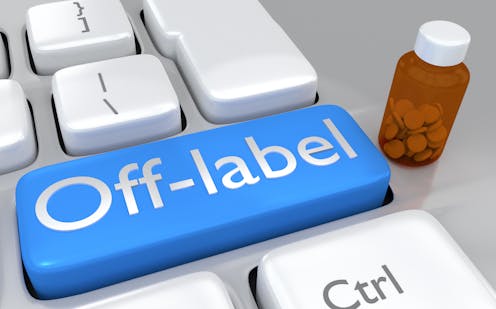
This wait could prompt parents and doctors alike to consider vaccinating against COVID-19 “off-label[8].” Off-label refers to the administration of an FDA-approved product for a different population, use or dosage[9] than what it was approved for. It is a common practice in health care.
However, the FDA[10] and the American Academy of Pediatrics[11] have warned against off-label use of COVID-19 vaccines in kids. And the CDC prohibits it[12] based on the COVID-19 vaccine provider agreement it has with pharmacies, hospitals and clinics that are administering COVID-19 vaccines.
But is it ethical to withhold available vaccines from young kids?
We are philosophers with expertise in bioethics[13], legal philosophy[14] and the application of philosophy to public policy[15]. Our newly published analysis[16] explores how prohibiting off-label use of COVID-19 vaccines in kids departs from ethical and legal norms.
Off-label vaccination is not a strategy for mass vaccination. But our research suggests that off-label use of COVID-19 vaccines is an ethically permissible option on a case-by-case basis. This is especially true for children at high risk of severe COVID-19 infection because of underlying conditions, or those at heightened exposure to COVID-19.
What is off-label use?
While off-label use may be a new concept to many, in medical practice it is relatively routine[17]. Studies suggest that approximately 20%[18] of all prescriptions are administered off-label.
In pediatrics, off-label use is even more common[19] because fewer clinical trials of the kind required for the FDA approval process are conducted in children. The American Academy of Pediatrics endorses off-label use[20] as an available tool “to benefit the individual patient” based on a pediatrician’s clinical judgment and the best evidence available. A recent study[21] suggests that over half of pediatric hospitalizations involve treatment with at least one off-label medication.
Reasons for off-label use[22] vary. Practically, the time and cost to conduct additional clinical trials on an already-approved medication is burdensome. Some products proven to be safe for use for a specific reason are later found to be effective for a new purpose. Off-label use helps make these treatments more accessible to other populations who may benefit from them.
Within medicine, off-label use is an ethically and legally sound practice. The FDA does not permit physicians to conduct experimental research on patients outside of clinical trials. But the law does permit[23] physicians to prescribe FDA-approved products off-label for the purpose of enhancing a patient’s well-being. Doctors face no heightened risk of malpractice liability when they follow informed consent processes, when clinical data suggest that the anticipated benefits likely outweigh known risks and when the medication was prescribed for the patient’s benefit rather than for research.
But what about COVID-19 vaccines?
Despite the ethical and legal norms supporting off-label use, it’s more complicated when it comes to COVID-19 vaccines.
When the FDA “fully approved[24]” the Pfizer vaccine for people age 16 and older in August 2021, some parents, pediatricians and scientists began debating[25] whether it could be administered “off-label” to younger kids who were not yet eligible.
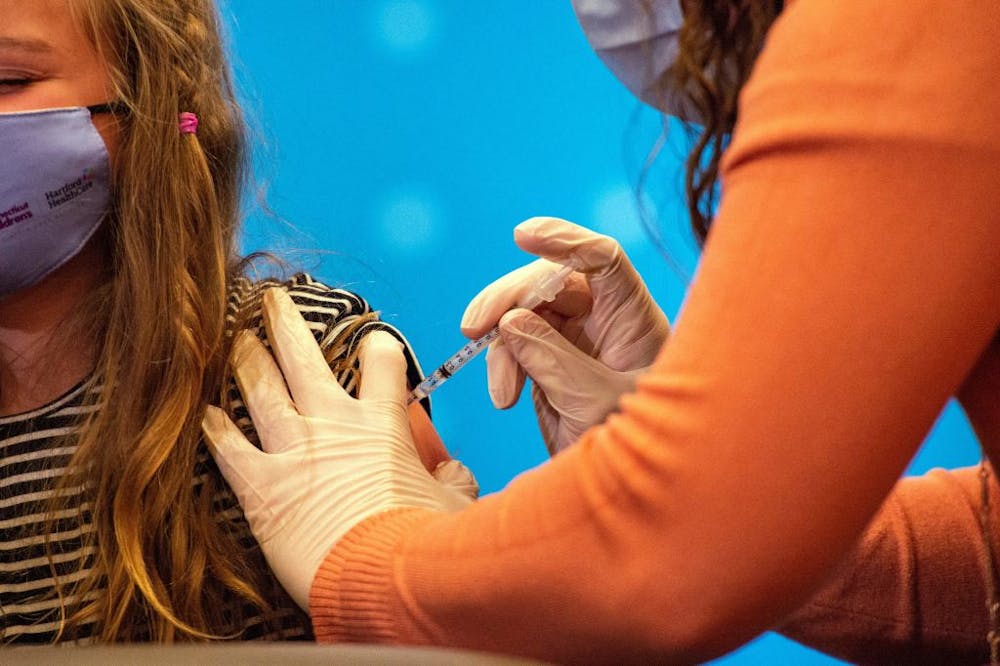
Off-label vaccination is less common than prescribing medication off-label. But other vaccines are at times administered off-label, especially during outbreaks[27] of diseases like measles. The MMR (measles, mumps and rubella) vaccine is approved for kids older than 12 months only[28]. Yet even the CDC’s Advisory Committee on Immunization Practices recommends[29] administering the MMR vaccine off-label to children between 6 and 12 months old when traveling internationally.
But in the case of COVID-19 vaccines, the CDC vaccine provider agreement restricts[30] off-label vaccination. The agreement prohibits using federally purchased COVID-19 vaccines outside the ages for which vaccines are authorized or approved. The CDC has implied[31] that providers who do not follow this agreement risk legal and financial liability and can be removed from the vaccine provider program. As all COVID-19 vaccines administered in the U.S.[32] are purchased and supplied by the U.S. government, the agreement effectively prohibits any off-label use in children.
This means that medical providers are unable to offer off-label vaccination even to those children for whom it might be most ethically justified, namely those with underlying health conditions that place them at increased risk[33] of complications from COVID-19.
[Research into coronavirus and other news from science Subscribe to The Conversation’s new science newsletter[34].]
Looking forward
The CDC has not explained its departure from ethical and legal norms of off-label use for the COVID-19 vaccines.
When considering emergency use authorization of the Pfizer vaccine for 5-to-11-year-olds, FDA advisory committee members[35] drew attention to the possibility of extremely rare side effects in kids that may arise only once the vaccine is administered more widely. The CDC has stressed that the safety of the vaccines will continue to be closely monitored[36].
Because of this, some members of the FDA’s vaccine committee expressed concern[37] about authorizing the vaccine for all kids this age, even while stressing its importance for high-risk kids. The committee ultimately voted to recommend[38] authorization. But had off-label use of COVID-19 vaccines been on the table, some high-risk kids would have already had access to the vaccine. So would kids under 5.
For children under 5 with high-risk medical conditions or those living in communities that continue to have low overall vaccination rates[39], high community spread or prohibitions[40] on other evidence-based[41] mitigation strategies like indoor masking, their parents and pediatricians may want to decide that the benefits of off-label vaccination outweigh the risks. But they can’t.
Heightened awareness of off-label use practices might lead parents to wonder – or worry – about its frequent and routine use in pediatric care. One way to reduce off-label use in kids in general is to increase pediatric clinical trials[42]. This requires funding for and interest from researchers and participants – including children and their parents. COVID-19 vaccines sparked an outpouring of interest in enrolling in clinical trials. This broadening of interest may yield more and faster access to “on-label” vaccines and other pharmaceuticals for children in the future.
References
- ^ Pfizer Bio-NTech vaccine for this age group (theconversation.com)
- ^ Centers for Disease Control and Prevention’s endorsement (www.cdc.gov)
- ^ remain hesitant (www.kff.org)
- ^ enthusiastically signing up (spectrumlocalnews.com)
- ^ lining up (www.fox19.com)
- ^ still left wondering (twitter.com)
- ^ Experts suggest (www.cnn.com)
- ^ off-label (doi.org)
- ^ dosage (theconversation.com)
- ^ the FDA (www.cnn.com)
- ^ American Academy of Pediatrics (www.aappublications.org)
- ^ prohibits it (www.cdc.gov)
- ^ expertise in bioethics (scholar.google.com)
- ^ legal philosophy (scholar.google.com)
- ^ public policy (www.ippp.gmu.edu)
- ^ Our newly published analysis (doi.org)
- ^ relatively routine (doi.org)
- ^ approximately 20% (doi.org)
- ^ more common (www.ncbi.nlm.nih.gov)
- ^ endorses off-label use (www.aappublications.org)
- ^ recent study (doi.org)
- ^ Reasons for off-label use (doi.org)
- ^ law does permit (doi.org)
- ^ “fully approved (www.fda.gov)
- ^ began debating (www.wired.com)
- ^ Joseph Prezioso/AFP via Getty Images (www.gettyimages.com)
- ^ during outbreaks (pubmed.ncbi.nlm.nih.gov)
- ^ approved for kids older than 12 months only (www.fda.gov)
- ^ recommends (health.mil)
- ^ vaccine provider agreement restricts (www.cdc.gov)
- ^ has implied (www.cdc.gov)
- ^ all COVID-19 vaccines administered in the U.S. (crsreports.congress.gov)
- ^ increased risk (www.cdc.gov)
- ^ Subscribe to The Conversation’s new science newsletter (theconversation.com)
- ^ FDA advisory committee members (www.youtube.com)
- ^ continue to be closely monitored (www.cdc.gov)
- ^ expressed concern (www.statnews.com)
- ^ voted to recommend (www.npr.org)
- ^ vaccination rates (www.nytimes.com)
- ^ or prohibitions (districtadministration.com)
- ^ evidence-based (theconversation.com)
- ^ increase pediatric clinical trials (doi.org)