The Times Australia
Google AI
The Times World News

.

What will the fuel excise cut save you? Not as much as the Treasurer says

  • Written by John Hawkins, Senior Lecturer, Canberra School of Politics, Economics and Society and NATSEM, University of Canberra
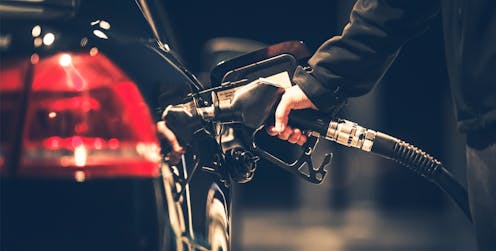
What will the fuel excise cut save you? Not as much as the Treasurer says

As an appeal to middle Australia, to the voters politicians routinely describe as working families or battlers, the Morrison government’s centrepiece budget move[1] to halve the fuel excise for six months has obvious attractions.

“A family with two cars who fill up once a week could save around $30 a week or around $700 over the next six months,” declared Treasurer Josh Frydenberg on budget night[2], a point he’s repeated many times since[3].

But our calculations show most households, particularly those on lower incomes, won’t gain anything near the amount touted by Frydenberg.

At a cost of about $3 billion, cutting 22 cents in tax from every litre of petrol for six months will disproportionately help wealthy households. The economic gain is doubtful. Depending on what happens with the global oil prices, it may even contribute to inflationary pressures.

Who benefits most?

We’ve calculated the effects of the fuel excise cut on household budgets using a computer model[4] developed by the National Centre For Social And Economic Modelling[5].

Our results show the six-month cut to the fuel excise will save the average household in inner-urban areas of Sydney and Melbourne about $132. The average households in outer suburbs will save about $242. Those in the outer suburbs of smaller cities will save less as they need to drive shorter distances. The average household in rural and remote areas will save $194.

Author provided/The Conversation, CC BY-ND[6] These amounts reflect average outcomes across all households, including those with just one vehicle, or no vehicle. It’s possible some two-car households will save the $700 cited by Frydenberg, but not many. That would require a household spending well over $10,000 a year on petrol, buying about 150 litres a week. The budget papers themselves say the cut will “deliver an average benefit of around $300 to households with at least one vehicle”. Why economists oppose the cut In The Conversation’s pre-budget survey of 46 leading economists selected by the Economic Society of Australia, not one thought cutting the fuel excise a good idea. About a third rated it among the worst possible policies. Read more: Cut emissions, not petrol tax; fund childcare, not beer. What economists want from next week's budget[7] Their reasons are the uncertain economic benefit and inconsistency with important long-term policy goals to reduce dependence on oil-based imports, lower greenhouse gas emissions and cut government debt. Frydenberg has promoted[8] the cut as anti-inflationary, reducing consumer prices by 0.25 percentage points in the June quarter. But prices will simply rise by the same amount in the December quarter. Global fuel prices may fall long before the end of six months. Last week benchmark oil prices fell 13%[9] on news the US will release more from its strategic reserves[10] as well as a truce in the long-running civil war in Yemen. The United States will be releasing a million barrels of crude oil every day for the next six months from its Strategic Petroleum Reserve.
The United States will be releasing a million barrels of crude oil every day for the next six months from its Strategic Petroleum Reserve. Eli Hartman/Odessa American/AP

If oil prices drop the government will be adding billions of dollars to the deficit for no real economic gain. It could even be adding to underlying inflationary pressures by increasing household spending, pushing the Reserve Bank to increase interest rates[11] sooner or by more.

Furthermore, while the fuel excise cut is legislated to be in place just six months, history shows governments find it hard to reverse cuts once implemented. In 2001, for example, the government of John Howard was panicked by poor opinion polls to suspend indexation of the petrol excise when prices reached $1 a litre. Indexation was not restored for 14 years, at a cost of more than $40 billion[12] in forgone tax revenue.

Well distributed?

Economists prefer targeted measures, and the problem with cutting the fuel excise is that lot of the benefit will go to sustaining the driving habits of wealthier households.

On average those in the most affluent 40% of households drive about 50% more kilometres[13] than those in the poorest 40%.

Read more: 5 maps that show why free public transport benefits the affluent most[14]

Wealthier households are more likely to have second or third cars, and to have larger cars – such as SUVs – that use more petrol. They also have the money for leisure pursuits such as weekend getaways.

A better approach would be target help to businesses that must buy fuel and to those on low incomes, such as through a cash bonus, leaving it to them to decide if they want to spend on petrol or other things.

This would also help those without a car, those who do not drive much and those with electric vehicles, who all face cost pressures as petrol prices feed into prices at the supermarket.

References

  1. ^ budget move (theconversation.com)
  2. ^ on budget night (joshfrydenberg.com.au)
  3. ^ many times since (www.abc.net.au)
  4. ^ computer model (www.sciencedirect.com)
  5. ^ National Centre For Social And Economic Modelling (www.governanceinstitute.edu.au)
  6. ^ CC BY-ND (creativecommons.org)
  7. ^ Cut emissions, not petrol tax; fund childcare, not beer. What economists want from next week's budget (theconversation.com)
  8. ^ promoted (www.theguardian.com)
  9. ^ benchmark oil prices fell 13% (www.aljazeera.com)
  10. ^ its strategic reserves (theconversation.com)
  11. ^ the Reserve Bank to increase interest rates (www.afr.com)
  12. ^ more than $40 billion (australiainstitute.org.au)
  13. ^ 50% more kilometres (www.sciencedirect.com)
  14. ^ 5 maps that show why free public transport benefits the affluent most (theconversation.com)

Read more https://theconversation.com/what-will-the-fuel-excise-cut-save-you-not-as-much-as-the-treasurer-says-180330

Times Magazine

With Nvidia’s second-best AI chips headed for China, the US shifts priorities from security to trade

This week, US President Donald Trump approved previously banned exports[1] of Nvidia’s powerful ...

Navman MiVue™ True 4K PRO Surround honest review

If you drive a car, you should have a dashcam. Need convincing? All I ask that you do is search fo...

Australia’s supercomputers are falling behind – and it’s hurting our ability to adapt to climate change

As Earth continues to warm, Australia faces some important decisions. For example, where shou...

Australia’s electric vehicle surge — EVs and hybrids hit record levels

Australians are increasingly embracing electric and hybrid cars, with 2025 shaping up as the str...

Tim Ayres on the AI rollout’s looming ‘bumps and glitches’

The federal government released its National AI Strategy[1] this week, confirming it has dropped...

Seven in Ten Australian Workers Say Employers Are Failing to Prepare Them for AI Future

As artificial intelligence (AI) accelerates across industries, a growing number of Australian work...

The Times Features

Ash Won a Billboard and Accidentally Started a Movement!

When Melbourne commuters stopped mid-scroll and looked up, they weren’t met with a brand slogan or a...

Is there much COVID around? Do I need the new booster shot LP.8.1?

COVID rarely rates a mention in the news these days, yet it hasn’t gone away[1]. SARS-CoV-2, ...

Why Fitstop Is the Gym Australians Are Turning to This Christmas

And How ‘Training with Purpose’ Is Replacing the Festive Fitness Guilt Cycle As the festive season ...

Statement from Mayor of Randwick Dylan Parker on Bondi Beach Terror Attack

Our community is heartbroken by the heinous terrorist attack at neighbouring Bondi Beach last nigh...

Coping With Loneliness, Disconnect and Conflict Over the Christmas and Holiday Season

For many people, Christmas is a time of joy and family get-togethers, but for others, it’s a tim...

No control, no regulation. Why private specialist fees can leave patients with huge medical bills

Seeing a private specialist increasingly comes with massive gap payments. On average, out-of-poc...

Surviving “the wet”: how local tourism and accommodation businesses can sustain cash flow in the off-season

Across northern Australia and many coastal regions, “the wet” is not just a weather pattern — it...

“Go west!” Is housing affordable for a single-income family — and where should they look?

For decades, “Go west!” has been shorthand advice for Australians priced out of Sydney and Melbo...

Housing in Canberra: is affordable housing now just a dream?

Canberra was once seen as an outlier in Australia’s housing story — a planned city with steady e...