What marginalised young people told us needs to be fixed
- Written by: Peter Kelly, Professor of Education, Deakin University
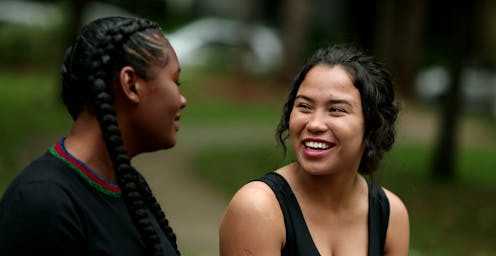
In youth policy and service delivery the idea of youth voice and participation is an uncontested “good thing”. But which youth voices? Who is heard and who is left out?
Our recent research in Melbourne’s inner northern suburbs[1] and in the Geelong region[2] has grappled with this question.
We have interviewed more than 80 young people since the start of the pandemic, in an effort to better understand the concerns of many disengaged, marginalised and disadvantaged young people in these areas.
We wanted to find out:
-
what challenges have they faced?
-
why do some young people seem to be able to get a say, while others don’t?
-
how can these young people become active stakeholders in their own futures?
-
what might change these dynamics?
Crucially, we asked young people to share their views in a format they felt comfortable with – by speaking directly to their webcams or phone cameras. Common themes that emerged included:
-
the need for secure work now and in the future
-
the need for better mental health services
-
a sense of pressure around school
-
a sense of not being heard
-
concern about climate change and the future of the planet.
Read more: Uncapping of university places has not failed disadvantaged students[3]
What we did
Many of the young people we heard from live with health and well-being challenges, neuro-diversity, and disengagement from traditional education, training and employment pathways. Financial struggles were common.
We asked young people to speak directly to their communities, and to a wider audience by filming their contribution on their camera phone or on a webcam. This allowed for a more natural flow of ideas from our interviewees. We published many of the videos on YouTube[4] and Instagram[5].
Our generous interviewees spoke openly about the connections between their health and well-being, and the hopes, aspirations and anxieties they feel about the future – around education, work, relationships, and the planet.
Young people in Geelong speak powerfully about their aspirations.What young people told us
Take, for example, Ruby, aged 16. She lives with her family in Geelong, is looking for work, and studies Victorian Certificate of Applied Learning (an alternative to Year 11 and 12 at school) at her local TAFE. She told us:
[…] they kind of like just say, to people that have anxiety or depression, to like, ‘just breathe’. And I think for a lot of us that just doesn’t work. I think we just need some better listeners and I think we need some people who genuinely care.
Emilie, aged 24, lives in a sharehouse in Geelong. She studies social work and is uncertain about the future.
I want to be hopeful for the future, but honestly, I don’t know if I exactly am. In some ways, I feel that the government focuses on what the voters are gonna want to get them in for the next election.
Ruth, who was in Year 12 and living in the inner Melbourne suburb of Fitzroy, spoke about her life and her hopes for the future:
Dickheads in politics – less of them please.
I’d like to be in a relationship with someone who makes me really happy. Who treats me in a really genuinely wonderful way. And who brings me joy. And maybe cake as well.
During 2020, Astrid, now 20 years old, was living in social housing in Fitzroy with her mum and her kitten. She faces a number of challenges due to her dyslexia. She told us:
Young people in Geelong speak about their experiences and needs.I hope, my biggest hope is that they figure out how to deal with climate change. Oh, no, I take that back. They know how to deal with climate change. I hope that they do it.
I also hope that the people who are running the community make note of the fact that young people want more involvement in it. And a place where they feel that they can be themselves.
Why do some young people seem to be on the margins?
Too often, the youth voices highlighted in public discourse and media narratives are the well-heeled, often privately educated beneficiaries of a system that serves wealthy people well while excluding those living with poverty or disability.
In an essay titled Can the Subaltern Speak?[6] Indian scholar Gayatri Chakravorty Spivak explores the legacies of colonialism in “postcolonial” states (such as India) and “settler colonies” (such as Australia), as well as the forms of disadvantage experienced by indigeneous peoples in these contexts.
The “subaltern” groups are those people facing often multiple forms of disadvantage, who are denied access to processes that shape their oppression. They have no voice.
Our discussion with these young, marginalised people harks back to these ideas, and calls for close consideration of what young people from the margins demand: “better listeners” among the adults who shape their lives, and a reason to hope for the future.
As young Swedish climate activist Greta Thunberg[7] put it:
We can no longer let the people in power decide what hope is. Hope is not blah, blah, blah. Hope is telling the truth. Hope is taking action. And hope always comes from the people.
References
- ^ Melbourne’s inner northern suburbs (young-people-futures-lab.org)
- ^ Geelong region (young-people-futures-lab.org)
- ^ Uncapping of university places has not failed disadvantaged students (theconversation.com)
- ^ YouTube (www.youtube.com)
- ^ Instagram (www.instagram.com)
- ^ Can the Subaltern Speak? (jan.ucc.nau.edu)
- ^ Greta Thunberg (young-people-futures-lab.org)