The AFL has consistently put the women's game second. Is it the best organisation to run AFLW?
- Written by: Matthew Klugman, Research Fellow, Institute for Health & Sport, member of the Community, Identity and Displacement Research Network, and Co-convenor of the Olympic Research Network, Victoria University
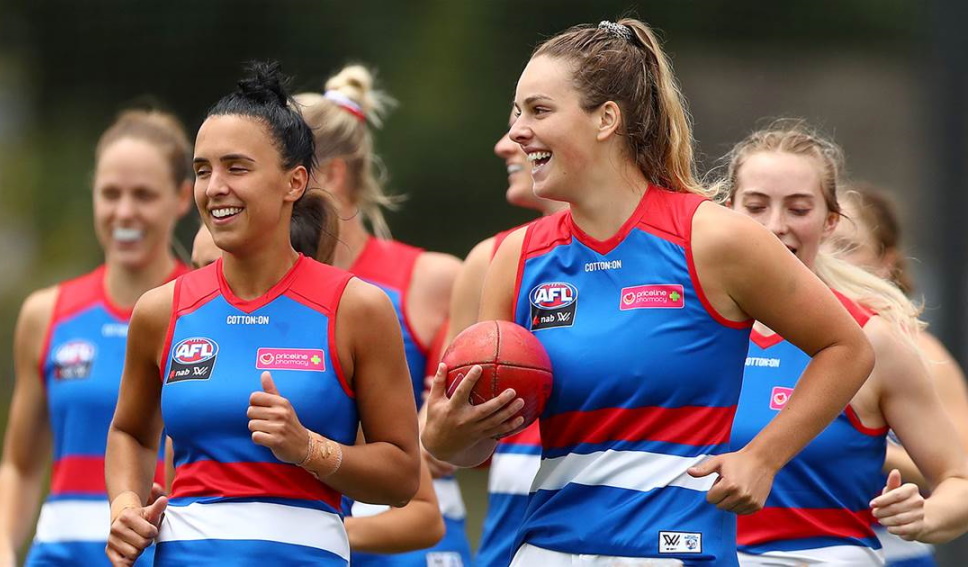
Saturday’s Adelaide Crows versus Melbourne Demons grand final is full of promise. Two superb teams matched up on a day forecast to be warm and clear, playing in front of tens of thousands of passionate fans.
But while the Crows and Demons have been busy preparing for the match, the rest of the league has been in an all-too familiar state of limbo.
The issue this time is when the next AFL Women’s season starts. Players, fans and clubs were blindsided[1] when news broke in early March the seventh season was likely to begin in August 2022 (it has always started in summer).
The problem wasn’t the suggested start date – some, though not all players are in favour[2] of this. The problem was the shambolic process. Players, clubs and fans weren’t initially consulted. A month later, no clarity has been provided.
Even more worryingly, this follows a pattern of devaluing those most invested in the AFLW. Is the AFL even up to the task of running the AFLW?
How the AFL has devalued women’s football
When it began in 2017, the new AFLW league was celebrated[3] as a chance for women to finally be able to play Australian Rules football at an elite, national level.
But at the outset, it did not mirror the men’s competition. The AFL decided it was necessary to amend the AFWL rules[4] to “ensure this is a great game to play and exciting to watch”.
Key changes included[5] making the ball smaller, making the game more than 20 minutes shorter and reducing the number of players on the field.
Such changes sent a message the women’s competition is worth less. For example, the smaller ball was harder to kick accurately[6] and didn’t travel as far, making it harder for women to demonstrate key skills valued by so many fans.
There have also been issues with a slew of injuries that seem related[7] (among other things) to playing on hard grounds in summer, players not being afforded the benefits of professionalisation[8] as well as the exhaustion of combining part-time work with the demands of elite sport.
Read more: Mark! Kick! Tackle! The reality of fast-tracking women into elite AFL[9]
The AFL doesn’t pay women players enough to sustain a life
Despite the mismanagement of AFLW, players, clubs and fans were nevertheless expected to remain grateful to the AFL[10]. To not complain. The fans were the first to voice their disapproval[11], building vigorous, joyful, critical communities of support for AFLW.
Players are also no longer prepared[12] to simply be grateful for the competition’s existence.
As recent research[13] has highlighted, although they’re grateful to be included, players know they’re actually key assets.
AFLW players are paid a small fraction of the men. The average salary for men is A$372,224[14] per year while most women receive $20,239[15] doled out in a precarious six-month contract.
The economic rationale is the AFLW doesn’t bring in as much income. But this crude accounting fails to factor in the goodwill and positive brand associations of the game.
Nor does it stand up to the realities of the costs of the men’s game. For example, new men’s teams like the Gold Coast Suns have required significant investment by the AFL, without the same backlash as the women’s competition[16].
Also, over the last decade the enormous growth in women and girls playing Australian Rules football has offset declining numbers of men playing the game, saving numerous local clubs[17].
Federal, state, and local governments have poured millions[18] of dollars into renovating grounds to support women playing, while the most compelling[19] advertisements featuring Australian Rules football tell stories of girls[20] and women[21] playing the game.
Yet the elite competition on which this economic, cultural and social growth is based doesn’t pay its players enough to sustain a life.
And when the players and fans agitate for more, they are called “whingers[22]” as sports journalist Sam Lane noted in a recent podcast.
Is the AFL the best organisation to run AFLW?
The AFL Player’s Association CEO Paul Marsh recently observed the AFL’s current lack of a clear, detailed plan for AFLW was simply “not good enough[23]”.
After six years of mismanagement the players, fans, and clubs deserve much more from the organisation currently in charge of the elite women’s football competition.
Research on the WNBA[24], the elite women’s basketball competition in the United States, suggested women players get paid less because of their secondary status within the culture of sport compared to men.
When the sustainability of the AFLW is raised, people tend to ask about the quality of the players, the number of fans, and the attention of the media.
As scholars of sport in history and society we think the spotlight should now focus on the AFL – an organisation that has consistently put the AFLW second to the AFLM, and is yet to invest in it fully, or to work closely and respectfully with the players and fans.
Is it willing to undergo the significant cultural and structural work required to ensure women are valued for the worth they bring? The players and the fans are watching.
References
- ^ blindsided (twitter.com)
- ^ are in favour (www.theage.com.au)
- ^ celebrated (theconversation.com)
- ^ amend the AFWL rules (www.aflq.com.au)
- ^ included (journals.sagepub.com)
- ^ harder to kick accurately (neversurrender.sydney)
- ^ that seem related (www.abc.net.au)
- ^ the benefits of professionalisation (www.abc.net.au)
- ^ Mark! Kick! Tackle! The reality of fast-tracking women into elite AFL (theconversation.com)
- ^ remain grateful to the AFL (www.crikey.com.au)
- ^ first to voice their disapproval (journals.sagepub.com)
- ^ no longer prepared (www.abc.net.au)
- ^ recent research (www.sciencedirect.com)
- ^ A$372,224 (www.afl.com.au)
- ^ $20,239 (www.abc.net.au)
- ^ without the same backlash as the women’s competition (www.thesaturdaypaper.com.au)
- ^ saving numerous local clubs (www.tandfonline.com)
- ^ millions (www.westernbulldogs.com.au)
- ^ compelling (www.youtube.com)
- ^ girls (www.youtube.com)
- ^ women (www.youtube.com)
- ^ whingers (www.abc.net.au)
- ^ not good enough (www.abc.net.au)
- ^ Research on the WNBA (www.polecom.org)