First Nations mothers are more likely to die during childbirth. More First Nations midwives could close this gap
- Written by: Pamela McCalman, PhD Candidate and Midwife, La Trobe University
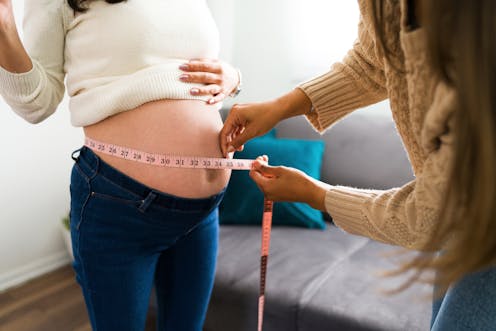
While Australia is one of the safest places in the world to give birth, First Nations women are three times more likely to die in childbirth than other Australian women (17.5 vs 5.5 per 100,000 women from 2012-2019)[1].
And First Nations infants are almost twice as likely to die in the first month of life (16% vs 9% per 1,000[2]), with preterm birth[3] the biggest cause of mortality.
The causes of these gaps in life expectancy are complex and stem from colonisation, including:
racism and lack of cultural safety in hospitals[4] and from healthcare providers[5]
pregnant First Nations women avoiding antenatal care for fear of child protection services taking their children. This is a legacy of the “stolen generations” with continuing high rates of child removals[6][7]
closures[8] of regional and remote birthing services requiring more First Nations women to leave home and travel long distances to give birth, often alone. Some women opt to give birth without a midwife, which can have significant issues for mother and baby.
Ensuring First Nations children are born healthy and strong is the second Closing the Gap[9] target - a critical foundation for “everyone enjoying long and healthy lives”. A much needed step to guarantee this is to increase First Nations health workers, particularly midwives and nurses.
Read more: Does the pre-election budget address ways to realistically 'close the gap' for Indigenous people?[10]
Addressing the health impacts of colonisation
Before colonisation, in some First Nations, new parents were supported using principles of “Grandmothers” law[11]. This is traditional childbearing knowledge held by senior community women. Children’s development was nurtured through extended kinship and community care.
These holistic care systems have been disrupted and western maternity services are informed by research conducted “on” First Nations people instead of in collaboration with or by First Nations people. This has led to a focus in the medical literature on the “five Ds” – disparity, deprivation, disadvantage, dysfunction and difference[12], rather than evidence reflecting the strengths of First Nations people and culture.
This is reflected in Australia’s policies, health and education systems which reinforce the legitimacy of “western” knowledge over First Nations knowledges. This leads to ongoing failures to improve First Nations people’s health and maternity services.
Western maternity services are often too busy and task-orientated with rigid structures[13] not suited to providing holistic women-centred maternity care that enables flexibility for cultural birthing practices.
The “Birthing in Our Community[14]” study showed culturally-safe models which enable care from a known midwife throughout pregnancy, birth and up until six weeks after birth, can significantly improve health outcomes for First Nations women and babies.
This research found women were approximately 50% more likely to attend the recommended number of antenatal visits, 38% less likely to give birth prematurely, and 34% more likely to be “exclusively” breastfeeding when they leave hospital.
The key to this success was leadership and care provision that included First Nations midwives. Similar improvements in access for women have been reported from similar models including the Baggarrook Yurrongi program[15], Waminda South Coast Birthing on Country program[16], and Waijungbah Jarjums program[17].
Read more: The Uluru Statement must be core to promises made by all parties in the lead-up to the federal election[18]
The vital role of First Nations nurses and midwives
First Nations midwives and nurses foster a sense of cultural safety and trust in maternity services for First Nations women. In addition to western midwifery training, First Nations midwives draw on cultural and community knowledge systems, including understanding the importance of including key family members and cultural practices specific to that community.
First Nations nurses and midwives currently represent 1.1%[19] of the workforce. If we want to close the gap in outcomes and ensure a culturally safe birthing experience for First Nations women, we need a much bigger proportion of First Nations midwives.
Read more: First Nations children are still being removed at disproportionate rates. Cultural assumptions about parenting need to change[20]
How can we increase the number of First Nations midwives and nurses?
Universities need to increase their proportion of First Nations students by:
providing better support for First Nations students from application through to graduation
implementing all 32 recommendations from the Gettin em and keepin em[21] report into First Nations nursing education, which includes integration of First Nations health issues into core midwifery curricula and having streamlined application and enrolment procedures
promoting scholarships[22] to attract students.
Maternity services need to increase the number of First Nations midwives employed, through:
implementing the government’s woman-centred care strategy[23] to ensure Australian maternity services are equitable, safe, woman-centred, informed and evidence-based; that women are the decision-makers in their care; and maternity care reflects women’s individual needs
directing cadetship[24] and graduate midwife programs at First Nations nurses
supporting midwifery career development, leadership roles, and representation at all levels of governance.
Both universities and maternity services need to:
improve cultural safety, as per the National Aboriginal and Torres Strait Islander health workforce strategic plan[25]
ensure midwifery academics[26] undertake cultural safety training as part of professional development
regularly assess health providers’ behaviours and parent experiences to ensure cultural safety training results in a culturally safe workplace.
Now is a great time for First Nations people to think about a midwifery career. Let’s work towards a future where every pregnant First Nations woman has access to a First Nations midwife, so they and their baby can have the best possible start in life.
References
- ^ (17.5 vs 5.5 per 100,000 women from 2012-2019) (www.aihw.gov.au)
- ^ 16% vs 9% per 1,000 (www.indigenoushpf.gov.au)
- ^ preterm birth (www.thelancet.com)
- ^ hospitals (www.ncbi.nlm.nih.gov)
- ^ healthcare providers (reader.elsevier.com)
- ^ child protection services (www.smh.com.au)
- ^ high rates of child removals (theconversation.com)
- ^ closures (www.rdaa.com.au)
- ^ Closing the Gap (www.closingthegap.gov.au)
- ^ Does the pre-election budget address ways to realistically 'close the gap' for Indigenous people? (theconversation.com)
- ^ “Grandmothers” law (www.caac.org.au)
- ^ disparity, deprivation, disadvantage, dysfunction and difference (press-files.anu.edu.au)
- ^ busy and task-orientated with rigid structures (research-repository.uwa.edu.au)
- ^ Birthing in Our Community (www.thelancet.com)
- ^ Baggarrook Yurrongi program (www.abc.net.au)
- ^ Waminda South Coast Birthing on Country program (www.abc.net.au)
- ^ Waijungbah Jarjums program (www.sbs.com.au)
- ^ The Uluru Statement must be core to promises made by all parties in the lead-up to the federal election (theconversation.com)
- ^ 1.1% (www.aihw.gov.au)
- ^ First Nations children are still being removed at disproportionate rates. Cultural assumptions about parenting need to change (theconversation.com)
- ^ Gettin em and keepin em (catsinam.org.au)
- ^ scholarships (aurorafoundation.com.au)
- ^ woman-centred care strategy (www.health.gov.au)
- ^ cadetship (www.abc.net.au)
- ^ strategic plan (www.health.gov.au)
- ^ midwifery academics (pubmed.ncbi.nlm.nih.gov)