Pumping loud music is putting more than 1 billion young people at risk of hearing loss
- Written by: Robert Cowan, Professorial Research Fellow, Audiology and Speech Pathology, The University of Melbourne
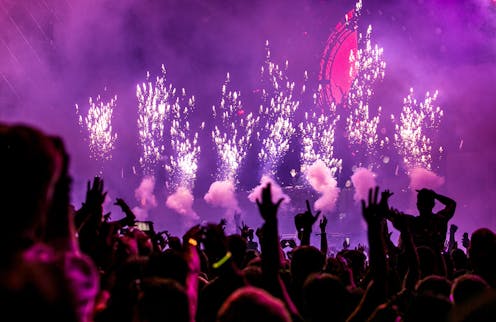
Music is an integral part of human life. It’s all around us, just like sunshine, lifting our mood. We enjoy it so much that many of us take it with us everywhere on our phones or we spend weekends hitting the club scene, live-music venues or concerts.
Meanwhile, many of us may have felt annoyed by loud sound from music venues or remarked on sound emanating from someone else’s headphones. We’re probably aware we should prevent hearing loss from loud industrial noise at work or from using power tools at home.
A systematic review released today in BMJ Global Health[1] reports unsafe listening practices in adolescents and young adults from using personal listening devices (such as phones or digital music players) and going to loud clubs and gigs are common, and could be a major factor contributing to hearing loss.
In fact, the authors estimate the pumping tunes could be placing up to 1.35 billion young people at risk of hearing loss worldwide.
What the study looked at
Systematic analysis involves looking across multiple studies to identify consistent findings. In this study, the authors included 33 peer-reviewed studies published between 2000 and 2021, involving over 19,000 people, aged 12–34.
In the study, unsafe listening was identified as listening at levels above 80 decibels for over 40 hours per week. For context, this is the level above which most Australian states require industry[2] to implement noise protection processes such as use of hearing protectors.
The study confirms the rate of unsafe listening practices is high in adolescents and young adults: 23.81% of them were listening to music on personal devices at unsafe levels and 48.2% at loud entertainment venues (though this rate is less certain). Based on global estimates of population, this translates to up to 1.35 billion young people at risk of hearing loss globally. The World Health Organization estimates[3] over 430 million people worldwide already have a disabling hearing loss and prevalence could double if hearing loss prevention is not prioritised.
The results tally with our previous studies conducted by Australia’s National Acoustic Laboratories and HEARing Cooperative Research Centre.
More than a decade ago we reported[4] a high potential for hearing loss from attendance at nightclubs, pubs and live concerts in young Australians aged between 18–35 years.
Back then, we found 13% of young Australians (aged 18–35) were getting a yearly noise dose from nightclubs, concerts and sporting activities that exceeded the maximum acceptable dose in industry. In 2015, the WHO launched the Make listening Safe[5] initiative to encourage young people to protect their hearing.

Why it’s bad for your hearing
So what’s the problem with loud music? Like sunshine, overexposure can lead to harm.
Loud noise, including music, can kill off hair cells and membranes[8] in the inner ear (the cochlea). Once hearing is lost, a person mightn’t be able to hear or understand speech or sounds around them.
Research[9] shows hearing loss results from a combination of sound being too loud (and it doesn’t need to be painful to cause hearing damage), listening to loud sound too long (and the louder the sound, the less time you can listen before your hearing is at risk) and how often you are exposed (and hearing damage is cumulative over time).
A good “rule of ear” is that if you hear ringing in your ears at or after listening, you are at risk of damaging your hearing. This type of hearing loss is permanent[10] and may require use of hearing aids or cochlear implants.
Read more: Don't wear earphones all day – your ears need to breathe[11]
Wait, so no loud music at all?
So what can we do, short of throwing away our headphones and avoiding clubbing and live music?
First, just like with the sun and skin, we need to be aware of the risks to our hearing and take the necessary steps to protect ourselves. We need to be aware of how loud sound is around us and how to keep our exposure within safe levels. We can do this by using personal hearing protection in clubs (such as ear muffs or ear plugs[12] that are fit for purpose), or limiting how often we visit noisy music venues or how long we stay at really loud ones.
In Australia, people can access a free noise risk calculator[13] to calculate their personal risk using an online sound level meter, and to explore how changes in lifestyle could protect their hearing while still allowing them to enjoy music.
Most phones now come with software that can monitor safe listening levels[14] and limit exposure.
 Young people might damage their hearing with unsafe listening.
Shutterstock[15]
Young people might damage their hearing with unsafe listening.
Shutterstock[15]
Hearing protection at the venue level is more challenging and may require regulatory and industry-based approaches. Our 2020 research[16] identified hazard controls for entertainment venues, such alternating volume between louder and softer levels, rotating staff, providing quiet rooms, and raising speaker locations above head height. We also showed DJs and venues were open to initiatives aimed at reducing the risk of hearing loss for their patrons and staff[17].
Compromises are possible and they could enable enjoyment of music at live-music venues, while still protecting hearing. That way everyone will be able keep enjoying music for longer.
Read more: Is it possible to listen to too much music each day?[18]
References
- ^ BMJ Global Health (globalhealth.bmj.com)
- ^ require industry (www.safeworkaustralia.gov.au)
- ^ estimates (www.who.int)
- ^ reported (acc.hearingservices.gov.au)
- ^ Make listening Safe (www.who.int)
- ^ Pexels/Burst (images.pexels.com)
- ^ CC BY (creativecommons.org)
- ^ kill off hair cells and membranes (www.cdc.gov)
- ^ Research (www.nidcd.nih.gov)
- ^ permanent (www.cdc.gov)
- ^ Don't wear earphones all day – your ears need to breathe (theconversation.com)
- ^ ear muffs or ear plugs (www.nytimes.com)
- ^ noise risk calculator (knowyournoise.nal.gov.au)
- ^ monitor safe listening levels (www.headphonesty.com)
- ^ Shutterstock (www.shutterstock.com)
- ^ 2020 research (academic.oup.com)
- ^ staff (www.tandfonline.com)
- ^ Is it possible to listen to too much music each day? (theconversation.com)