5 reasons to check on your elderly neighbour during a heatwave
- Written by: Sarah Cunningham, Doctoral Candidate in Public Health, Griffith University
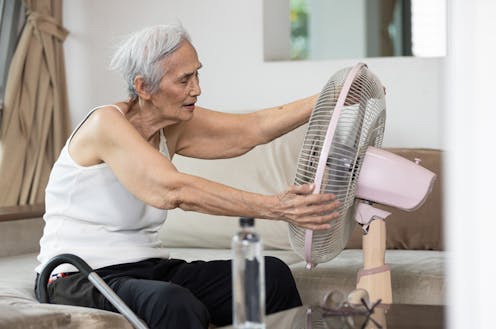
We all know someone who insists on wearing a cardigan in summer or refuses to turn on the air conditioning because “it’s not that hot”. Chances are this is an older person, and there’s a good reason for that.
As we get older, we tend to not “feel” the heat as much[1] even though our bodies are less able to handle the heat[2]. This contradiction can have lethal consequences[3], especially during periods of extreme heat.
So, why is extreme heat so dangerous for older people? And what can we do to help?
Read more: Health Check: how can extreme heat lead to death?[4]
Why are older people at risk?
Extreme heat kills[5] more Australians than all other natural hazards[6], and people aged 60 or older account for 69% of those deaths.
There are five key reasons we’re more susceptible to heat as we get older.
1. Bodily changes
One of the main ways we lose excess heat, blood flowing to our skin[7], isn’t as effective as we get older. This is in part because the blood vessels in our skin don’t expand fast enough, and we may have less blood pumping with each beat of our heart.
Many other changes[8] in our bodies also lead us to gain and store more heat as we get older. These include how our bodies control sweat and how well our kidneys balance fluid, which are both important for staying cool.
Read more: How rising temperatures affect our health[9]
2. Social isolation
Loneliness and social isolation are health risks[10] on their own, but also multiply the risk[11] of heat-related illness.
A South Australian survey[12] of older people showed those who were socially isolated were less confident in asking for help during a heatwave.
This is concerning as many older Australians live alone[13], and we are more likely to live alone as we get older.
Read more: One in four Australians are lonely, which affects their physical and mental health[14]
3. Beliefs and behaviour
Older Australians may not respond to heat in ways that protect their own health and wellbeing. Australian culture tends to view heat tolerance as a matter of resilience[15] and identity[16], where there is a sense of generational pride in being able to cope with the heat.
Reports also suggest[17] many older people have concerns about the cost of air conditioning, may be hesitant to use it, or accidentally use reverse cycle units as heaters.
Read more: High energy costs make vulnerable households reluctant to use air conditioning: study[18]
4. Medical issues
Many chronic illnesses that are more common with age are also associated with an increased risk for heat-related illness. Because blood flow is so important for regulating our body temperature, it’s not surprising that conditions such as heart failure[19] and diabetes[20] are associated with increased heat risk.
Similarly, many medications commonly prescribed for chronic illnesses can interfere[21] with how our body regulates temperature. For instance, some blood pressure medicines reduce our ability to sweat and lose heat.
Read more: What time of day should I take my medicine?[22]
5. Home environment
It is increasingly difficult[23] for older Australians to find affordable and appropriate housing, especially pensioners and renters.
Poor home design, lack of insulation, inability to pay their energy bills, and limited income all contribute[24] to being vulnerable to heatwaves in Australia. This is particularly troubling as energy prices soar.
Read more: To keep heatwaves at bay, aged care residents deserve better quality homes[25]
What can we do?
Older Australians
Knowing the risks of extreme heat is the first step. Don’t underestimate[26] your own risk during a heatwave.
There are many practical ways we can all keep ourselves and our homes cool, both safely and efficiently. These include:
- using a fan, which is effective[27], especially when it’s humid, but may not be enough[28] when it’s very hot and dry. If you have an air conditioner, consider using it
knowing the conditions inside your home by installing thermometers that ideally also measure humidity[30] so you know which ways will work best to cool down
opening windows facing away from the sun when it’s cooler outside; otherwise keep blinds closed in the heat of the day
taking cool showers or applying a damp cloth to the back of your neck can help cool the skin
taking regular, small drinks of water, even when you’re not thirsty (unless you have heart or kidney problems[31] in which case you need to talk to your doctor first as too much water may be a problem for you)
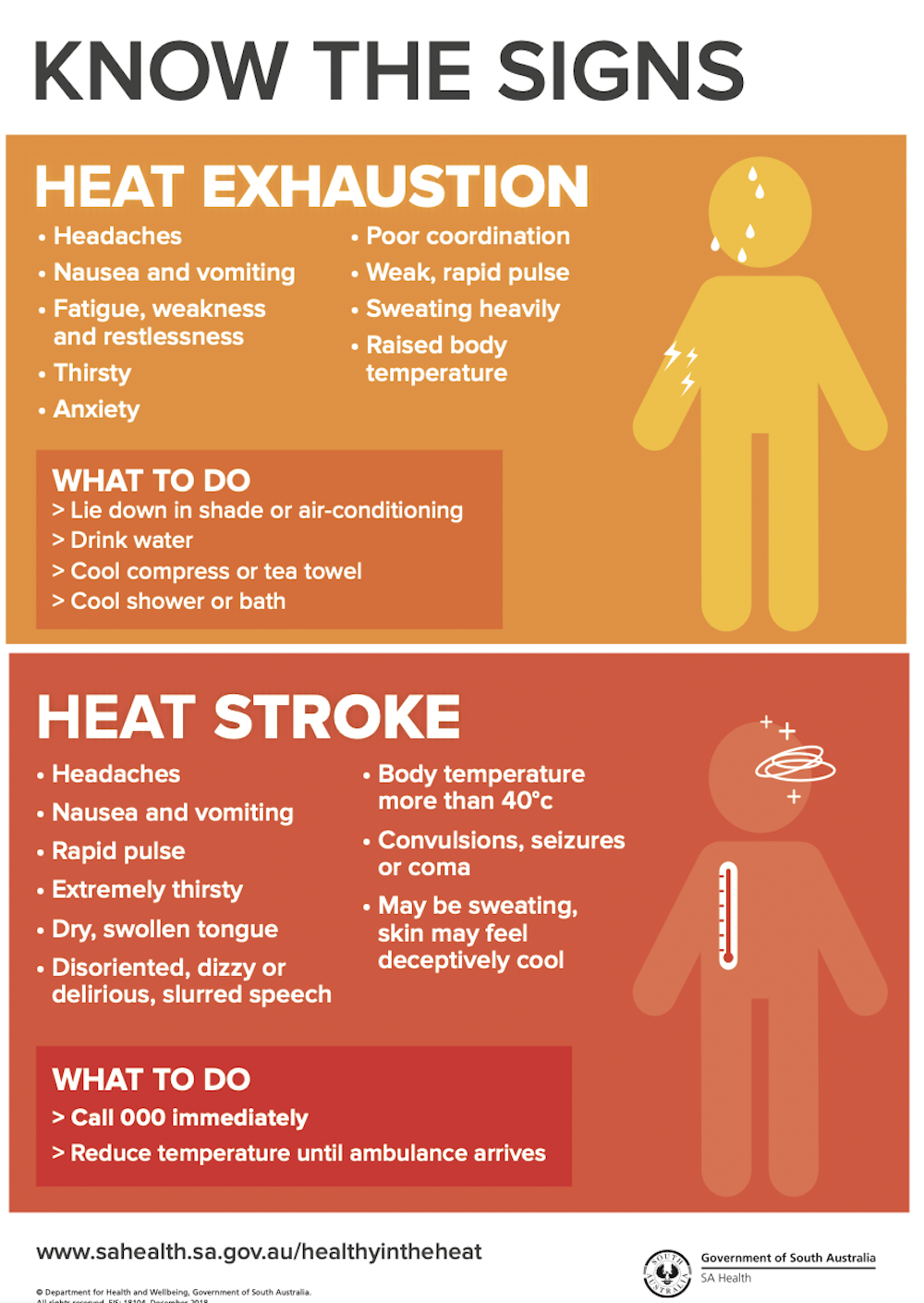
knowing the signs[32] of heat exhaustion and heat stroke.
Read more: How to cope with extreme heat days without racking up the aircon bills[33]
Older relatives, friends and neighbours
We can all keep an eye on our older relatives, friends and neighbours as:
keeping in touch is great protection[34] from heat-related illness; check in regularly
when an older person can’t keep the house cool, support a day trip to a cooler place such as a library, cinema, or shopping centre
encourage them to talk to their doctor about how medical conditions or medications might increase their risk to heat.
Read more: Australia's 'deadliest natural hazard': what's your heatwave plan?[35]
We need to raise awareness
Australians are growing complacent about the health risks of extreme heat, see heatwaves as normal and public health messages aren’t cutting through[36] any more.
It’s also important to remember that older people aren’t all the same, so any public health approaches to extreme heat should be tailored to communities and individuals[37].
One way we’re trying to help is by working directly with older people. Together, we’re researching and developing a smart device[38] that makes it easier to know when your house is getting warm, and customising strategies you can use to cool down safely.
Read more: Health Check: how do I tell if I'm dehydrated?[39]
References
- ^ as much (www.sciencedirect.com)
- ^ less able to handle the heat (journals.physiology.org)
- ^ lethal consequences (www.sciencedirect.com)
- ^ Health Check: how can extreme heat lead to death? (theconversation.com)
- ^ Extreme heat kills (www.sciencedirect.com)
- ^ all other natural hazards (www.sciencedirect.com)
- ^ blood flowing to our skin (www.ncbi.nlm.nih.gov)
- ^ Many other changes (www.sciencedirect.com)
- ^ How rising temperatures affect our health (theconversation.com)
- ^ health risks (www.sciencedirect.com)
- ^ multiply the risk (www.sciencedirect.com)
- ^ survey (www.mdpi.com)
- ^ live alone (www.aihw.gov.au)
- ^ One in four Australians are lonely, which affects their physical and mental health (theconversation.com)
- ^ resilience (www.ncbi.nlm.nih.gov)
- ^ identity (www.tandfonline.com)
- ^ Reports also suggest (www.sahealth.sa.gov.au)
- ^ High energy costs make vulnerable households reluctant to use air conditioning: study (theconversation.com)
- ^ heart failure (www.sciencedirect.com)
- ^ diabetes (www.ncbi.nlm.nih.gov)
- ^ interfere (www.health.vic.gov.au)
- ^ What time of day should I take my medicine? (theconversation.com)
- ^ increasingly difficult (www.anglicare.asn.au)
- ^ all contribute (cur.org.au)
- ^ To keep heatwaves at bay, aged care residents deserve better quality homes (theconversation.com)
- ^ underestimate (www.mdpi.com)
- ^ which is effective (theconversation.com)
- ^ not be enough (www.sciencedirect.com)
- ^ SA Health (www.sahealth.sa.gov.au)
- ^ measure humidity (theconversation.com)
- ^ heart or kidney problems (www.betterhealth.vic.gov.au)
- ^ knowing the signs (www.sahealth.sa.gov.au)
- ^ How to cope with extreme heat days without racking up the aircon bills (theconversation.com)
- ^ great protection (link.springer.com)
- ^ Australia's 'deadliest natural hazard': what's your heatwave plan? (theconversation.com)
- ^ aren’t cutting through (widgets.figshare.com)
- ^ communities and individuals (www.sciencedirect.com)
- ^ researching and developing a smart device (www.griffith.edu.au)
- ^ Health Check: how do I tell if I'm dehydrated? (theconversation.com)
Read more https://theconversation.com/5-reasons-to-check-on-your-elderly-neighbour-during-a-heatwave-196218