What's driving the potato chip shortage and when will it pass?
- Written by: Flavio Macau, Associate Dean - School of Business and Law, Edith Cowan University
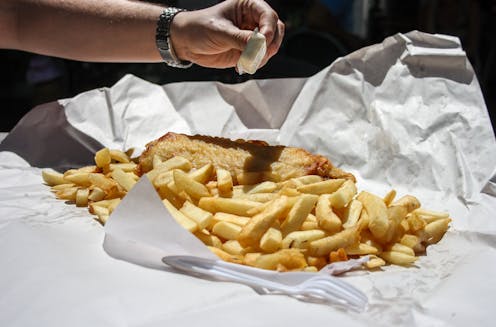
Potatoes are among Australia’s favourite[1] vegetables. However, we are facing a shortage of processed potatoes, especially of frozen chips. Coles introduced a two-item limit[2] for shoppers seeking frozen potato products. Fish and chip businesses are under pressure and some are outraged[3] McDonald’s is launching a new potato product in the middle of a crisis.
As with so many staples and fresh produce items in the past two years – lettuce, milk and eggs to name a few – the problem is a temporary imbalance between supply and demand.
Read more: Floods, pandemics, wars and market forces: what's driving up the price of milk[4]
Soaring demand
Let’s start with demand, which is soaring[5].
Countries like China[6] are pushing potato consumption as part of their food security policy, and rising urbanisation worldwide is driving up[7] consumption of ready-to-eat and ready-to-cook foods.
Fast-food chains are cashing in on the opportunity. McDonald’s is set to continue[8] its expansion[9] in Australia. In 2020, McDonald’s Australia purchased over 133,000[10] tons of potatoes. With the launch of its potato scallops[11] with chicken salt product, demand for processed potatoes should only increase.
Supply won’t keep up
On the demand side, potato growers worldwide had to take action against higher cultivation costs.
European countries exporting frozen potatoes to Australia are facing much higher energy[12] bills. Many growers sold[13] supplies early in the season to save on storage, which demands a lot of energy to control for temperature and humidity.
That means fewer[14] potatoes are available to export as we move into the year.
In New Zealand, the main exporter to Australia, vast amounts of rainfall in the past month are set to momentarily reduce yields[15], as potatoes need dry soil and sunlight before harvest.
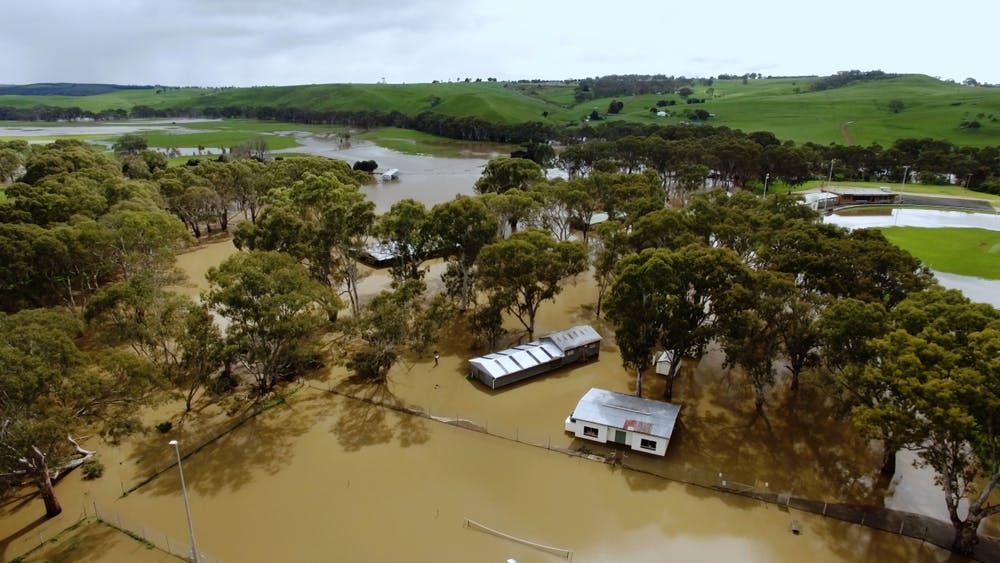
Australian potato farmers are also struggling with the weather. Central regions to the production of processed potatoes in South Australia, Tasmania, and Victoria were hit by extreme weather events[16] in the past few months. Existing crops were lost to floods[17], and planting new crops was significantly delayed.
The pain Australians are feeling now is not new to our neighbours in New Zealand, who had their own “chipocalypse” just a few years ago.
In 2017, up to 30%[18] of New Zealand’s potato production in some areas was ruined by heavy rain.
Recovery is on the way, but…
Potato farmers will recover.
What we see now is partly a reflection of the inclement weather from two or three months ago. With La Niña predicted to end[19], fewer floods are expected for 2023.
Later this year could well see healthy yields, bringing relief to potato farmers. Give them a full cycle[20] and in about four months current shortages may be over, especially if prices continue to soar[21].
But this will not be the last shortage we will see, thanks to some relatively new factors in the farming landscape.
First, small farmers are quitting.
The 2020 European Union farm census[22] show consolidation is not slowing, with about 800 farmers[23] quitting the sector every day.
In 2021-22 the Australian Bureau of Statistics registered 87,800[24] agricultural businesses, compared to about 134,000[25] in 2009-10 – roughly a 35% reduction.
That does not mean less food, but more concentration and therefore more risk[26]. An extreme event hitting a group of small farmers is normally offset by their peers in the next town. When a very large farm is hit by the same event, often there is no immediate alternative.
Then there’s climate change. Weather patterns[27] are changing[28] and will continue[29] to do so in the foreseeable future. Australia could go from a rare three year La Niña straight into a hot and dry El Niño[30].
This much volatility demands new skills and advanced, coordinated planning to save for a raining day.
So, what can farmers and governments do to prepare?
Of course, there have been bumper harvests as well — just look at Western Australia’s grain[31] crops this summer. But some of the value of these exceptional yields is lost to transportation and storage bottlenecks.
With proper conditions, many grains, fruits and vegetables can be stockpiled[32] for long periods of time. Stored correctly, potatoes can go for months[33] without spoiling. Processed and frozen chips will last even longer inside industrial freezers.
If storage costs can be brought down – which has a lot to do with interest rates and electricity bills – farmers can keep surplus coming from bumper harvests instead of selling them immediately at discounted prices. Quicker deals with friendly international partners can also provide faster imports in dire times.
It’s up to Australia to create the right conditions to better cope with more volatility, so empty shelves can become a thing of the past.
Read more: Food shortages: five ways to fix 'unfair' supply chains[34]
References
- ^ favourite (www.agriculture.gov.au)
- ^ limit (www.coles.com.au)
- ^ outraged (www.news.com.au)
- ^ Floods, pandemics, wars and market forces: what's driving up the price of milk (theconversation.com)
- ^ soaring (www.expertmarketresearch.com)
- ^ China (theconversation.com)
- ^ driving up (www.potatonewstoday.com)
- ^ continue (qsrmedia.com.au)
- ^ expansion (www.theaustralian.com.au)
- ^ 133,000 (www.nzherald.co.nz)
- ^ scallops (www.news.com.au)
- ^ energy (www.reuters.com)
- ^ sold (www.mintecglobal.com)
- ^ fewer (ausveg.com.au)
- ^ reduce yields (www.stuff.co.nz)
- ^ extreme weather events (static1.squarespace.com)
- ^ floods (www.sbs.com.au)
- ^ 30% (www.theguardian.com)
- ^ end (www.theguardian.com)
- ^ cycle (greenharvest.com.au)
- ^ soar (www.agriculture.gov.au)
- ^ census (ec.europa.eu)
- ^ 800 farmers (www.farmersjournal.ie)
- ^ 87,800 (www.abs.gov.au)
- ^ 134,000 (www.ausstats.abs.gov.au)
- ^ risk (www.agriculture.gov.au)
- ^ Weather patterns (theconversation.com)
- ^ changing (origin.cpc.ncep.noaa.gov)
- ^ continue (www.epa.gov)
- ^ hot and dry El Niño (www.theguardian.com)
- ^ grain (www.graincentral.com)
- ^ stockpiled (www.potatogrower.com)
- ^ months (www.sciencedirect.com)
- ^ Food shortages: five ways to fix 'unfair' supply chains (theconversation.com)
Read more https://theconversation.com/whats-driving-the-potato-chip-shortage-and-when-will-it-pass-198667