Would a nature repair market really work? Evidence suggests it's highly unlikely
- Written by: Yung En Chee, Senior Research Fellow, Environmental Science, The University of Melbourne
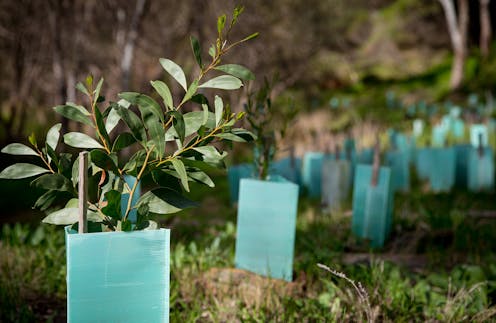
Why should governments do all of the heavy lifting to arrest the steep decline of many ecosystems? Endangered species live on private land too – so why not give farmers and landholders incentives to look after them and restore habitat?
Framed like this, it’s easy to see the appeal of nature repair markets. Harness private money and direct it towards rescuing nature. No wonder the Albanese government is forging ahead with its nature repair market bill[1] and seeking public submissions[2]. If it becomes law, landholders will be able to gain tradeable biodiversity certificates for projects that protect, manage and restore nature.
Why do we need it? According to the government, actually reversing the decades of decline in Australia’s environment is so expensive it’s beyond[3] government and individual landholders.
It sounds beautiful in theory – carbon credits, but for nature. But the idea has a poor track record in practice. Other offset markets have been easily gamed. Ensuring integrity is costly. Policies with teeth – banning land clearing, stronger environmental laws – are much more likely to work.

Where did this idea come from?
It’s not wholly new. Labor’s plan is based on a repackaged and expanded Morrison government biodiversity stewardship[4] program, originally targeted at farmers.
Environment Minister Tanya Plibersek has claimed[5] the market is a response to demand. “Businesses tell me all the time that they want to invest in nature because their shareholders, customers and staff are demanding it,” she has said.
Read more: Australia's next government must tackle our collapsing ecosystems and extinction crisis[6]
Consultants paint glowing futures where markets in nature balloon in size. McKinsey[7] estimates the current value of global nature credit markets is around A$7 billion a year. If the forecasts of PricewaterhouseCoopers[8] are correct, that could vastly increase to $137 billion in Australia by 2050.
Enthusiasm for voluntary nature markets is at an all time high. In the last two years, we’ve seen many plans and initiatives, from Nature Finance[9] to the Taskforce on Nature Markets[10] to the Biodiversity Credit Alliance[11].
So why the scepticism? In short, it’s harder than it looks to unlock private capital and direct it to pro-nature interventions.
If they are to succeed, these kinds of schemes must be legitimate. To make these credits worthy of investment and tradeable, you need a governance framework, measurement systems[12], certification, registration, contracting, trading, monitoring, reporting, accounting, auditing, and a bureaucracy for administering, consulting and advising[13] on all of it.
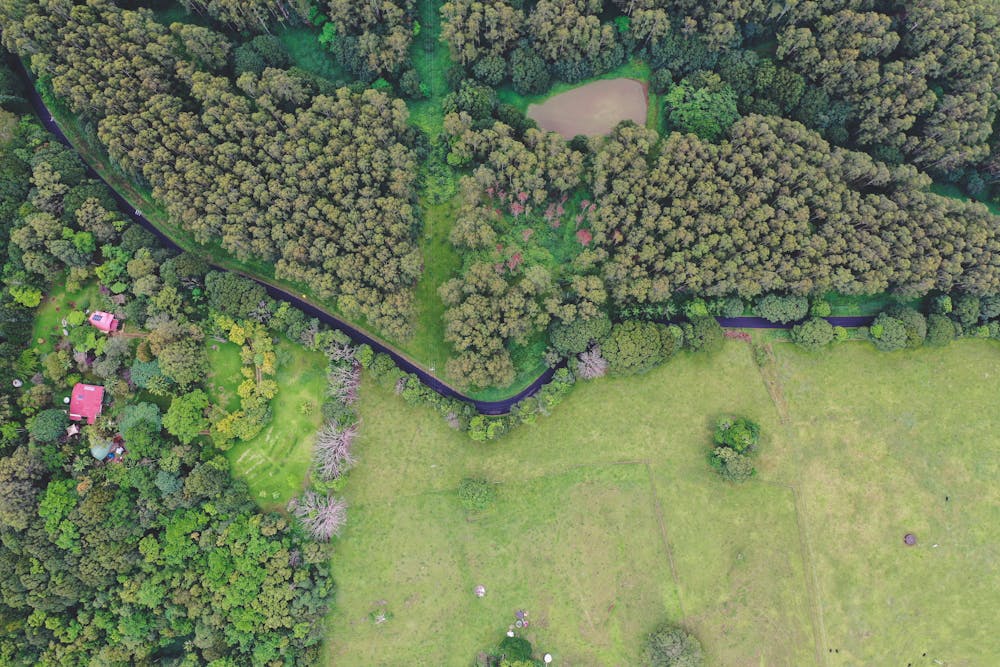 Is private money likely to be invested in biodiversity credits, given the high transaction cost? That, too, seems unlikely.
Shutterstock
Is private money likely to be invested in biodiversity credits, given the high transaction cost? That, too, seems unlikely.
Shutterstock
3 reasons for scepticism: money, demand and effectiveness
1. Money
If the reason for turning to the private sector is funding, how can we reconcile this with the Stage 3 tax cuts, set to slash government revenues[14] by $300 billion?
Crying poor is not a credible excuse. As economists repeatedly point out, countries with their own sovereign currency[15] can create money to spend on priorities they care about.
2. Demand
You would think a policy aimed at the private sector would be based on credible market data. But demand for these voluntary credits is “untested and likely overestimated”[16].
Almost three-quarters of the current global biodiversity market is based on compliance[17]. Companies aren’t plowing money in because they want to. They do it because they have to. Australia’s nature repair scheme, by contrast, is voluntary. No other country has launched a large-scale voluntary biodiversity credit scheme.
In showcasing two decades of practice of voluntary biodiversity credits, the World Economic Forum only mustered four examples[18]. None of them have detail on scale, value or improvement to the environment.
3. Effectiveness
To date, we have little evidence market-based regulatory measures, such as compulsory biodiversity and carbon offsets[19], actually do what they promise to do. In short, it is very unclear that these tools make things better relative to a baseline.
Of Australia’s states, Victoria has arguably the best-developed and most technically sophisticated biodiversity offset scheme. Even so, the Victorian Auditor-General has found[20] the scheme cannot show results. Their report found Victoria “is not achieving no net biodiversity loss from native vegetation clearing on private land”.
In New South Wales, the deficiencies[21] are even more severe. Our most populous state has a scheme which lacks[22] a clearly defined objective to measure success against.
Among the scheme’s many problems are non-delivery[23], double-dipping[24], conflicts of interest and potential insider trading[25].
Why use a market to deliver a public good?
Functioning ecosystems produce clean water, breathable air, nutrient recycling, fertile soil, food, fibre and many other benefits.
So why are we turning to markets to deliver complex public goods like biodiversity?
The natural world is multifaceted, interconnected and complex. Developing market infrastructure to deliver desired natural outcomes is extremely difficult.
Victoria and NSW’s biodiversity offset schemes show us there’s no guarantee advocates of voluntary markets can design and produce tangible, low fraud risk biodiversity credits.
Even if they can, the cost of credibility and good governance will mean these credits will have high transaction costs in conflict with the competitive returns sought by investors[26].
 Results from two existing state-based schemes are underwhelming.
Shutterstock
Results from two existing state-based schemes are underwhelming.
Shutterstock
Consider the challenges faced by the far more straightforward schemes aimed at preserving forests for carbon offsets or credits. These schemes have been plagued by issues, such as human rights violations[27], questions over credibility of offsets[28] and leakage[29] of environmental damage to other areas.
In these schemes, failure is common and success is rare. It’s time to end the catchcry[30] of “let’s not allow the perfect to become the enemy of the good”.
After 30 years of experience, we can now conclude these schemes have done a great deal more harm than good.
Repairing nature? Use sticks, not carrots
If we want to reverse Australia’s environmental decline, we know what we have to do.
We have to end land clearing[31] to salvage as much habitat as possible.
We have to end unsustainable water extraction[32].
We have to rapidly cut emissions[33] to limit further climate damage.
We have to put public money[34] into conservation and environmental management.
And we need environmental laws with teeth to act as a more direct and effective[35] method of ending the damage.
Turning nature around is hard. We’ve left it late. But markets are not the answer – they’re a band-aid solution. Time to rip it off.
Read more: Labor's plan to save threatened species is an improvement – but it's still well short of what we need[36]
References
- ^ nature repair market bill (storage.googleapis.com)
- ^ public submissions (www.dcceew.gov.au)
- ^ beyond (storage.googleapis.com)
- ^ biodiversity stewardship (theconversation.com)
- ^ has claimed (www.theguardian.com)
- ^ Australia's next government must tackle our collapsing ecosystems and extinction crisis (theconversation.com)
- ^ McKinsey (uploads-ssl.webflow.com)
- ^ PricewaterhouseCoopers (www.pwc.com.au)
- ^ Nature Finance (www.naturefinance.net)
- ^ Taskforce on Nature Markets (www.naturemarkets.net)
- ^ Biodiversity Credit Alliance (www.biodiversitycreditalliance.org)
- ^ measurement systems (blogs.lse.ac.uk)
- ^ bureaucracy for administering, consulting and advising (t.co)
- ^ slash government revenues (www.theguardian.com)
- ^ sovereign currency (theconversation.com)
- ^ “untested and likely overestimated” (www.theguardian.com)
- ^ based on compliance (uploads-ssl.webflow.com)
- ^ World Economic Forum only mustered four examples (www3.weforum.org)
- ^ carbon offsets (australiainstitute.org.au)
- ^ found (www.audit.vic.gov.au)
- ^ deficiencies (www.theguardian.com)
- ^ which lacks (www.parliament.nsw.gov.au)
- ^ non-delivery (www.theguardian.com)
- ^ double-dipping (www.theguardian.com)
- ^ potential insider trading (www.theguardian.com)
- ^ sought by investors (www.sustainableviews.com)
- ^ human rights violations (unearthed.greenpeace.org)
- ^ credibility of offsets (www.source-material.org)
- ^ leakage (eprints.lse.ac.uk)
- ^ the catchcry (www.weforum.org)
- ^ land clearing (theconversation.com)
- ^ water extraction (theconversation.com)
- ^ cut emissions (theconversation.com)
- ^ public money (papers.ssrn.com)
- ^ direct and effective (theconversation.com)
- ^ Labor's plan to save threatened species is an improvement – but it's still well short of what we need (theconversation.com)