You've read the scary headlines – but rest assured, your cookware is safe
- Written by: Oliver A.H. Jones, Professor, RMIT University
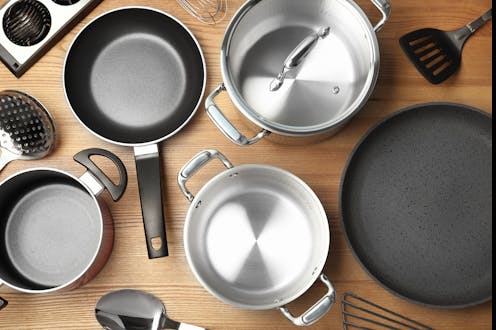
“Are nonstick pans toxic”? “Can aluminium cookware cause dementia?” “Are my scratched pans still safe?” That’s just a sample of a few worrying headlines about the safety of our pots and pans recently.
These stories often crop up in the media, and it’s easy to see why. We use our cookware every day. We want it to be safe. So are these concerns legitimate?
Good news for those who worry: the main chemical of concern used to make nonstick pans has been phased out. And aluminium is not linked to dementia.
If you are shopping for new kitchenware, you’ll find there’s now a lot of choice in material, such as cast iron, stainless steel, copper, non-stick and ceramic. By and large, they are all safe.
The choice over which is best depends on what type of cook you are, not on the health risks from the material.
Nonstick pans: levels of forever chemicals are safe
Nonstick pans are very popular because food is less likely to stick to their coating. That means you need less oil. They’re also easier to clean than, say, cast iron pans.
Most nonstick pans are coated with Teflon, the brand name for polytetrafluoroethylene (PFTE), though some are now being made with a titanium-ceramic coating.
If you’ve looked into cookware health risks, nonstick pans usually feature at the top of the list. That’s due to concerns about their use of “forever chemicals” such as PFTE.
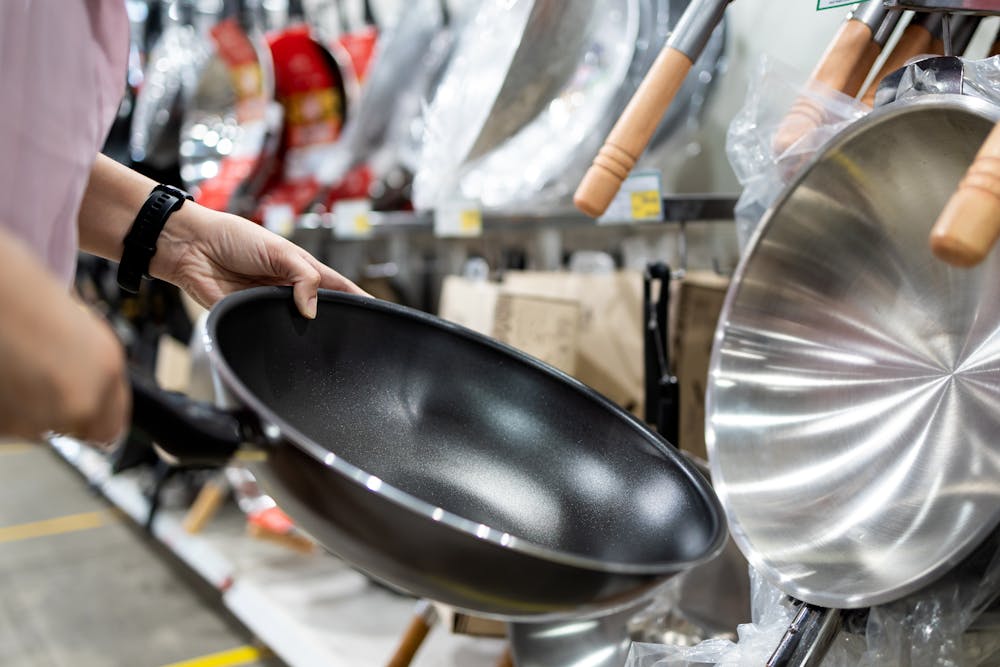
Forever chemicals is the common phrase for per- and poly-fluoroalkyl substances (PFAS), a family of man-made chemicals based on carbon-fluorine bonds.
These chemicals became notorious after the 2019 film Dark Waters, which tells the story of an American town contaminated[1] with the forever chemical perfluorooctanoic acid (PFOA).
The concern many have about nonstick cookware is because before 2013, PFOA was used to make Teflon. But it’s been a decade and this is no longer[2] the case. Even when PFOA was used in pans it posed little risk[3], and neither does Teflon.
Forever chemicals have been around since the 1940s, used in Teflon as well as food packaging, waterproof textiles, and firefighting foams. There are very real concerns about firefighting foams, which have caused widespread environmental pollution, particularly on army bases[4] and firefighting training facilities[5] in Australia. People affected have launched legal action over contamination, worried over potential links to cancer, liver damage, and lowered immunity in children.
So why are forever chemicals like PFTE safe in our cookware?
Two reasons: stability and concentration.
Teflon is stable in cookware, even when heated to the temperatures commonly used in cooking. It begins to deteriorate if heated over 260℃ when it may release polymer fumes but most people don’t fry their dinner at 260℃
Not only that, the concentration levels of these chemicals in your kitchen and the environment are far lower than those found to cause health effects[6]. Heavily contaminated sites are very different to your well-manufactured pots and pans.
If your non-stick pan is scratched, it may be a good idea to replace it but you aren’t going to get a damaging dose of PFAS from dinner.
Read more: A blanket ban on toxic 'forever chemicals' is good for people and animals[7]
Aluminium pans: Can they cause dementia?
There’s no strong evidence supporting fears aluminium exposure can causes any kind of dementia, including Alzheimer’s disease.
So where did the idea come from?
In 1965, scientists discovered that feeding rabbits very high levels of aluminium produced changes in the rabbits’ brains resembling Alzheimer’s. This was later proven to be incorrect[8].
There have also been reports[9] the brains of some people with dementia had high levels of metals such as aluminium. But no-one has found a link.
That’s probably where this myth[10] came from. Even though there’s no credible evidence for this, it’s led some people to avoid aluminium cookware – and even drink cans.
That’s a shame, as aluminium cookware heats up very rapidly and is lightweight and cheap. There have been issues with plain aluminium reacting to acidic and alkaline foods, or warping in the heat. You can largely avoid these – and put any residual health concerns to rest – by choosing anodised aluminium[11] cookware.
Are copper pans safe?
Copper is famously gorgeous. There’s something about seeing burnished copper cookware twinkling on the shelf. But it’s not all aesthetics – copper is an excellent conductor of heat and tends to heat the pot or pan evenly. That’s useful for delicate dishes requiring fine temperature control. It’s why you’ll often see copper pans used by professional chefs.
What about your health? If you eat food laced with high levels of copper, you can get nausea, vomiting and even liver damage. But that’s not going to happen from your pots or pans – you’ll get trace elements at best. (You also need small amounts of copper as an essential nutrient).
And most copper cookware has a non-reactive lining like stainless steel or tin, preventing traces of copper from getting into food.
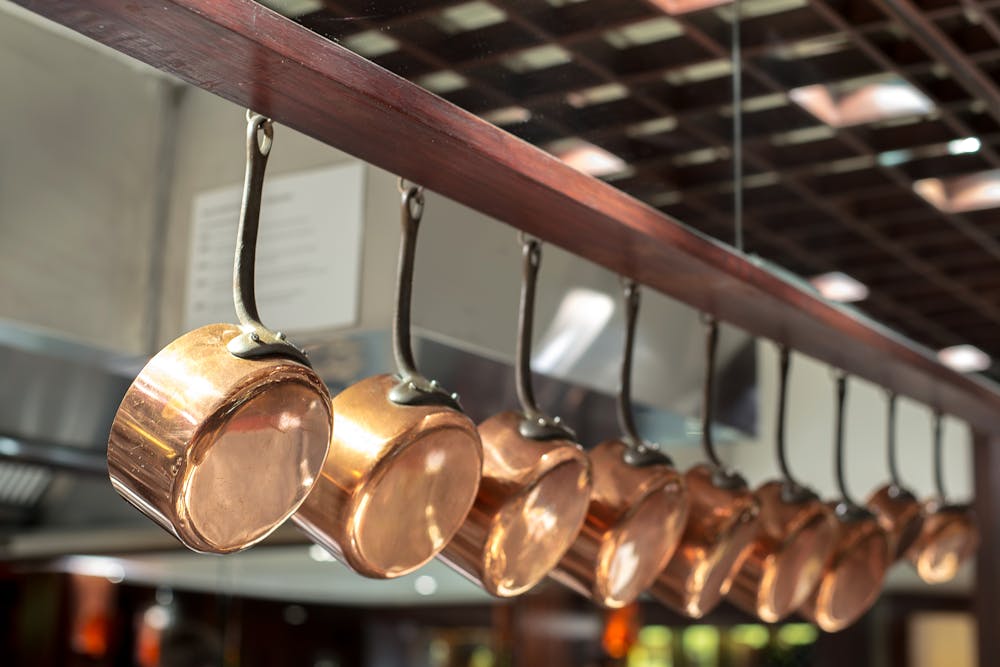 Chefs often like copper for its temperature control.
Shutterstock
Chefs often like copper for its temperature control.
Shutterstock
What about cast iron, stainless steel or ceramic cookware?
Cast iron, stainless steel and ceramic cookware are all good options, as they’re usually durable, non-reactive, and easy to clean.
Downsides? Cast iron is heavy and may not heat evenly. Some ceramics can be damaged quite easily, though most modern varieties are very strong.
In cheap stainless steel pans, nickel and other metals could potentially leach out of the pan and into your meal but it’s very unlikely unless the manufacturer is cutting corners and using low-quality stainless steel.
By and large, all three are good choices if they are from reputable manufacturers.
So why do we worry about chemicals and metals in our cookware?
We’re often bad at assessing risk. The more we hear about an alleged risk, the more dangerous we tend to think it is – even when the actual risk is low. Fear of chemicals Chemophobia[12] is common but many of these fears are unnecessary. The painkiller you took for your hangover was a chemical, as is the fuel in your car.
In short, your cookware is safe. Enjoy your dinner.
Read more: Seven ways to protect your health when cooking with gas[13]
References
- ^ contaminated (slate.com)
- ^ no longer (www.healthline.com)
- ^ little risk (www.webmd.com)
- ^ army bases (www.theguardian.com)
- ^ firefighting training facilities (www.abc.net.au)
- ^ health effects (www.sciencedirect.com)
- ^ A blanket ban on toxic 'forever chemicals' is good for people and animals (theconversation.com)
- ^ be incorrect (www.ncbi.nlm.nih.gov)
- ^ reports (www.alzheimers.org.uk)
- ^ this myth (www.alz.org)
- ^ anodised aluminium (www.drweil.com)
- ^ Chemophobia (www.canr.msu.edu)
- ^ Seven ways to protect your health when cooking with gas (theconversation.com)