In Greta Gerwig’s Barbie Land, the matriarchy can be just as bad as the patriarchy
- Written by: Katie Pickles, Professor of History, University of Canterbury
Spoiler alert: this review contains plot details of the film.
At last – after the hype and advance mass-merchandising – the Barbie movie is here. Part spoof, part action fantasy, part Barbie doll virtual museum, it’s a full-blown product placement experience – but ironic as much as iconic.
The movie sets off feeling like a post-pandemic party. It’s an opportunity to be frivolous after a time of adversity, and to reclaim the pink of life – especially, perhaps, for fun-starved Gen Z. Given Barbie first appeared in 1959 as a baby boomer’s plastic mini-mannequin, dress-up fashion doll, that’s real inter-generational reach.
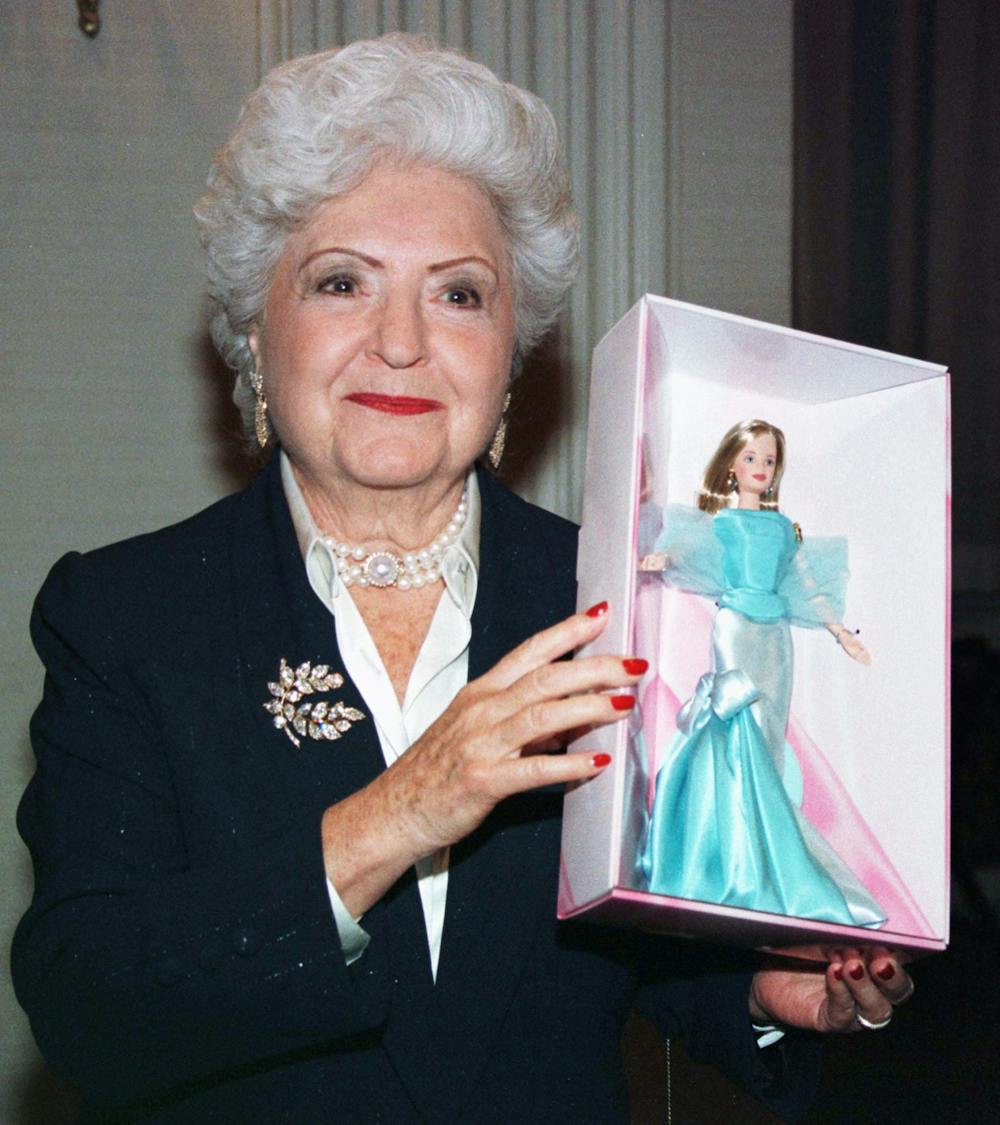
But to early critics, the doll evoked the mass production of white, American tween culture. To feminists seeking women’s liberation, Barbie symbolised a culture that objectified women, treating them quite literally as living dolls.
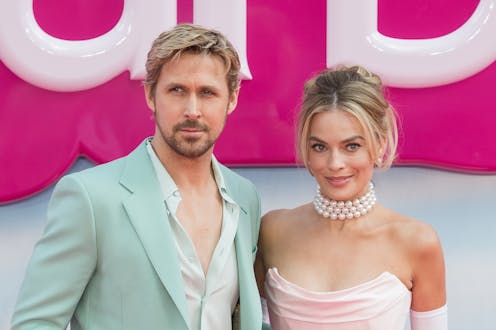
All this is captured in the first part of the film, where “Stereotypical Barbie” and “Just Beach Ken” are brilliantly brought to life by Margot Robbie and Ryan Gosling. The film playfully toys with the long history of Barbie debates, subtly feeding into the backstory.
Just as impressively, no expense has been spared on set and accessory design. Watching the actors breathe, think, move and play like dolls is hilarious and spooky.
Of course, real people playing dolls might suggest those feminist fears have been realised. Except for the fact that Barbie Land in this film is an empowering matriarchy, full of dreams coming true, and where the dolls are leading perfect lives of substance.
Unlike real-world America, there is a woman president. Equity, diversity and the acceptance of all body types are on display. All of which support Barbie manufacturer Mattel’s claim to create the dolls as “role models” for women’s advancement in a changing world.
And then the aspirational matriarchy starts to malfunction. Stereotypical Barbie develops bad breath, flat feet, cellulite and a fear of death. A leak in the portal to the Real World means dark and crazy drawings by that Barbie’s owner are having a voodoo effect. She must travel there to sort things out.
‘I am Kennough’
The movie turns dark, with tag-along Ken discovering patriarchy in the Real World and taking it back to Barbie Land. With Ken largely invisible in the film’s merchandising and girls-night-out launches, we’ve been set up for the surprising plot twist.
Gosling proceeds to own the screen and make this the Ken Movie. He rejects being “just Ken” and instead acts, dances, prowls and flexes to steal the show. (He calms down later, accepting that Barbie does not want to be his girlfriend.)
An appendage no more, it is Ken, not Barbie, who whines about blonde fragility and every night being a girls’ night, and who now sings of seeking to push women around and take them for granted.
Read more: Greta Gerwig’s Barbie movie is a 'feminist bimbo' classic – and no, that's not an oxymoron[1]
This is where the movie is at its most profound. Ken, not Barbie, is the victim of sexism. As Barbie has flourished, Ken has been left behind. Kens are the objectified, excluded second sex.
There are echoes here of the American feminist Susan Faludi’s writings. In the early 1990s, she saw feminism as being defined in a sign hoisted by a little girl at the 1970 Women’s Strike for Equality[2] march: I AM NOT A BARBIE DOLL.
By the end of that decade she described the betrayal of the American man, and a crisis of masculinity. Emasculated men, she wrote, were left behind in the wake of women’s progress. But as the inhabitants of Barbie Land discover in the film, matriarchy can be just as damaging as patriarchy. Better to mix pink and blue to make purple instead of them competing.
Rejects save the day
Writer-director Greta Gerwig and her collaborator (and husband) Noah Baumbach feed the dichotomy of being “for” or “against” Barbie. But they ultimately render that debate history.
Enter Weird Barbie (Kate McKinnon) and Alan (Michael Cera), outcasts and rejects of Barbie Land, who want “nobody in the shadows”. These are the real heroes who save the day, deprogramming the brainwashed Barbies. It is one more layer of irony in a film about a doll once accused of brainwashing girls.
Indeed, when Barbie cries at one point about being ugly, providing irony within irony, narrator Helen Mirren steps in to suggest that Margot Robbie was probably not the right actress to cast to make that point.
Read more: How I learned to stop worrying and love the doll – a feminist philosopher's journey back to Barbie[3]
By the end of the film, Barbie has become real and ordinary. Replete with genitalia, she liberates herself from her plastic-fantastic dream world – without Ken – to live in the unruly real world. In a full circle, the doll becomes human.
So, must women’s empowerment come at men’s expense? The historian of patriarchy Gerda Lerner[4] once addressed this very question. She said the idea was an outmoded construct that
no longer serves the needs of men or women and in its inextricable linkage to militarism, hierarchy, and racism it threatens the very existence of life on earth.
As in the finale of Gerwig’s film, Lerner’s feminist vision was for everybody to stand in the sunshine. In a world emerging from COVID and grappling with the general grimness of war and climate change, Gerwig’s Barbie is both an exuberant opiate and a comment on the state of global feminism.
Perhaps most ironically, however, it may signal market saturation for Barbie. Surely this must be her peak moment, a massive last hurrah, after which the doll and all she has represented for over 60 years recede into history. Then again, Hollywood loves a sequel.
References
- ^ Greta Gerwig’s Barbie movie is a 'feminist bimbo' classic – and no, that's not an oxymoron (theconversation.com)
- ^ Women’s Strike for Equality (time.com)
- ^ How I learned to stop worrying and love the doll – a feminist philosopher's journey back to Barbie (theconversation.com)
- ^ Gerda Lerner (www.gerdalerner.com)