A new TikTok trend has people drinking toxic borax. An expert explains the risks – and how to read product labels
- Written by: Nathan Kilah, Senior Lecturer in Chemistry, University of Tasmania
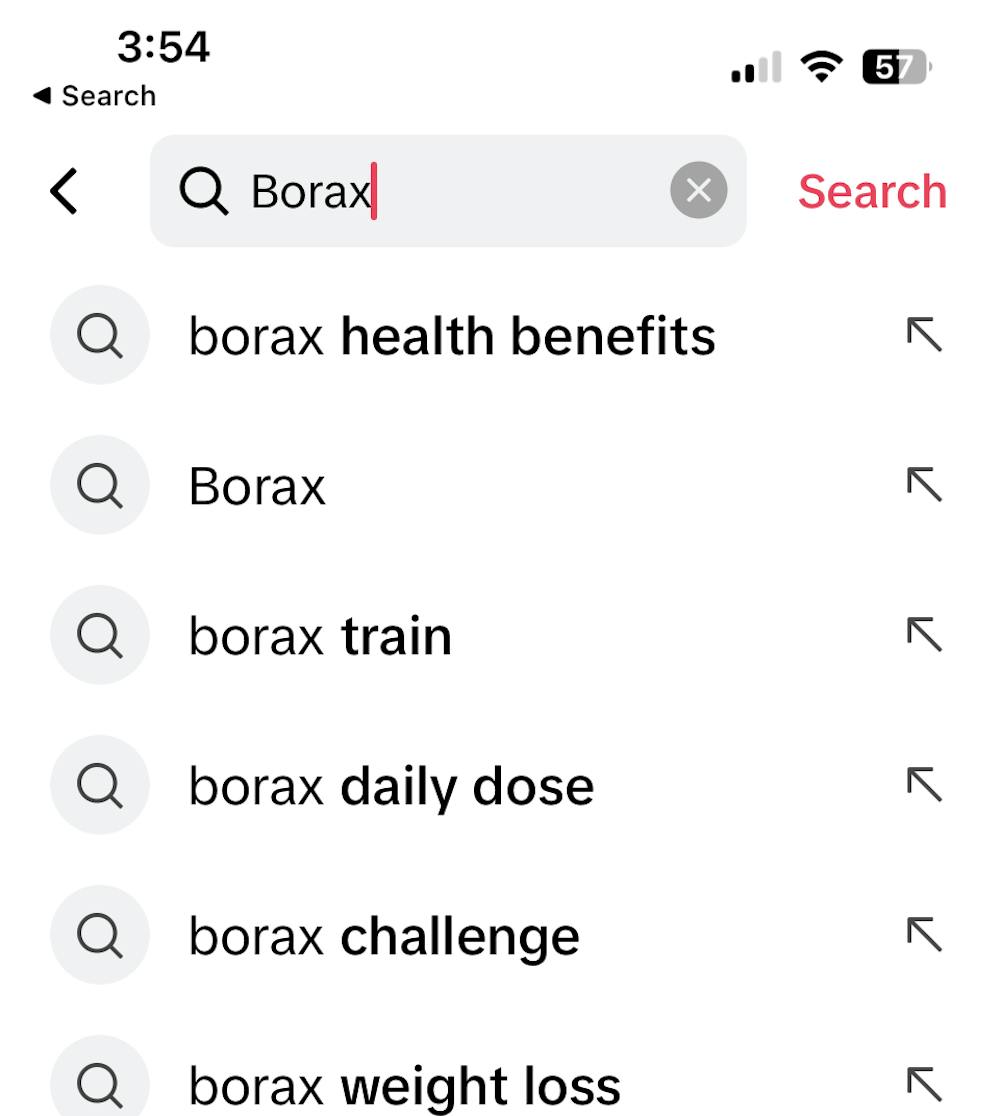
A potentially dangerous trend has gained prominence[1] on TikTok, with a number of people mixing borax into water and drinking it for supposed health benefits.
This isn’t new. Social media platforms have been host to many dangerous “challenges” – and users have been dosing themselves with questionable substances for years.
There’s no evidence to support the latest claims about borax. So how dangerous is it? And how can we assess the safety of the many other substances we use in daily life?
What is borax?
Borax, or sodium borate decahydrate, is a salt made of a combination of boron, sodium, oxygen and hydrogen. It comes in the form of a colourless crystalline solid that can easily be dissolved in water.
Borax and the related boric acid[2] are commonly used in household products including laundry cleaning products, wood preservers, fertilisers, contact lens solution and ant killers.
Borax crystals are also widely available in supermarkets, hardware stores and garden centres. These products are typically pure borax, but other additives may be present.
Don’t confuse borax with boron
TikTok users posting videos of themselves ingesting borax and water solution have falsely[3] claimed[4] it can help treat inflammation, joint pain, arthritis, lupus and a range of other conditions.
This is yet another hoax “remedy” in a long list of false hope products. Alternative therapies are often touted as being “natural” and therefore supposedly non-toxic.
But while borax is naturally occurring[5], this isn’t a guarantee of safety. Arsenic, ricin and the toxin responsible for botulism[6] are also 100% natural, but can be highly toxic to humans.
And although the element boron specifically is considered essential[7] for plants and some animals, its role in the functioning of the human body is less clear. Boron can be found in some of the foods we eat, such as grapes and potatoes, but isn’t classified as an essential nutrient[8]. The very small amount of boron your body may need can be safely obtained by eating a diet rich in fruits and vegetables[9].
How dangerous is borax?
Borax is not considered safe to ingest.
In toxicology, the median lethal dose, or LD50, is the approximate dose required to kill half the animals in a population being studied.
The LD50 for borax in rats is about 5g per kilogram of body weight. This is a relatively large dose, which means acute toxicity causing death is unlikely in humans. But just because a dose won’t kill, that doesn’t mean it isn’t harmful – and it definitely doesn’t mean it’s good for you.
Borax was used extensively as a food preservative in the early 1900s. That was before the work of Harvey Washington Wiley[10] and his poison squad uncovered a range of side effects to consumption, including headaches, nausea, vomiting, gastric discomfort and more.
Borax is also classified as a reproductive toxin[11], which means it “may impair fertility” and “may cause harm to the unborn child”. It is banned[12] as a food additive in Australia, the United States and several other countries.
Safety first, last and always
A number of dangerous social media challenges have gone viral over the past decade. One notable example was the “Tide pod challenge[13]”, in which users recorded themselves biting or eating laundry pods.
The consumption of laundry pods has caused a number of deaths[14] (although these can’t necessarily be linked to the Tide pod challenge). From 2013 to 2022, poison centres in the US have managed around[15] 10,000 cases each year related to children age five and under being exposed to laundry detergent packets.
Clearly, we shouldn’t be drinking borax or eating laundry pods. Yet such substances can’t always be avoided – so the best protection is to understand the dangers associated with them.
Read more: People want to use bleach and antiseptic for COVID and are calling us for advice[16]
Apart from reading the generic safety warnings on a product, such as “CAUTION” or “KEEP OUT OF REACH OF CHILDREN”, consumers can dig a little deeper through the use of resources known as safety data sheets (or SDS).
Every product containing hazardous substances must legally have an SDS. So whether you’re using a shampoo, hand sanitiser, vinegar or borax, there will almost certainly be an SDS available. Here’s the SDS[17] for Johnson’s Baby Shampoo, as an example.
You can find the SDS of a product online by searching the product’s name and “SDS” in Google. These documents follow a standardised format and provide details of hazards associated with a product.
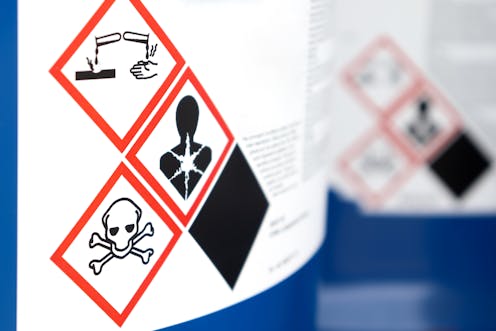
They also include standardised hazard pictograms[18] that represent the associated physical, health and environmental risks. You’ve probably seen these before, such as a “flammable” sign on a deodorant, or a “corrosive” sign on a household cleaner.
As far as borax is concerned, the main product shown in the TikTok videos[19] has an SDS that lists the human silhouette and exclamation mark pictograms. These correspond to the listed hazards of skin irritation, serious eye irritation and potential damage to fertility or an unborn child.
A number of precautionary statements follows – with advice on appropriate personal protective equipment, and how to store and dispose of the product.
Further details go beyond the typical consumer information and include composition, first aid information, toxicological information and fire fighting methods. These are helpful for medical professionals treating patients and fire fighters dealing with chemical spills and fires.
Safety data sheets aren’t perfect[20], but they are a useful resource. So the next time you see an unusual “miracle cure” on social media, or there’s a chemical in your home you aren’t sure about, consider reading the SDS.
If you have been exposed to a potentially harmful substance, call your local poison information centre or seek medical attention.
References
- ^ gained prominence (www.nbcnews.com)
- ^ Borax and the related boric acid (www.foodauthority.nsw.gov.au)
- ^ have falsely (www.nbcnews.com)
- ^ claimed (www.ndtv.com)
- ^ naturally occurring (www.healthline.com)
- ^ responsible for botulism (www.cdc.gov)
- ^ considered essential (www.frontiersin.org)
- ^ essential nutrient (apps.who.int)
- ^ diet rich in fruits and vegetables (ods.od.nih.gov)
- ^ work of Harvey Washington Wiley (blog.history.in.gov)
- ^ reproductive toxin (www.industrialchemicals.gov.au)
- ^ It is banned (www.foodauthority.nsw.gov.au)
- ^ Tide pod challenge (www.washingtonpost.com)
- ^ caused a number of deaths (www.consumerreports.org)
- ^ have managed around (www.aapcc.org)
- ^ People want to use bleach and antiseptic for COVID and are calling us for advice (theconversation.com)
- ^ Here’s the SDS (imgcdn.mckesson.com)
- ^ standardised hazard pictograms (www.safeworkaustralia.gov.au)
- ^ product shown in the TikTok videos (cdn.commercev3.net)
- ^ aren’t perfect (pubs.acs.org)