Champagne is deeply French – but the English invented the bubbles
- Written by: Garritt C Van Dyk, Lecturer, University of Newcastle
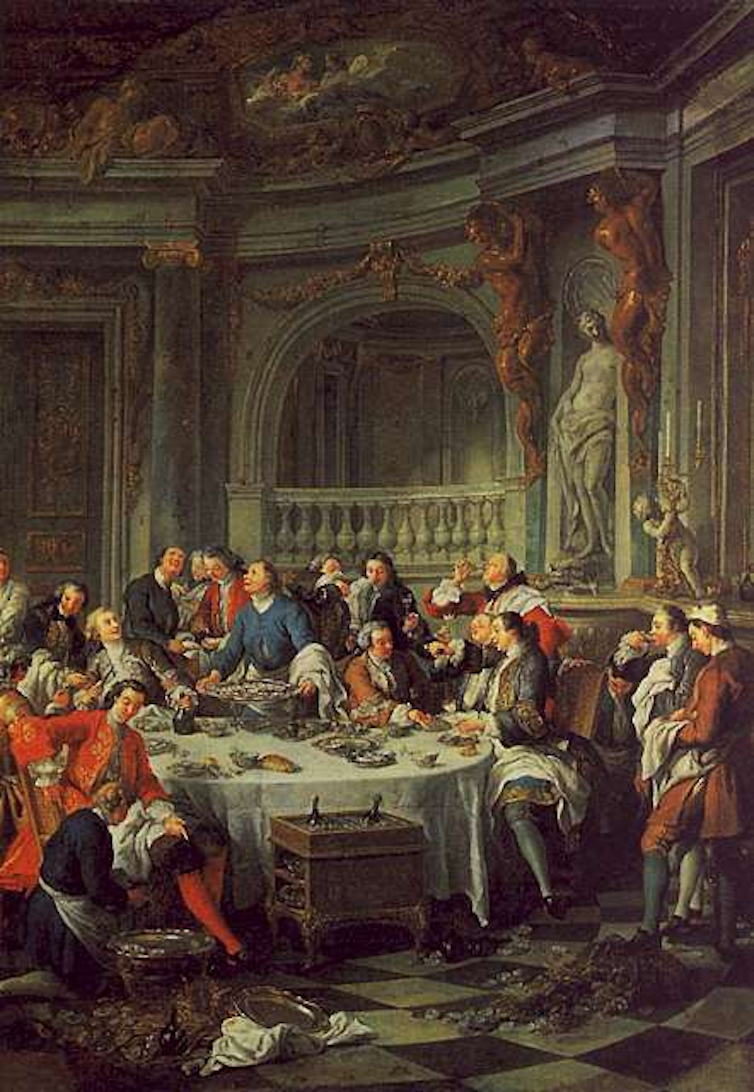
In 1889, the Syndicat du Commerce des Vins de Champagne produced a pamphlet[1] promoting champagne at the Exposition Universelle in Paris, claiming that Dom Pérignon, procurator[2] of the Benedictine Abbey of Hautvillers from 1668, was the “inventor”, “creator” or discoverer" of sparkling champagne.
“Come, Brothers! I drink stars!” is the famous quote often attributed[3] to him.
The story of a blind monk having an epiphany, accidentally happening upon the secret to effervescence, was seductive. It combined divine revelation and French winemaking expertise to produce a national symbol deeply rooted in the French landscape.
However, the truth is slightly different. Dom Pérignon[4] did contribute to improving the still wines of the Champagne region, but he did not discover effervescence – he was trying to get rid of the bubbles.
The champagne myth
The expo where the champagne myth was propagated marked the 100-year anniversary of Bastille Day and is best known for the debut of another icon of French culture, the Eiffel Tower. The Pérignon story gained traction at the same moment these other symbols of nation-building reinforced the uniqueness of French culture and history.
The basis for the myth can be traced to a letter from Dom Grossard[6] of Hautvillers Abbey to the mayor of Aÿ, in the heart of the Champagne region. Grossard claimed that Pérignon had perfected the method for making perfectly white wine from pinot noir grapes (blanc de noirs), pioneered the technique for effervescence, and championed the use of bottles and corks.
Only the first of these claims is true. At the abbey, wooden stoppers and canvas soaked in grease were used to seal bottles, and French glass was too weak[7] to contain the pressure from effervescence. A bigger problem was that French winemakers – and consumers – considered bubbles a fault, a trick to distract the drinker from bad wine.
Prominent French wine merchant Bertin de Rocheret[8] advised a client who inquired about sparkling wine:
effervescence obscures the best characteristics of good wines, in the same way that it improves wines of lesser quality.
Read more: No, putting a spoon in an open bottle of champagne doesn't keep it bubbly – but there is a better way[9]
Bubbles, bottles and corks
The method for effervescence, strong glass bottles and the use of corks all came from England in the 17th century. English consumers imported wine in barrels from France because bottles were taxed at a higher rate than wine imported in bulk.
The wines often deteriorated during the journey across the channel and once opened, they oxidised quickly, developing an unpleasant flavour. To improve the taste, consumers added honey, syrup made from raisins or sugar. The additional sugar content caused a secondary fermentation – and effervescence.
In 1662, Christopher Merrett[10], a founder of the Royal Society, published a paper titled “Some Observations Concerning the Ordering of Wines”, in which he described the method for effervescence:
Our winecoopers of latter times use vast quantities of sugar and molasses to all sorts of wines, to make them drink brisk and sparkling, and to give them spirits, as also to mend their bad tastes.
To produce sparkling wine and retain the effervescence, three things are necessary: bubbles, strong glass bottles and corks.
Merrett’s method provided the fizz, and corks were already used in England for bottling cider and perry[11]. Strong glass in England was a by-product of a prohibition on using wood in industrial furnaces, decreed[12] by King James I in 1615.
Timber was too valuable to be burned for glassmaking, reserved for building ships for the merchant fleet. Using sea coal, English glass furnaces reached higher temperatures and produced stronger glass. These bottles could withstand pressure (as much as a car tyre) without bursting.
 Statue of Dom Pérignon at Moët et Chandon.
Wikipedia
Statue of Dom Pérignon at Moët et Chandon.
Wikipedia
The paradox?
The only ingredient the English lacked was wine, prompting French wine historians[13] to refer to their contribution as “The English Paradox[14]”. How could a country with no winemaking tradition pioneer the technique for effervescence? The “paradox” label, however, only makes sense if the traditions and standards of French winemaking are presumed to be superior.
Bound by tradition, French winemakers were unwilling to contemplate a fault as a desirable innovation. Driven by necessity, and without any winemaking rules, English consumers were free to experiment.
But necessity was only part of the equation – English culture did play a part in the success of effervesce. Reserving timber for the English fleet made for stronger glass, and cider and perry production provided corks to seal the bottles.
The French champagne industry[15] now claims effervescence was not invented, but is a natural product of the soil and climate in a strictly defined region.
Natural fermentation does produce some fizz, but rarely enough to pop a cork without the intervention of a winemaker. The emphasis on nature reinforces the exclusivity and unique geographic attributes to distinguish champagne from all other sparkling wines.
A more complex history[16] of the origin of effervescence challenges preconceptions about national identity, even in matters of taste. This does not diminish champagne’s luxury status, but it does reveal the influence of cultural traditions on innovation, and the many influences that pave the way to novelty.
References
- ^ pamphlet (books.google.com.au)
- ^ procurator (www.tourisme-hautvillers.com)
- ^ often attributed (en.wikipedia.org)
- ^ Dom Pérignon (www.guildsomm.com)
- ^ CC BY (creativecommons.org)
- ^ Dom Grossard (books.google.com.au)
- ^ weak (www.cairn.info)
- ^ Bertin de Rocheret (www.cairn.info)
- ^ No, putting a spoon in an open bottle of champagne doesn't keep it bubbly – but there is a better way (theconversation.com)
- ^ Christopher Merrett (www.google.com.au)
- ^ cider and perry (cideruk.com)
- ^ decreed (www.google.com.au)
- ^ historians (books.google.com.au)
- ^ The English Paradox (vinepair.com)
- ^ The French champagne industry (www.champagne.fr)
- ^ more complex history (www.aup.nl)
Read more https://theconversation.com/champagne-is-deeply-french-but-the-english-invented-the-bubbles-208569