Female genital cutting remains a taboo subject in Pakistan, preventing real progress from being made
- Written by: Huda Syyed, PhD Candidate & Tutor, Charles Darwin University
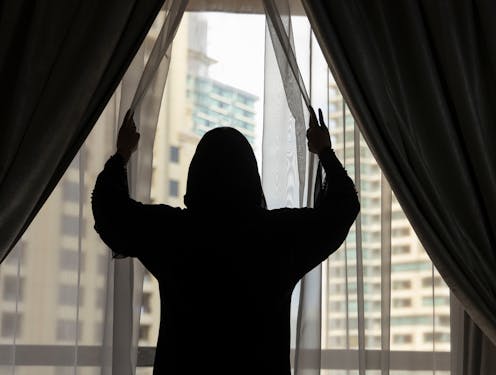
Female genital cutting is a secretive[1] and largely invisible practice in Pakistan.
The experiences of survivors[2] are the only sources of information we have to understand its prevalence. There are no national statistics or governmental efforts to counter the practice or this lack of awareness[3]. Open conversations are difficult because women’s bodies are treated as a source of shame or taboo[4].
My research[5] has found we must understand female genital cutting from a Pakistani perspective and work towards bridging the knowledge gap through increased data collection and encouraging greater dialogue with survivors.
Otherwise, Pakistan risks being left behind in achieving one of the United Nations’ sustainable development goals[6], the elimination of female genital cutting by 2030.
BBC report on women in Pakistan who have undergone the procedure (translated into Hindi).What is female genital cutting?
There are four types[7] of female genital cutting, but generally speaking, it involves the partial or total removal[8] of the external female genitalia. This can be through pricking, scraping, stitching and burning.
At least 200 million girls and women[9] globally have experienced different forms of female genital cutting, according to the United Nations. It is practised on every continent[10], except Antarctica[11].
A small minority of Dawoodi Bohra Muslims[12] from the Shiite Ismaili sect practice female genital cutting in Pakistan (as well as in India).
The practice also occurs within the Dawoodi Bohra diaspora[13]. In 2015, a mother, nurse and spiritual leader were found guilty in Australia’s first genital mutilation trial[14]. Even though the practice is illegal in Australia, it is still carried out in secret[15].
Dawoodi Bohras generally practice a type of cutting called khatna, or the removal of the clitoral hood. Young girls usually undergo this practice at seven years old[16]. This is ostensibly done to curb a woman’s sexual desire[17], to promote genital hygiene[18] and to follow the Islamic sunnah[19], or the sayings and practices[20] of the Prophet Muhammad.
Religious scholars[21], medical practitioners[22] and activist organisations[23] argue, however, that it is a harmful practice and not a religious duty.
According to World Health Organization, there are short-term and long-term health risks[24] from the practice. These include severe pain, bleeding, infections, urination problems, obstetric fistulas, perinatal risk, trauma and other mental health problems. A study in India[25] also reported side effects such as low sex drive, oversensitivity in the clitoral area and problems with sexual pleasure and trusting partners.
While there are members of the Dawoodi Bohra community who speak out against the practice, some also defend it as a cultural right[26]. Most Dawoodi Bohras are secretive about it due to a fear of potential backlash, since acts of violence against minorities are common in Pakistan.
Read more: Why it's so difficult to end female genital mutilation[27]
Not just an African problem
Most international efforts to eliminate female genital cutting focus on Africa. As a result, it is believed to be an African practice.
Somalia has one of the highest prevalence rates[28] of female genital mutilation in the world, with 99% of women aged 15-49 having been cut. Sudan also saw an increase in the practice during COVID lockdowns, despite it being criminalised in 2020[29].
This statistical data[30] is available to us because African countries are able to measure its prevalence through nationally representative household surveys. Self-reporting[31] is also used to acquire data from mothers and daughters.
Although these data collection efforts are not always reliable[32], the general level of awareness in some African countries gives activists and policymakers a platform to organise more targeted campaigns[33] to bring social change.
Research shows the practice is also widespread[34] among the Dawoodi Bohra community in India. The Indian government, however, has denied[35] the existence of female genital cutting in the country, meaning there is no official data collection there, either.
However, in 2017, a human rights advocate[36] and lawyer filed a petition before the Supreme Court to ban the practice[37]. Although a decision is still pending[38], non-profit organisations[39] continue to speak out against the practice.
What can be done in Pakistan?
Pakistan ranks as 142nd out of 146 countries[40] in the Global Gender Gap report 2023[41] by the World Economic Forum. It is frequently criticised by human rights activists for its high rates of violence against women and mistreatment of minorities[42].
Recently, there has been more activism in Pakistan against honour killings of women[43], the mistreatment of the khwaja sira (transgender) community[44] and child labour[45]. Protests and community engagement make these issues more visible and put pressure on the government to respond.
This is not the case with female genital cutting. To curb the practice in Pakistan, it must be openly addressed and understood.
How can we do this? Through responsible data collection and consensual conversations with community members.
Dialogue should start in the Dawoodi Bohra community because change from within[46] is more likely to be long-lasting and less contentious. Considering Pakistan’s fractious religious climate, it is important for communities to mobilise for change from within to avoid the Dawoodi Bohras being targeted in sectarian violence.
Religion and women’s bodies are sensitive topics in patriarchal societies. Pakistan’s history with women has long been marked by an urge to morally police their bodies. One discriminatory practice, the two-finger virginity testing[47] in sexual assault cases, for example, has only recently been abolished after a concerted push from activists.
This is why an issue like female genital cutting must be discussed with contextual care and caution. This approach, supported by activists and lawmakers within the community, will be transformative in ending this practice for good.
References
- ^ secretive (www.jogc.com)
- ^ survivors (www.youtube.com)
- ^ lack of awareness (www.refworld.org)
- ^ shame or taboo (broadview.org)
- ^ research (vc.bridgew.edu)
- ^ sustainable development goals (www.unwomen.org)
- ^ four types (www.who.int)
- ^ partial or total removal (www.who.int)
- ^ 200 million girls and women (data.unicef.org)
- ^ every continent (www.unfpa.org)
- ^ Antarctica (www.aljazeera.com)
- ^ Dawoodi Bohra Muslims (www.thedawoodibohras.com)
- ^ diaspora (www.npr.org)
- ^ trial (www.theguardian.com)
- ^ still carried out in secret (www.watoday.com.au)
- ^ seven years old (www.orchidproject.org)
- ^ woman’s sexual desire (sahiyo.org)
- ^ genital hygiene (sahiyo.org)
- ^ sunnah (www.unfpa.org)
- ^ sayings and practices (www.bbc.co.uk)
- ^ scholars (www.ghanaweb.com)
- ^ practitioners (www.ncbi.nlm.nih.gov)
- ^ activist organisations (sahiyo.com)
- ^ risks (www.who.int)
- ^ A study in India (www.news18.com)
- ^ cultural right (bristoluniversitypressdigital.com)
- ^ Why it's so difficult to end female genital mutilation (theconversation.com)
- ^ highest prevalence rates (africa.unwomen.org)
- ^ criminalised in 2020 (reliefweb.int)
- ^ statistical data (data.worldbank.org)
- ^ Self-reporting (journals.plos.org)
- ^ reliable (journals.plos.org)
- ^ campaigns (www.globalcitizen.org)
- ^ widespread (theprint.in)
- ^ denied (www.csmonitor.com)
- ^ human rights advocate (lawschoolpolicyreview.com)
- ^ ban the practice (indiankanoon.org)
- ^ pending (blogs.lse.ac.uk)
- ^ non-profit organisations (www.mid-day.com)
- ^ 142nd out of 146 countries (www.dawn.com)
- ^ Global Gender Gap report 2023 (www3.weforum.org)
- ^ violence against women and mistreatment of minorities (unwatch.org)
- ^ honour killings of women (tribune.com.pk)
- ^ khwaja sira (transgender) community (www.voanews.com)
- ^ child labour (www.thenews.com.pk)
- ^ change from within (www.tandfonline.com)
- ^ two-finger virginity testing (www.nytimes.com)