4 ways to support someone with dementia during extreme heat
- Written by: Nikki-Anne Wilson, Postdoctoral Research Fellow, Neuroscience Research Australia (NeuRA), UNSW Sydney
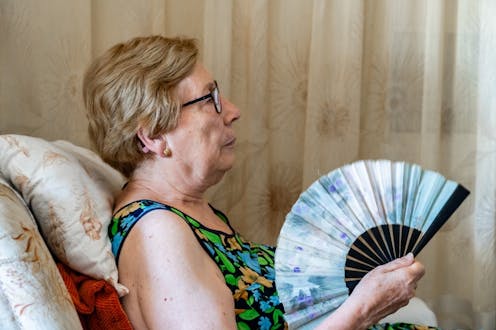
Our ability to adapt our behaviour to changes in temperature takes a significant amount of thought and decision making. For example, we need to identify suitable clothing, increase our fluid intake, and understand how to best keep the house cool.
A person with dementia may find some or all these things challenging. These and other factors mean, for someone with dementia, extreme heat can be deadly[1].
But as the temperature rises, friends, relatives and carers can help.
Read more: 5 reasons to check on your elderly neighbour during a heatwave[2]
El Niño means there are challenges ahead
The recent declaration of another El Niño[3] means we need to think about how we can best support those more vulnerable to be safe during the warmer months.
Extreme heat and bushfires bring unique challenges for someone with dementia.
Bushfires have a significant impact on older people’s mental health. But they generally bounce back[4] quickly.
However, for someone with dementia, extreme heat can lead to a significant deterioration[5] in their overall health and they may not recover.
Emergency evacuations can also be confusing and distressing for a person with dementia, so it is important to think ahead.
Read more: Worried about heat and fire this summer? Here's how to prepare[6]
Why are people with dementia more at risk?
Dementia can affect the parts of the brain that help regulate[7] our body temperature. Some medications[8] can also increase someone’s sensitivity to heat.
Problems with memory and thinking associated with dementia means[9] remembering to drink or communicating you are thirsty can be challenging.
Heat can affect everyone’s mood. But if someone with dementia becomes dehydrated this can increase[10] confusion and agitation, making it harder for them to know how to cool down.
A person with dementia can also wander and become lost, which can be dangerous in extreme heat.
Read more: Is my medicine making me feel hotter this summer? 5 reasons why[11]
4 ways to support someone with dementia
1. Avoid dehydration and heatstroke
Try to avoid dehydration by encouraging someone to drink throughout the day. It’s better to have small amounts[12] of liquid regularly instead of a large amount all at once. Little and often will help maximise hydration while avoiding sudden trips to the bathroom[13].
Try to offer different types of drinks, or ice blocks. Placing drinks in sight can help as a reminder to drink. Choose foods with a high liquid content, such as fruit, salads, cool broths and yoghurt.

Look out for signs of heatstroke[15], such as increased confusion beyond what the person would usually experience. Heatstroke may be more difficult to spot in someone living with dementia so it is important to check in when possible and to help them cool down if needed.
Read more: Health Check: how do I tell if I'm dehydrated?[16]
2. Cool the home
Try to modify their home to make it easier to stay cool. Some air-conditioners have complex settings so make sure the temperature is set appropriately and the person with dementia knows how to use the controls.
It is important to keep blinds and curtains shut where possible to reduce heat. However, ensure the lighting is adequate[17] to avoid falls.
Try to support the person to make suitable clothing choices for the season by having cool, lightweight options easily available.
Read more: What is delirium?[18]
3. Think about communications early
If someone with dementia lives alone, consider how you will maintain contact in an emergency.
Some people may not realise many landlines don’t work in a power outage, and of course, mobile phones can’t be recharged. Ensure the person with dementia has access to an uninterruptable power supply[19]. This can help maintain communication for a few hours in a blackout.
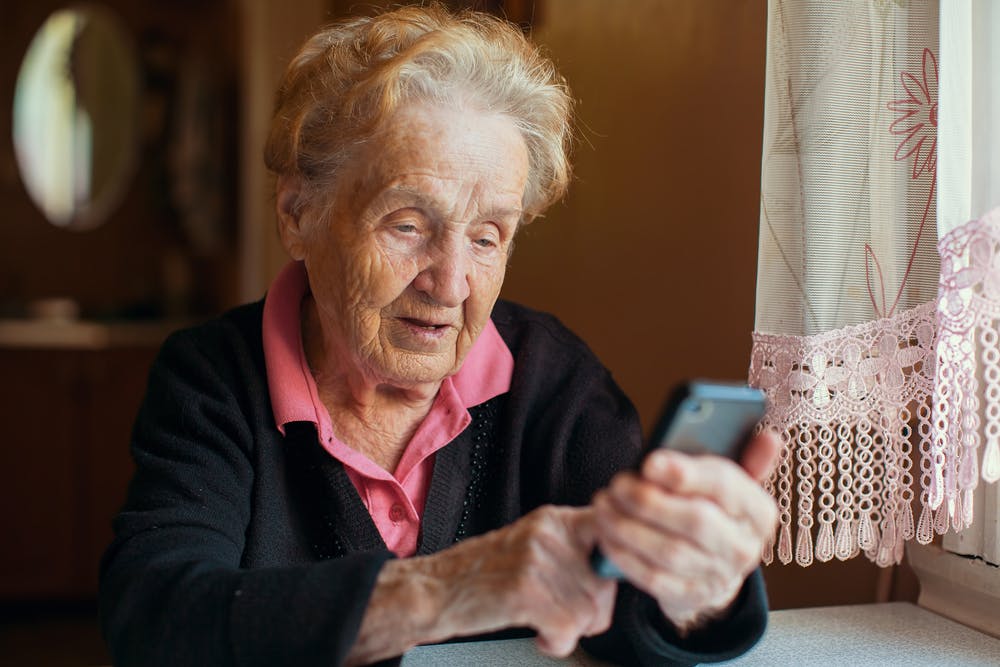 You cannot always rely on phones in an emergency.
Shutterstock[20]
You cannot always rely on phones in an emergency.
Shutterstock[20]
Read more: Why people with dementia don't all behave the same[21]
4. Have an evacuation plan
In case of fire, flash flooding or severe storm, have an evacuation plan[22]. If the person with dementia attends a day or respite centre, know their plan too.
The situation can change quickly in an emergency, and this can be particularly overwhelming for people with cognitive issues.
Understand that someone with dementia may become distressed when their routine is disrupted. So be prepared with some simple activities or comfort items, current medications, and any specific medical information.
Stay up-to-date with current warnings[23] and act early whenever possible.
Read more: Floods and other emergencies can be extra tough for people with dementia and their carers. Here's how to help[24]
We can all help
It’s not just carers of people with dementia who can help. We can all ensure people with dementia stay safe and cool this spring and summer.
So remember to check in on your relatives, friends and neighbours or arrange for someone to do so on your behalf.
References
- ^ can be deadly (pubmed.ncbi.nlm.nih.gov)
- ^ 5 reasons to check on your elderly neighbour during a heatwave (theconversation.com)
- ^ another El Niño (www.abc.net.au)
- ^ bounce back (www.health.act.gov.au)
- ^ significant deterioration (www.sciencedirect.com)
- ^ Worried about heat and fire this summer? Here's how to prepare (theconversation.com)
- ^ regulate (academic.oup.com)
- ^ medications (journals.plos.org)
- ^ means (www.alzheimers.org.uk)
- ^ increase (www.alzdiscovery.org)
- ^ Is my medicine making me feel hotter this summer? 5 reasons why (theconversation.com)
- ^ small amounts (pubmed.ncbi.nlm.nih.gov)
- ^ the bathroom (www.betterhealth.vic.gov.au)
- ^ Shutterstock (www.shutterstock.com)
- ^ signs of heatstroke (www.nia.nih.gov)
- ^ Health Check: how do I tell if I'm dehydrated? (theconversation.com)
- ^ lighting is adequate (www.scie.org.uk)
- ^ What is delirium? (theconversation.com)
- ^ uninterruptable power supply (www.telstra.com.au)
- ^ Shutterstock (www.shutterstock.com)
- ^ Why people with dementia don't all behave the same (theconversation.com)
- ^ have an evacuation plan (dementiaresearch.org.au)
- ^ current warnings (www.bom.gov.au)
- ^ Floods and other emergencies can be extra tough for people with dementia and their carers. Here's how to help (theconversation.com)
Read more https://theconversation.com/4-ways-to-support-someone-with-dementia-during-extreme-heat-213987