Pesticide residue from farms and towns is ending up in fresh oysters
- Written by: Kirsten Benkendorff, Professor, Southern Cross University
For years, oysters have been lauded as one of the most sustainable and healthy seafood options. But our food is only as healthy as the environment it is grown in.
In new research published in Environmental Pollution[1], we found something unfortunate. These filter-feeding shellfish eat by straining particles from water. This, alas, makes them very good at soaking up pesticide residue.
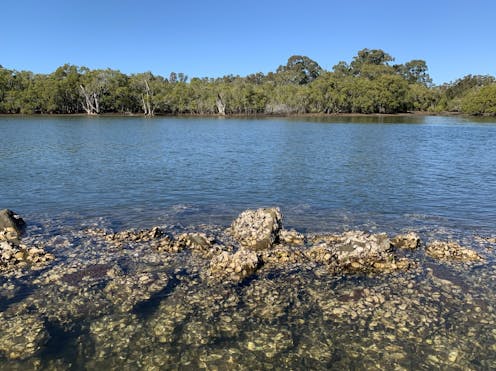
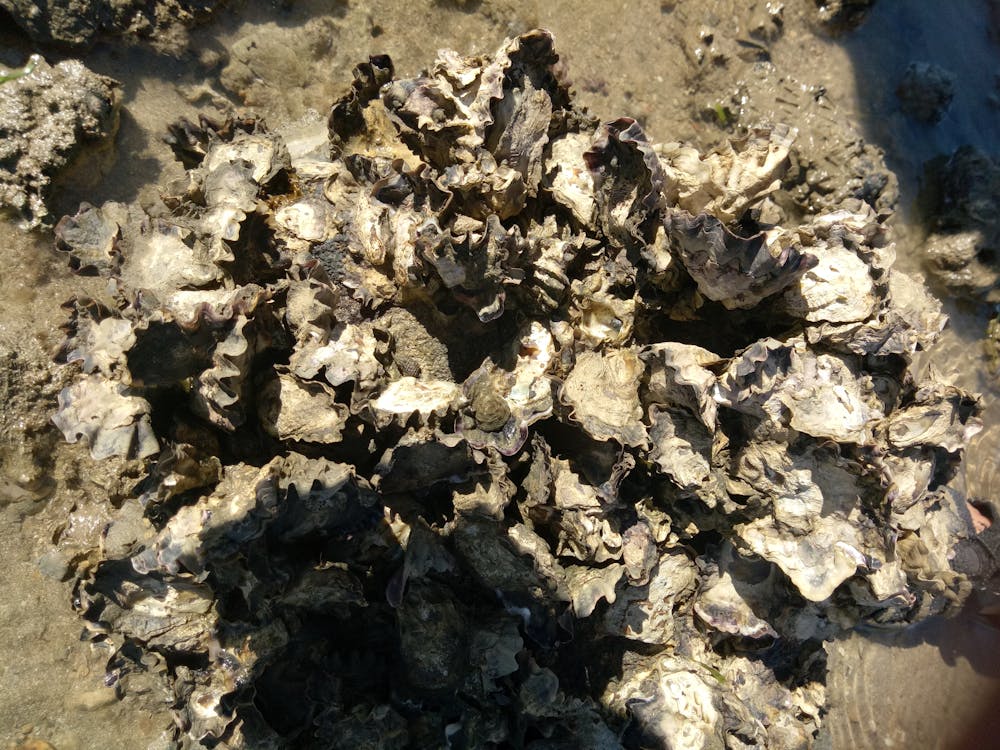
When we analysed oysters growing naturally in the Richmond River estuary in New South Wales, we found 21 different pesticides – more than in the water. Each oyster had detectable amounts of nine different pesticides, on average.
We don’t know the full health risks of eating oysters from this river. But we do know five pesticides we found are potentially dangerous – they are not allowed to be present in meat due to the risks.
To be clear: the risk is largely in taking oysters from the wild. Commercially farmed oysters are likely to be safer, as they are regulated by Australia’s shellfish quality assurance program[2] and can only be harvested when water quality is good.
How do pesticides get into oysters?
Oysters pump water through their bodies and eat the bacteria, plankton and other particles they filter out. A single oyster can filter up to five litres of water an hour and over 250,000 litres in their lifetime.
Before colonisation, oyster reefs were everywhere. Most of these reefs were pulled out to use the shells for lime and the meat to eat. In the Richmond River, poor water quality and a disease killed off most oysters until a new, disease-resistant strain emerged[3].
Filter-feeding works well if you’re just filtering out what’s found naturally. But if the water is contaminated, oysters can end up storing pathogens and pollutants in their bodies.
Oysters prefer brackish water – where fresh meets salt. That’s why they’re intensively farmed in many estuaries. But because many of our coastal catchments now contain farms, towns or cities, the pesticides, herbicides and insecticides we use wash into rivers after rain.
What did we find in these oysters?
Most of the herbicides, insecticides and fungicides we found are used routinely by farmers, land managers and council workers.
But we did find an unwelcome surprise – the fungicide benomyl, which has been illegal in Australia since 2006 due to the high risk to human health and the environment. Detecting this chemical means someone is using it illegally.
Four pesticides – atrazine, diuron, hexazinone and metolachlor – were found in concentrations above safe environmental limits for fresh and marine water[5].
Atrazine and diuron are among the most commonly used herbicides in Australian farming, but they are not safe chemicals. They’re known to contaminate groundwater and surface water, and have been detected in unsafe levels in the waters of the Great Barrier Reef[6].
Atrazine is banned in the European Union over concerns about the damage it can do to the environment and the risk of it getting into drinking water.
Diuron has been severely restricted[7] in the EU, but is commonly used by the sugarcane industry in Australia. Like atrazine, diuron can pollute groundwater and kill aquatic species, and is carcinogenic to humans[8].
Australia’s pesticide authority suspended the use of 63 diuron products in 2011[9]. The ban only lasted a year, following lobbying from sugarcane growers[10], and diuron is back in use.
What does this mean for oyster eaters?
The sheer number of different pesticides we found in oysters was perhaps the biggest concern for lovers of oysters. Five of these – pebulate, vernolate, fosetyl Al, benomyl and prothiofos – have residue limits set at zero for meat. That is, if you want to sell meat, it cannot have any detectable level of these pesticides. (At present, our food safety guidelines have no specific limits for most pesticides in seafood.)
What about the 16 other pesticides we found? Most were below the allowable residue limits in meat on their own, but we have very little understanding of the combined effects of exposure from multiple pesticides.
Read more: The real cost of pesticides in Australia's food boom[11]
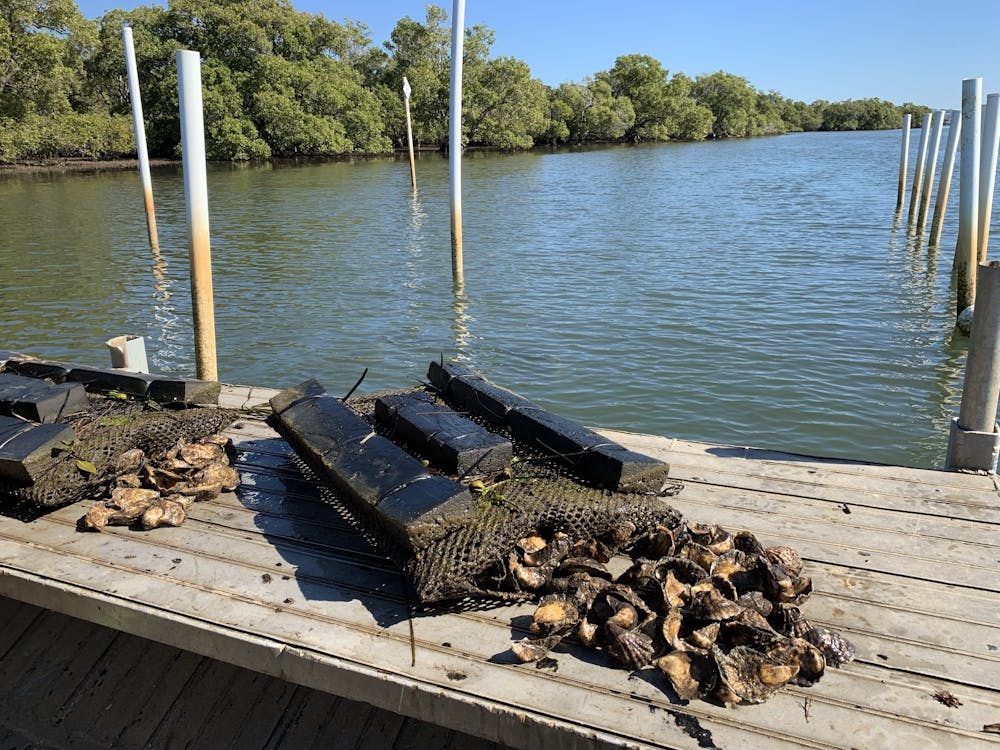 These Sydney rock oysters have come from an oyster lease in the Richmond River.
Kirsten Benkendorff, CC BY-ND[12]
These Sydney rock oysters have come from an oyster lease in the Richmond River.
Kirsten Benkendorff, CC BY-ND[12]
What should be done?
The problem for oyster farmers and marine managers is they’re effectively powerless to prevent water pollution entering the river from farms or towns upstream.
The first step is to find out how bad the problem is. We need dedicated pesticide monitoring programs for seafood producers in estuaries to gauge the size of the problem and look for hotspots.
If hotspots are found, the next step is to work with farmers and land managers to collaboratively design solutions.
These could include incentives to cut pesticide use through integrated pest management[13] and precision agriculture[14] as well as the use of tools to decide which pesticide to use and when[15].
Strategically located wetlands and bacterial bioreactors[16] able to break down pesticides can also stop these chemicals arriving in the river.
Mangrove and shellfish reef restoration could help protect commercial oyster farms and other seafood harvesting areas. Like oysters, mangroves have the ability to remove chemical contaminants from the water and store them internally.
You might be wondering why some of these chemicals are legal to use in the first place. It’s very time consuming to seek review of currently available pesticides in Australia. Scientists or community members have to demonstrate these products cause harm, even if they have been reviewed and banned in many other nations.
Can I still eat oysters?
Yes. To cut your personal risk, buy only from reputable commercial oyster farms. These farms are only allowed to harvest oysters when the water quality is good, which helps remove water soluble pesticides. Given most of us don’t eat oysters daily, the risk is likely to be low.
What you should avoid is harvesting your own oysters in estuaries where there are farms or towns upstream. These may have accumulated pesticides. Leave them where they are – they’re doing a very important job: cleaning the water.
Read more: Once the fish factories and ‘kidneys’ of colder seas, Australia’s decimated shellfish reefs are coming back[17]
References
- ^ Environmental Pollution (doi.org)
- ^ shellfish quality assurance program (www.agriculture.gov.au)
- ^ disease-resistant strain emerged (ozfish.org.au)
- ^ CC BY-ND (creativecommons.org)
- ^ fresh and marine water (www.waterquality.gov.au)
- ^ waters of the Great Barrier Reef (doi.org)
- ^ severely restricted (eur-lex.europa.eu)
- ^ carcinogenic to humans (pubmed.ncbi.nlm.nih.gov)
- ^ in 2011 (www.apvma.gov.au)
- ^ lobbying from sugarcane growers (search.informit.org)
- ^ The real cost of pesticides in Australia's food boom (theconversation.com)
- ^ CC BY-ND (creativecommons.org)
- ^ integrated pest management (www.epa.nsw.gov.au)
- ^ precision agriculture (www.csiro.au)
- ^ which pesticide to use and when (link.springer.com)
- ^ bacterial bioreactors (www.youtube.com)
- ^ Once the fish factories and ‘kidneys’ of colder seas, Australia’s decimated shellfish reefs are coming back (theconversation.com)