The AI industry is on the verge of becoming another boys' club. We’re all going to lose out if it does
- Written by: Zena Assaad, Senior Lecturer, School of Engineering, Australian National University

A recent New York Times article[1] released a list of people “behind the dawn of the modern artificial intelligence movement” – and not a single woman was named. It came less than a week after news of a fake auto-generated woman being listed as a speaker on the agenda for a software conference[2].
Unfortunately, the omission of women from the history of STEM isn’t a new phenomenon. Women have been missing from these narratives for centuries.
In the wake of recent AI developments, we now have a choice: are we going to leave women out of these conversations as well – even as they continue to make massive contributions to the AI industry?
Doing so risks leading us into the same fallacy that established computing itself as a “man’s world”. The reality, of course, is quite different.
A more accurate history
Prior to computers as we know them, “computer” was the title given to people who performed complex mathematical calculations. These people were commonly women[3].
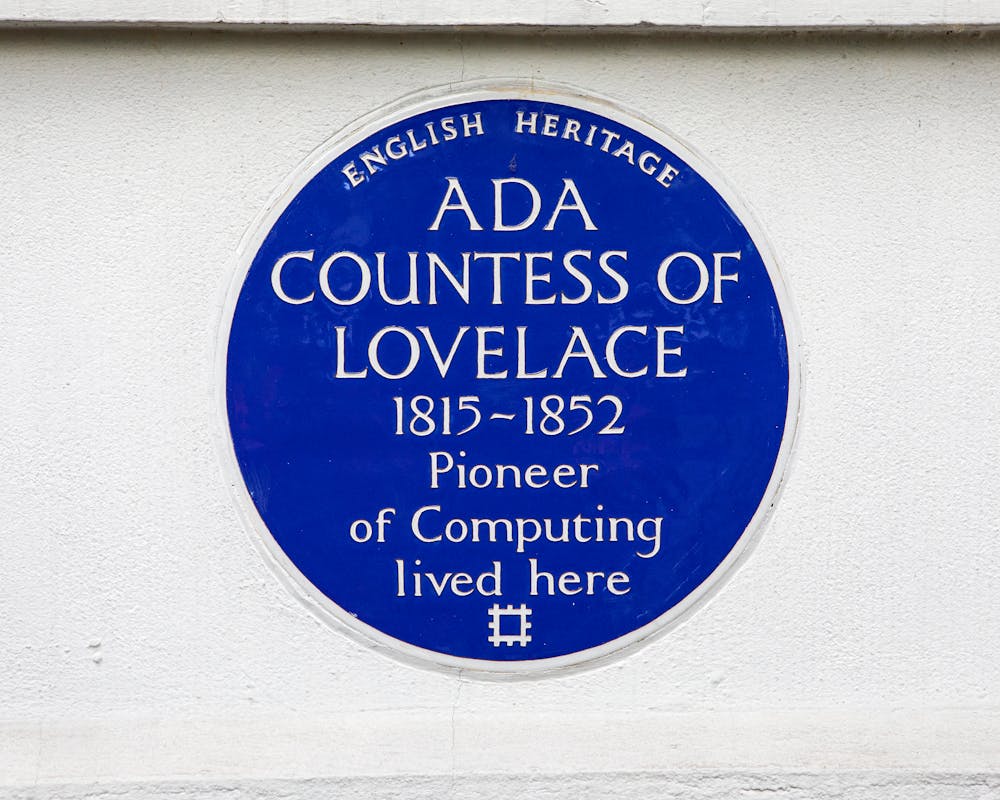
English mathematician Ada Lovelace (1815–1852) is often referred to as the first computer programmer[4]. She was the first person to realise[5] computers could do much more than just math calculations. Her work on the analytical engine[6] – a proposed automatic and fully programmable mechanical computer – dates back to the mid-1800s.
By the 1870s, a group of about 80 women worked as computers at the Harvard Observatory[7]. They catalogued and analysed copious amounts of astronomic data for astronomer Edward Charles Pickering (who exploited the fact they’d work for less money than men, or even as volunteers).
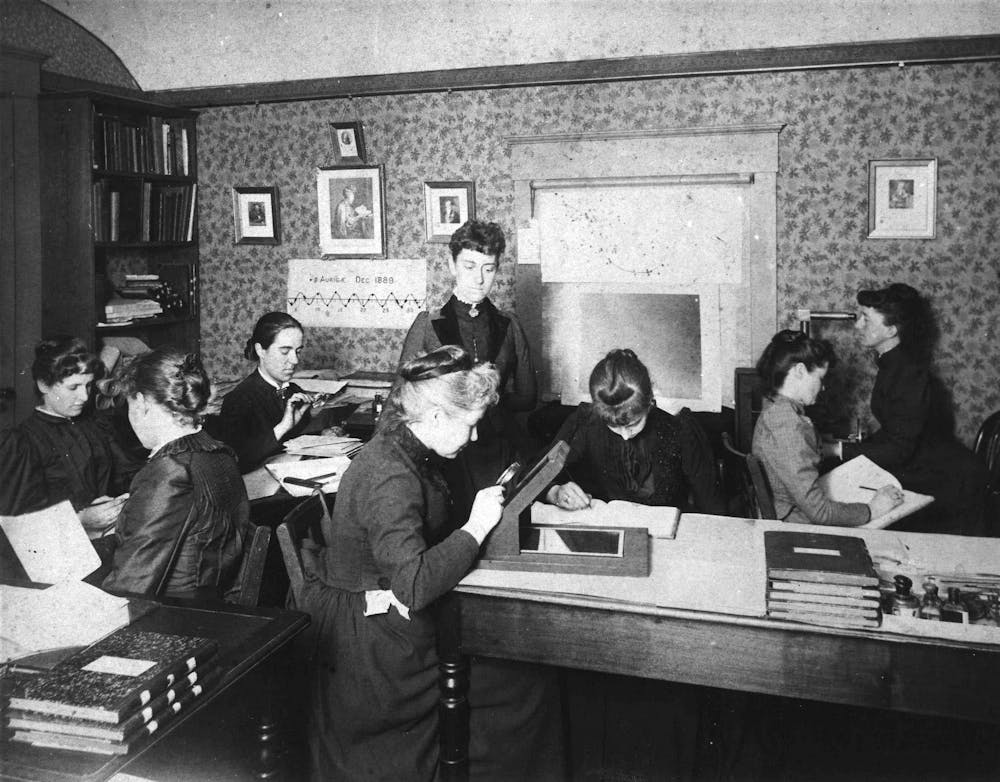 In 1886, Pickering put Williamina P.S. Fleming in charge of the Harvard computers. Over the course of her career she discovered 10 novae, 52 nebulae and hundreds of stars.
Wikimedia
In 1886, Pickering put Williamina P.S. Fleming in charge of the Harvard computers. Over the course of her career she discovered 10 novae, 52 nebulae and hundreds of stars.
Wikimedia
By the late 19th century, increased access to education meant there was an entire generation of women trained in maths. These woman computers were cheaper labour than men at the time, and so employing them[8] significantly reduced the costs of computation.
During the first world war, women were hired to calculate artillery trajectories[9]. This work continued into the second world war, when they were actively encouraged to take on wartime jobs[10] as computers in the absence of men.
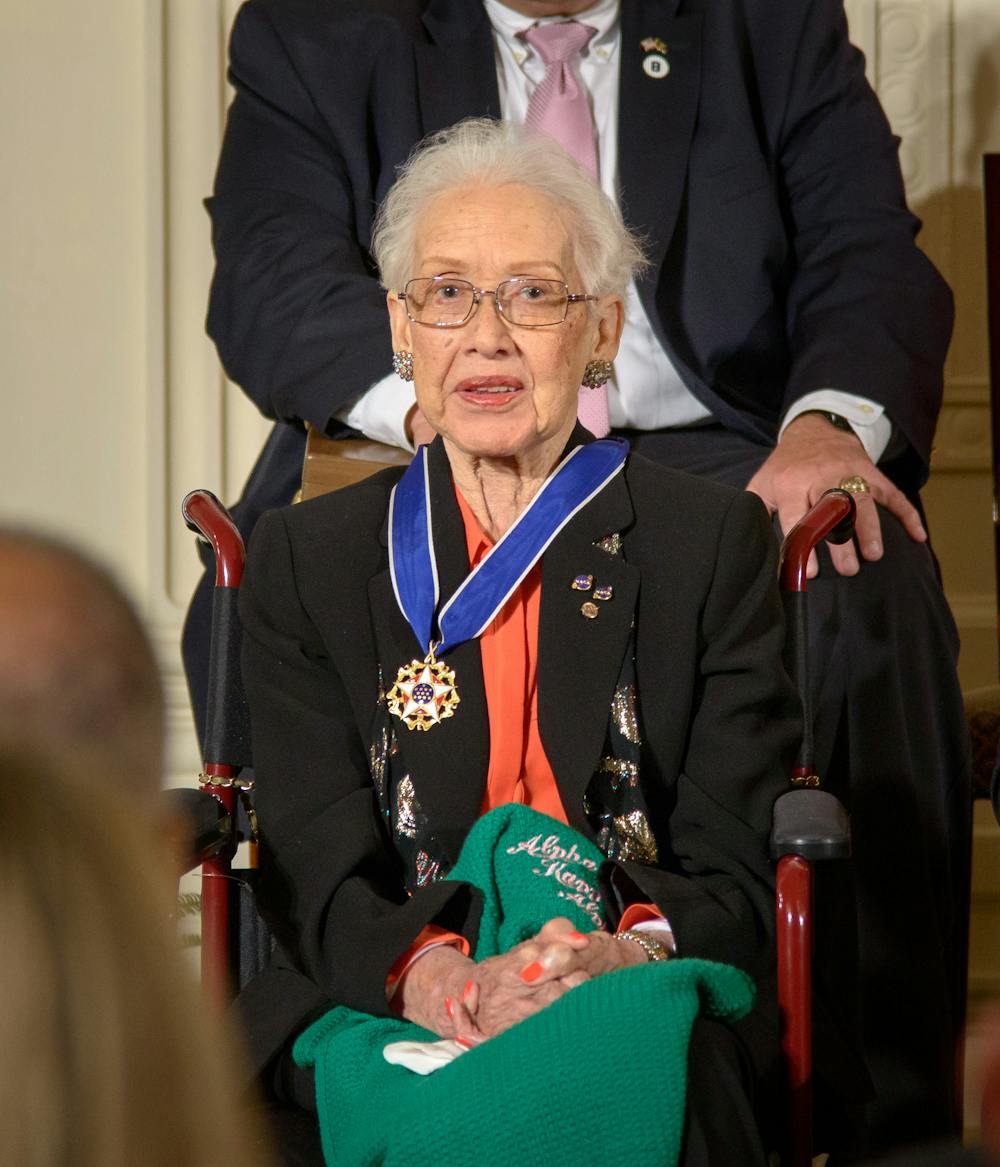 Former NASA mathematician Katherine Johnson was awarded the Presidential Medal of Freedom in 2015.
NASA/Bill Ingalls
Former NASA mathematician Katherine Johnson was awarded the Presidential Medal of Freedom in 2015.
NASA/Bill Ingalls
Women continued to work as computers into the early days of the American space program in the 1960s[11], playing a pivotal role in advancing NASA’s space projects. One of these computers was Katherine Johnson[12], who was responsible for quality-checking the outputs of early IBM computers for an orbital mission in 1962.
Many women made significant contributions to computing, yet few were recognised for these contributions – let alone financially compensated. According to[13] Virginia Tech professor Janet Abbate, by 1969 a female computer specialist’s median salary was US$7,763, compared to US$11,193 for a male computer specialist.
Woman computers worked behind the scenes, while their male counterparts received recognition, awards and publicity.
Read more: How your money is helping subsidise sexism in academia – and what you can do about it[14]
Women in AI
Computing and programming are the foundation of AI as we know it today. At a basic level, today’s generative and predictive AI systems work by analysing large amounts of data and finding patterns in it[15].
The women who pioneered computing from as early as the 1800s laid the foundations for this work. The work they were doing by hand for more than a century has now been replaced by machines capable of analysing much larger quantities of data in much a shorter time.
This transition does not diminish women’s contributions to the field of computing and, more recently, AI. Myriad women are doing pioneering work in the AI industry today, including the 12 women named is this recent Medium article[16].
From Google’s ex-chief decision scientist Cassie Kozyrkov, to Canadian computer scientist Joy Buolamwini, to OpenAI’s CTO Mira Murati (pictured in this article’s banner image) – these women are helping make AI safer, more accurate, more accessible, more inclusive and more reliable.
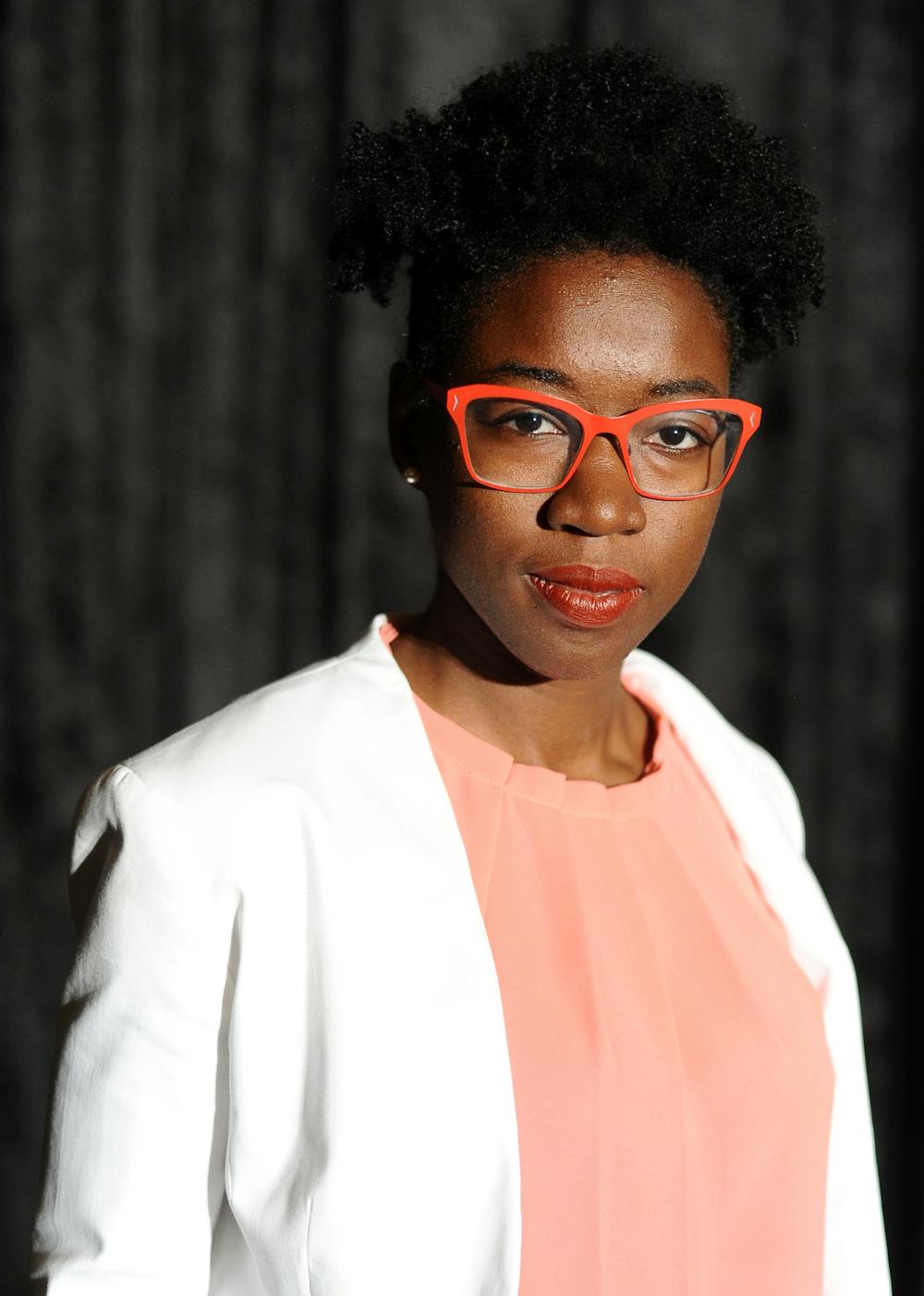 Joy Buolamwini is a Rhodes scholar, Fulbright fellow, Stamps scholar, Astronaut scholar and Anita Borg Institute scholar. Her work focuses on reducing bias in AI.
Wikimedia, CC BY-SA[17][18]
Joy Buolamwini is a Rhodes scholar, Fulbright fellow, Stamps scholar, Astronaut scholar and Anita Borg Institute scholar. Her work focuses on reducing bias in AI.
Wikimedia, CC BY-SA[17][18]
And they’re taking these strides despite working in a heavily male-dominated industry. One 2018 study[19] of 4,000 researchers who had been published in leading AI conferences found women made up just 12% of this group.
The impact of omission
The omission of women isn’t limited to the AI industry, or even to STEM. As historian Bettany Hughes notes, women occupy a meagre 0.5%[20] of recorded history. Clearly, a lack of gender diversity in the workforce is part of a much larger, systemic problem – one that affects many more people than the individuals being excluded.
In 1983, NASA engineers suggested packing 100 tampons on the Challenger space shuttle[21] for astronaut Sally Ride – for a trip that was one week long. Such an incident is seemingly harmless on the surface. But what happens when gender bias and stereotypes bleed into the design and development of AI?
Research published in 2018[22] by international non-profit Global Witness found Facebook’s job ad platform, which uses algorithms to target users with ads, based its targeting on sexist stereotypes. For example, ads for mechanics were targeted mostly at men, while ads for preschool teachers were targeted mostly at women.
Another 2018 study[23] found computer vision systems reported higher error rates for recognising women, and in particular women with darker skin tones.
A lack of gender diversity in AI has a demonstrated ability to harm and disadvantage women and, by extension, all of us. While many argue that improving AI training datasets could address the gender gap, others rightly point out that women should also be included in data-collection processes[24][25]
Breaking the glass ceiling
Speaking at the UN Women’s HeForShe summit[26] earlier this year, Hugging Face[27] research scientist Sasha Luccioni made a salient point[28]:
AI bias doesn’t come from thin air – it comes from the patterns we perpetuate in our societies.
The recent New York Times article is an example of how both media and industry play a role in reinforcing a status quo that disproportionately favours men. This form of bias does nothing to help close a persistent and problematic gender gap.
Despite millions of dollars[29] being spent to encourage women to take up careers in STEM, these fields are struggling to retain woman workers[30].
Women’s contributions to AI are not insignificant. Failing to acknowledge this can make the glass ceiling seem impossible to break through.
Read more: Chief Scientist: women in STEM are still far short of workplace equity. COVID-19 risks undoing even these modest gains[31]
References
- ^ article (www.nytimes.com)
- ^ for a software conference (apnews.com)
- ^ were commonly women (www.smithsonianmag.com)
- ^ the first computer programmer (www.newyorker.com)
- ^ first person to realise (lemelson.mit.edu)
- ^ the analytical engine (www.britannica.com)
- ^ at the Harvard Observatory (www.thecrimson.com)
- ^ employing them (www.smithsonianmag.com)
- ^ calculate artillery trajectories (cs.brown.edu)
- ^ take on wartime jobs (www.history.com)
- ^ American space program in the 1960s (education.nationalgeographic.org)
- ^ Katherine Johnson (www.nasa.gov)
- ^ According to (books.google.com.au)
- ^ How your money is helping subsidise sexism in academia – and what you can do about it (theconversation.com)
- ^ finding patterns in it (medium.com)
- ^ Medium article (medium.com)
- ^ Wikimedia (en.wikipedia.org)
- ^ CC BY-SA (creativecommons.org)
- ^ One 2018 study (medium.com)
- ^ meagre 0.5% (www.english-heritage.org.uk)
- ^ Challenger space shuttle (prospect.org)
- ^ published in 2018 (edition.cnn.com)
- ^ 2018 study (proceedings.mlr.press)
- ^ lack of gender diversity (www.wired.com)
- ^ data-collection processes (www.forbes.com)
- ^ UN Women’s HeForShe summit (www.heforshe.org)
- ^ Hugging Face (huggingface.co)
- ^ salient point (www.unwomen.org)
- ^ millions of dollars (www.smh.com.au)
- ^ retain woman workers (www.lgea.org.au)
- ^ Chief Scientist: women in STEM are still far short of workplace equity. COVID-19 risks undoing even these modest gains (theconversation.com)