Northern Territory Chief Minister Natasha Fyles has resigned. How did we get here?
- Written by: Rolf Gerritsen, Professorial Research Fellow, Northern Institute, Charles Darwin University
When it was announced this afternoon that the Northern Territory’s Chief Minister Natasha Fyles had resigned, few could say it was unexpected.
She has been under increasing pressure on several fronts, chief among them the failure to disclose[1] shares she held, prompting accusations of having a conflict of interest.
In the role for around 18 months, Fyles’ Labor government has been in the spotlight for everything from increased crime rates[2] in Alice Springs to the controversial decision to approve fracking[3] in the Beetaloo Basin.
So what’s behind Fyles quitting the territory’s top job, and what’s next for the government?
Read more: High Court, then what? NT remote housing reforms need to put Indigenous residents front and centre[4]
A surprise ascent to leadership
Fyles was sworn in as chief minister in May 2022, following the resignation[5] of Michael Gunner.
She won the leadership against expectations, despite being Gunner’s protege. The left faction, which has a majority of two in the party caucus, had backed Nicole Manison. But two members defected and voted for Fyles instead, securing her victory in the leadership ballot.
Fyles has been the member for Nightcliff since 2012 and held a range of important portfolios before her promotion, including health and Attorney-General.
Her leadership style has been not unlike most of the new generation of politicians: speaking in short, sharp sentences with authoritative confidence.
But she’s overseen some odd and sometimes unpopular decisions.
The $11 million Nightcliff Police Station was built in her electorate, despite being just a seven-minute drive from Casuarina station. Allegations of pork-barrelling[6] were quick to follow, especially after reports emerged of the facility having half the staff promised.
There was also the matter of the Palmerston Hospital, which opened in 2018, when Fyles was health minister. It’s since been plagued by understaffing[7] and underfunding[8].
Two key undoings
Smaller controversies aside, there have been two main pressure points for Fyles’ leadership.
The first is crime in remote communities, especially the much-publicised plight of Alice Springs.
While the issue is hardly unique to the city, the national interest generated by the removal and reinstatement of the alcohol bans[9] shone a large and often unflattering light on crime rates across the Northern Territory.
Read more: 'Cheap police': Four Corners shows the dangers of private policing in the NT and why First Nations people are more at risk[10]
The fact the federal government intervened[11] to create the role of the Regional Controller – a role the Commonwealth funds and manages – shows how little confidence they had in the territory government.
The second, more recent problem is the revelations around Fyles’ potential conflicts of interest.
It was revealed earlier this week the chief owns shares[12] in South32, a company that owns a manganese mine on Groote Eylandt. She hadn’t disclosed this, despite appearing to have owned them since 2015.
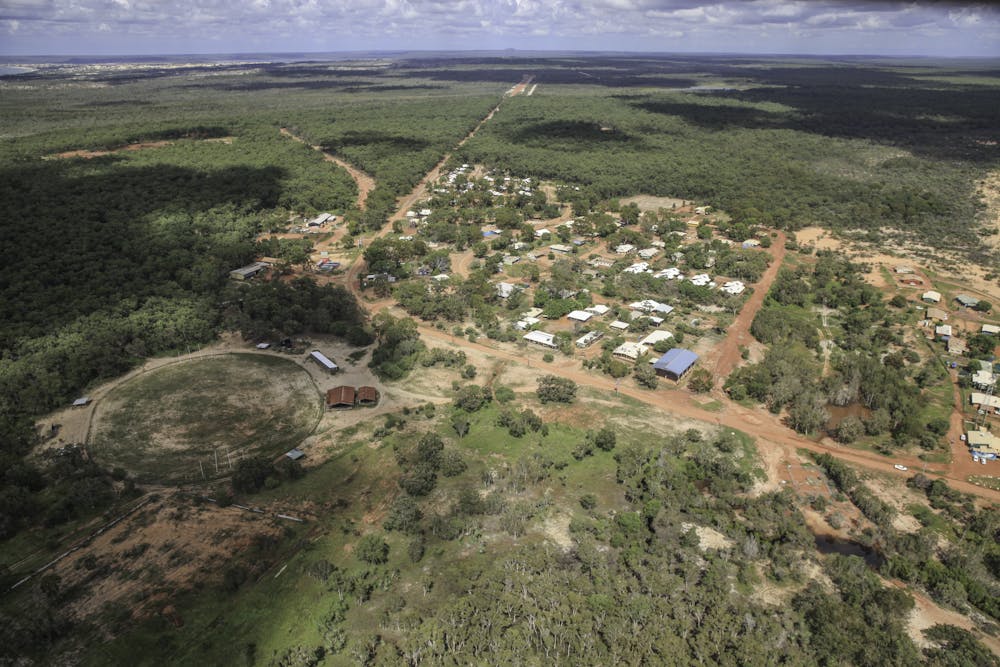
Locals have been lobbying for years for the mine to be tested[13] for its potential impact on human health, but to no avail.
It wasn’t even the first instance in the past month of undisclosed shares coming to light. In November, Fyles divested her minor stake[14] in gas company Woodside Energy.
But the final nail in the coffin came last week, when matters swirling around Fyles were referred to the territory’s corruption watchdog.
One of her senior political advisors, Gerard Richardson, co-owns a company[15] that lobbied on behalf of mining company Tamboran – a company that has large stakes[16] in multiple projects in the NT.
While she dug her heels in, the news went down like a lead balloon in the electorate, and likely in the party room too.
A salvagable government?
Politics in the Top End is a strange beast. Fyles stepping down as leader doesn’t necessarily mean she takes the government down with her.
The way politics plays out in the territory has long been down to the happiness or unhappiness of key interest groups.
With some electorates containing just 5,000 people or so, the blessing (or lack thereof) of recreational fishers or the police association, for example, can have a disproportionate affect.
So in choosing its next leader, the Labor party will be considering who appeals most to the most important groups.
Read more: 'We haven't got anybody': new research reveals how major parties are dying in remote Australia[17]
That’s why the current Minister for Recreational Fisheries (among many other things), Joel Bowden, might be in with a shot. The former Richmond footballer might have the right appeal with those who are most electorally influential.
But the government will have to contend with an increase in environment-focused politics in the lead-up to the next election in 2024.
Conservationist issues have gathered momentum in the past few years and their potential impact should not be underestimated. Greens and conservationists appear to be gaining increasing Indigenous support.
The next leader will need to be agile enough to deal with these newer forces, but compelling enough to win the party a third term in government.
References
- ^ failure to disclose (www.abc.net.au)
- ^ increased crime rates (www.abc.net.au)
- ^ approve fracking (www.abc.net.au)
- ^ High Court, then what? NT remote housing reforms need to put Indigenous residents front and centre (theconversation.com)
- ^ the resignation (www.theguardian.com)
- ^ pork-barrelling (www.ntnews.com.au)
- ^ understaffing (www.abc.net.au)
- ^ underfunding (www.abc.net.au)
- ^ alcohol bans (www.theguardian.com)
- ^ 'Cheap police': Four Corners shows the dangers of private policing in the NT and why First Nations people are more at risk (theconversation.com)
- ^ intervened (www.abc.net.au)
- ^ owns shares (www.abc.net.au)
- ^ to be tested (www.abc.net.au)
- ^ minor stake (www.abc.net.au)
- ^ co-owns a company (www.abc.net.au)
- ^ large stakes (www.abc.net.au)
- ^ 'We haven't got anybody': new research reveals how major parties are dying in remote Australia (theconversation.com)