Should Donald Trump be disqualified from state ballots in presidential election? Here’s how the US Supreme Court might rule
- Written by: John Hart, Emeritus Faculty, Australian National University
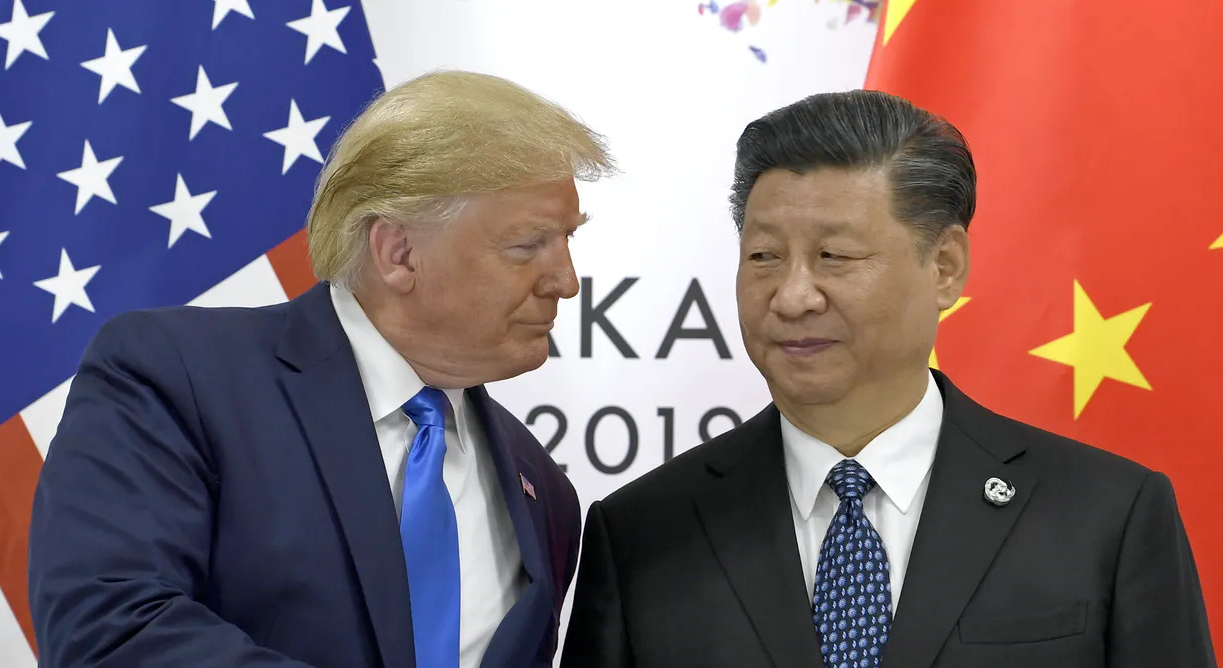
The US Supreme Court will hear oral arguments this week in former President Donald Trump’s appeal[1] against the decision to exclude him from the ballot in the Colorado Republican primary for this year’s presidential election.
The Colorado Supreme Court ruled[2] in December that Trump was disqualified from holding the office of president under Section 3 of the 14th Amendment[3] to the Constitution because he engaged in an insurrection on January 6, 2021.
Because the Republican primaries have already begun (Coloradoans vote on March 5) and the US Supreme Court’s current term ends on June 30, the nine justices have very little time to consider such a momentous dispute with so many constitutional issues to be clarified.
So, what will happen this week and how might the court rule?
How does the Supreme Court operate?
Each side is usually allotted 30 minutes to present their case in oral arguments, but the lawyers are almost always interrupted by questions from the justices. The questioning can provide clues as to how the justices might be leaning.
The justices then meet in private to discuss the case and form a preliminary opinion. The chief justice, John Roberts, has the power to determine which of the justices will draft the written opinion, but only if he is in the majority. If not, that power transfers to the next most senior justice in the majority.
The draft opinion will be circulated to the other justices and is subject to their suggestions and possible alterations. This is almost a political exercise because the justice writing the opinion needs to get four other justices to sign the draft, or, at least, support the decision.
He or she would also want to minimise the number of dissenting or concurring opinions that would, inevitably, undermine the force of the court’s majority opinion. It is an exercise in coalition-building to forge that majority, which is never certain until this final stage of the process.
What are the constitutional issues?
The justices face a seemingly intractable choice between two fundamental values: defending the rule of law and protecting democracy.
For most of its life, the insurrection clause[4] has been regarded by constitutional scholars as of historical interest only and consequently ignored.
Trump’s appeal[5] raised three major constitutional questions the Supreme Court will have to decide:
-
whether Section 3 applies to Trump as a sitting president
-
what it takes to determine if someone is guilty of insurrection
-
and whether the states have the power to enforce Section 3 without prior approval from Congress.
Read more: Trump defends himself to the Supreme Court, saying he called ‘for peace, patriotism, respect for law and order’ on Jan. 6 and is not an insurrectionist[6]
On the first issue, Trump believes Section 3 doesn’t apply to him because it doesn’t specifically refer to the president or the presidential oath. He also claims the president is not an “officer of the United States”, as the clause reads[7].
In his petition, Trump offers several unconvincing reasons why this is so and it will probably be a difficult argument for his lawyers to sustain. As the Colorado Supreme Court said pointedly in its judgement,
The Constitution refers to the presidency as an “office” 25 times.
The second issue is whether the Colorado court erred in grounding its judgement on the fact Trump had been guilty of insurrection (based on the House Select Committee report[8]). One of the dissenting justices argued that Trump was entitled to the “due process of law” before being disqualified from the ballot.
So far, Trump has not been found guilty of insurrection, nor is he facing any specific charges of insurrection in the court cases under way.
The respondents seeking to remove Trump from the ballot point to the findings of the trial court in Colorado detailing his actions on January 6 as the central issue in the case. They claim Trump has failed to show why the trial court was wrong.
In effect, then, they are asking the Supreme Court to validate the charge that Trump engaged in an insurrection.
The third major issue is whether Section 3 is self-executing, as the Colorado Supreme Court decided. This means the Constitution does not require legislation by Congress in order to disqualify a candidate for office under Section 3.
The US Supreme Court will have to decide whether Congress must legitimise any action under Section 3, or whether Congress merely has the power to invoke the insurrection ban should no other body do so.
How will the court likely respond?
The Supreme Court has a solid six-to-three conservative majority, with three of the conservative justices nominated by Trump. But there isn’t a clear “liberal” or “conservative” position on the Colorado court’s opinion. Liberal and conservative[9] lawyers alike have provided legal rationales for excluding Trump’s candidacy based on the 14th Amendment.
The last time the Supreme Court entangled itself in a presidential election – the Bush v. Gore decision[10] in 2001 – it was a judicial dog’s breakfast. The ruling was widely seen[11] as a political decision reflecting the partisan preferences of the five conservative justices in the majority.
In a blistering dissenting opinion, Justice John Paul Stevens wrote[12]:
Although we may never know with complete certainty the identity of the winner of this year’s presidential election, the identity of the loser is perfectly clear. It is the nation’s confidence in the judge as an impartial guardian of the rule of law.
The court should be mindful of the public and legal backlash to that decision and its current low level of public approval[13]. The court’s embarrassing ethical problems[14] and unpopular decisions, such as the overturning of Roe v. Wade, have already clouded its legitimacy and reputation.
Whatever its decision, the court risks once again being seen as politically partisan. If it overturns the Colorado decision, it saves Trump’s political ambitions. If it upholds the decision and bars Trump from the ballot, it could trigger protests from Trump supporters, as Trump has already intimated[15].
Read more: US Supreme Court decision on Trump-Colorado ballot case 'monumental' for democracy itself, not just 2024 presidential election[16]
The general view among constitutional commentators is the Supreme Court would probably not want to give 50 different states and the District of Columbia the freedom to decide who is qualified or disqualified to be president. This could lead to Trump appearing on the ballot in some states, but not others.
If so, it would need to make the Colorado decision apply to all states, or craft an opinion that overturns the Colorado decision without being seen as overtly pro-Trump. It would have to seek some mid-point between upholding the rule of law (some would argue the Colorado decision does that very effectively) and permitting people to be able to vote for the candidate of their choice.
There’s not much legal precedent to guide the court in resolving the appeal. And the liberal-conservative divide on the court is probably not going to be a reliable predictor of the outcome. How the court settles this dispute is anyone’s guess.
Given the current fragile state of American democracy, the country can ill-afford a repeat of Bush v. Gore.
References
- ^ appeal (www.supremecourt.gov)
- ^ ruled (apnews.com)
- ^ Section 3 of the 14th Amendment (constitution.congress.gov)
- ^ insurrection clause (constitution.congress.gov)
- ^ appeal (theconversation.com)
- ^ Trump defends himself to the Supreme Court, saying he called ‘for peace, patriotism, respect for law and order’ on Jan. 6 and is not an insurrectionist (theconversation.com)
- ^ the clause reads (constitution.congress.gov)
- ^ report (www.pbs.org)
- ^ Liberal and conservative (www.theatlantic.com)
- ^ Bush v. Gore decision (supreme.justia.com)
- ^ widely seen (www.amazon.com.au)
- ^ wrote (www.politico.com)
- ^ low level of public approval (www.washingtonpost.com)
- ^ ethical problems (www.nbcnews.com)
- ^ has already intimated (www.theguardian.com)
- ^ US Supreme Court decision on Trump-Colorado ballot case 'monumental' for democracy itself, not just 2024 presidential election (theconversation.com)