Ridding Macquarie Island of pests pays off as seabirds come back from the brink – but recovery has just begun
- Written by: Jeremy Bird, Research Associate, Ecology and Biodiversity, University of Tasmania
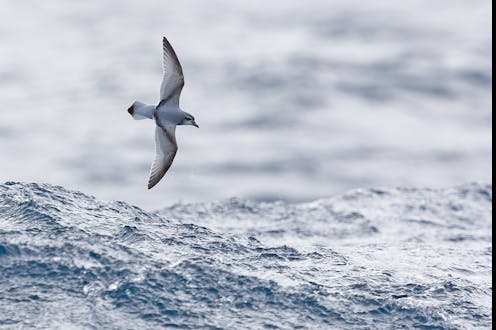
One of the largest publicly funded conservation investments[1] in history is starting to pay off on Macquarie Island, our newly published study[2] shows.
Sealers and whalers introduced cats, rats, rabbits and other animals to the island in the 19th century. Their impacts devastated the millions of seabirds breeding on the island. Numbers fell to a fraction of their former populations.
From 2011-14, the last non-native pests were cleared from the island. It was the end of a deadly chapter in the island’s history during which two bird species, a rail and a parakeet, were lost from the planet forever.
We looked for signs of recovery in populations of petrels, a group of highly specialised seabirds. We found that species listed as threatened have recovered to the point where they can be delisted. There’s still a long way to go, though, before their populations return to historical levels.
Read more: The good news: 25 Australian birds are now at less risk of extinction. The bad news: 29 are gone and 4 more might be[3]
A highly threatened group of birds
Petrels can live for decades and spend most of their lives over the open oceans far from land. Some circumnavigate the Pacific each year.
Petrels return to land only to breed on remote islands that are naturally free of mammalian predators.
Under natural circumstances petrels can be enormously abundant. This means they play important roles in marine food webs. And, by transferring marine nutrients to breeding islands, they enrich whole island ecosystems.
Petrels usually come ashore only at night and nest in underground burrows to ward off predatory birds. However, these behaviours have been no defence against the cats and rats introduced to most of the world’s islands. As a result, petrels are among the world’s most threatened bird groups.
These habits make petrels extremely difficult to study, so good information is lacking. We used novel technologies[4] and new analytical approaches[5] to calculate the population and distribution of four species across Macquarie Island and to compare these with surveys from the 1970s.
Read more: Why are dead and dying seabirds washing up on our beaches in their hundreds?[6]
What did the study find?
Antarctic prions (Pachyptila desolata[7]) remain the most widespread and common of the four species. They survived on the barren, elevated interior of the island in areas relatively inhospitable to predators. There are about 160,000 breeding pairs today, increasing by around 1% each year.
In the 1970s, cats ate an estimated 11,000 white-headed petrels (Pterodroma lessonii[8]) each year. Only 15% of nests were successfully fledging chicks. Today there are about 12,800 pairs with a breeding success rate of about 80%.
White-headed petrels’ range remains smaller than it was, and they were likely close to extinction before cats were eradicated in 2001. Listed as vulnerable in Tasmania[9], the population is growing by 1% a year and now warrants delisting.
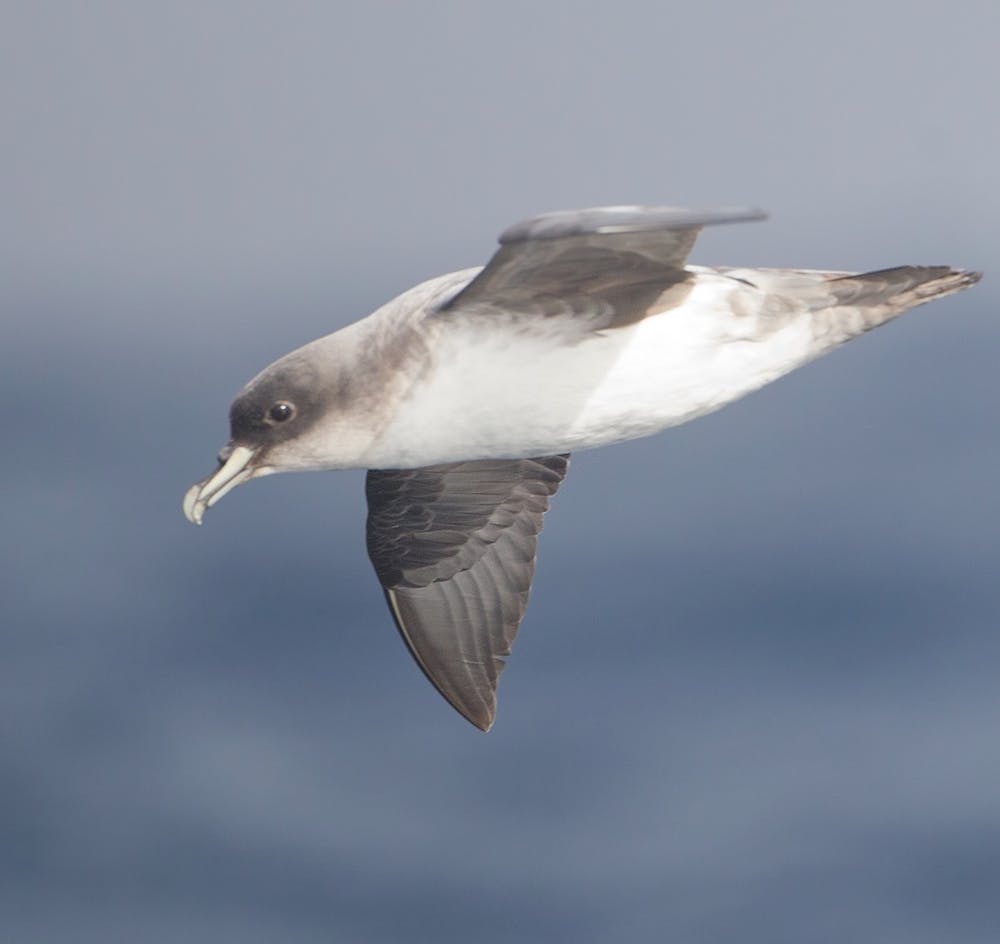
Two species, grey petrel (Procellaria cinerea[12]) and blue petrel (Halobaena caerulea[13]), became extinct on the main island in the 1900s. Grey petrels disappeared altogether, while 500–600 pairs of blue petrels survived on a few coastal rock stacks. Both have now recolonised the main island.
Grey petrels still number only in the low hundreds and blue petrels in the thousands, but are increasing at more than 10% each year. Our data suggest blue petrels no longer qualify as a federally listed vulnerable species[14]. Grey petrels will no longer qualify for listing as endangered in Tasmania if they increase at the same rate until 2026.
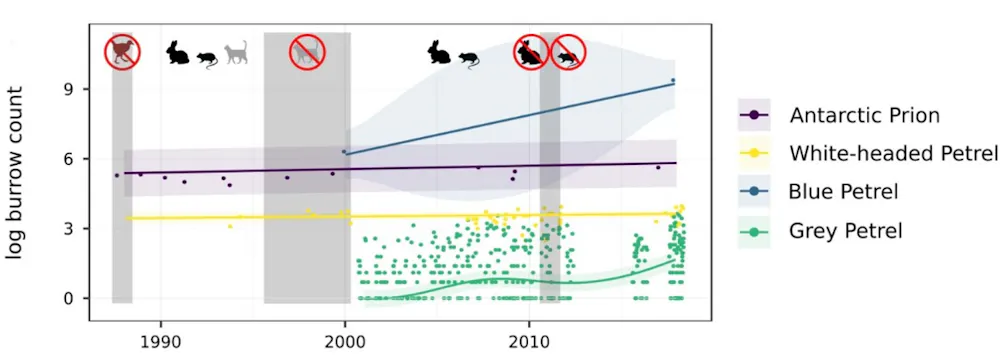 Petrel populations have increased as cats and then rabbits and rats were eradicated from Macquarie Island.
Jeremy Bird
Petrel populations have increased as cats and then rabbits and rats were eradicated from Macquarie Island.
Jeremy Bird
Read more: Penguin paradise and geological freak: why Macquarie Island deserves a bigger marine park[15]
Recovery has only just begun
It is testament to the hard work of all those involved in eradicating invasive species that these bird species are showing signs of recovery. Yet we found ourselves pondering what “recovery” really means.
We don’t know what Macquarie Island was like before humans first visited in 1810. To try to understand this, we identified suitable areas for recovering petrel populations by comparing with analogous islands with different invasive species histories.
The species we studied still occupy only a tiny fraction of the island. They were almost certainly many times more abundant historically. It will take decades for populations to fulfil their ecological roles again – if threats like climate change and avian influenza[16] don’t halt their recovery.
Read more: Avian influenza has killed millions of seabirds around the world: Antarctica could be next[17]
A vision of an island of abundance reborn
This is our vision of Macquarie Island if these amazing birds make a full recovery.
Days before visitors first sight land, thousands of seabirds swirl around the ship at sea. The white undersides of blue petrels and prions outnumber the spindrift cresting each wave. Rather than ones or twos, there’s a constant stream of white-headed and soft-plumaged petrels.
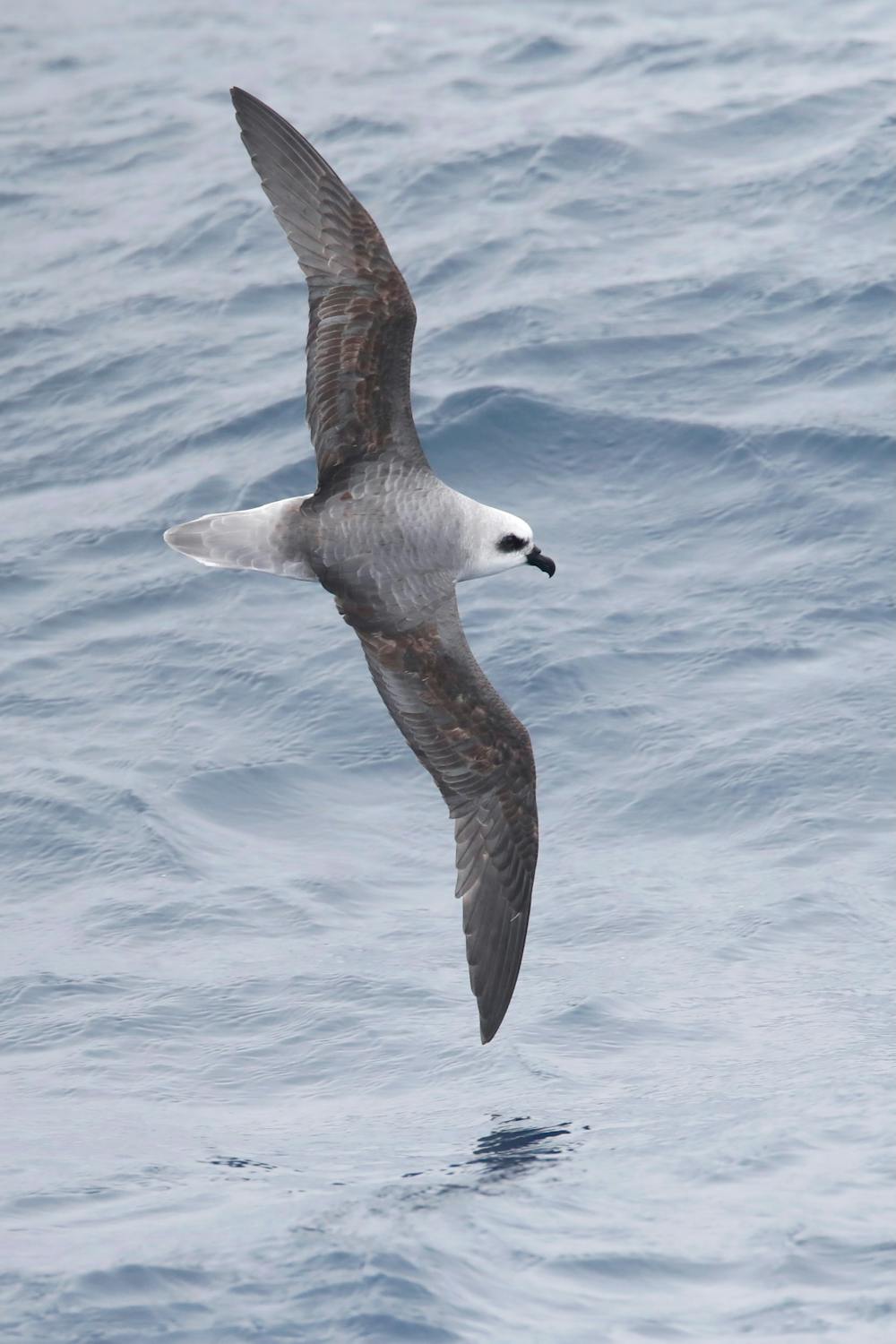 Instead of seeing white-headed petrels fly past in ones and twos, we hope to see many more in future.
Agami Photo Agency/Shutterstock[18]
Instead of seeing white-headed petrels fly past in ones and twos, we hope to see many more in future.
Agami Photo Agency/Shutterstock[18]
On the island, all must tread carefully, sticking to managed paths to avoid collapsing burrows in the super-colonies that cover seaward-facing slopes. These areas, once denuded by rabbit grazing, have revegetated. A labyrinth of tunnels through the undergrowth blurs the lines between the surface and underground world.
In places the smell of ammonia is powerful. Even more pervasive is the warm, musty smell associated with petrel plumage.
By day, predatory skuas patrol the colonies, going from burrow entrance to entrance, as the occupants sit silently within. As the sun sinks, a scan from land with binoculars finds the petrels approaching en masse, loitering over coastal waters as they wait for the cover of darkness.
At dusk, black silhouettes swarm like flies up and down the coastal hills. Where once the night was silent save for the wind, the slopes are bubbling with the purr and chatter of blue petrels, the “kwick, kwick, kwick[19]” calls of white-headed petrels and the mournful cries of soft-plumaged petrels[20]. Once a forlorn few, the calls have become an excited cacophony.
References
- ^ conservation investments (parks.tas.gov.au)
- ^ newly published study (doi.org)
- ^ The good news: 25 Australian birds are now at less risk of extinction. The bad news: 29 are gone and 4 more might be (theconversation.com)
- ^ novel technologies (zslpublications.onlinelibrary.wiley.com)
- ^ new analytical approaches (nsojournals.onlinelibrary.wiley.com)
- ^ Why are dead and dying seabirds washing up on our beaches in their hundreds? (theconversation.com)
- ^ Pachyptila desolata (ebird.org)
- ^ Pterodroma lessonii (ebird.org)
- ^ Listed as vulnerable in Tasmania (nre.tas.gov.au)
- ^ JJ Harrison/WIkimedia Commons (commons.wikimedia.org)
- ^ CC BY-SA (creativecommons.org)
- ^ Procellaria cinerea (ebird.org)
- ^ Halobaena caerulea (ebird.org)
- ^ federally listed vulnerable species (www.environment.gov.au)
- ^ Penguin paradise and geological freak: why Macquarie Island deserves a bigger marine park (theconversation.com)
- ^ avian influenza (theconversation.com)
- ^ Avian influenza has killed millions of seabirds around the world: Antarctica could be next (theconversation.com)
- ^ Agami Photo Agency/Shutterstock (www.shutterstock.com)
- ^ kwick, kwick, kwick (subantarcticconservation.org)
- ^ soft-plumaged petrels (ebird.org)