Are you ready for it? ‘Yeah-nah’ comes back stronger – with a little help from Taylor Swift
- Written by: Kate Burridge, Professor of Linguistics, Monash University
Much has been written about the power of Taylor Swift’s poetic lyrics to resonate deeply with her audiences. But forget poetry and literary allusions — their influence pales in comparison to the cultural impact of a resounding “yeah-nah”.
During last Friday evening’s concert, Swift’s dancer Kameron Saunders bellowed the cherished Australian phrase in response to Swift’s line “You know that we are never getting back together” — and 96,000 Swifties at the Melbourne Cricket Ground went wild.
It was enchanting to meet you — introducing ‘yeah-nah’
According to the first ever study[1] of this little Aussie icon, “yeah-nah” arrived on the linguistic scene probably around the late 1990s. But it didn’t really come to the attention of Australians until the early 2000s, much the same time as Swift and her guitar began to rise to fame in Nashville. And, just like Swift, it’s not always been plain sailing for “yeah-nah” — a rocky start and a career marked by continual change and innovation.
Condemned by many in the early 2000s, “yeah-nah” was branded with disparaging labels[2] such as “speech junk” — and lumped together with other “unnecessary words that clutter up our language”. “Yeah-no” was a symptom of Australia’s inarticulateness, they argued, and it should go.
Read more: Yeah, nah: Aussie slang hasn't carked it, but we do want to know more about it[3]
But somehow “yeah-no” climbed out of the linguistic abyss — came back stronger than a nineties trend, as Swifties would put it — and won people’s hearts. When ABC radio stations around the country asked their listeners to send in their favourite Aussie slang expressions, “yeah-nah” came second out of more than a thousand unique phrases (it might even have come first[4] had “mate” not got that unfair boost from other favourites like “g’day mate”).
“>
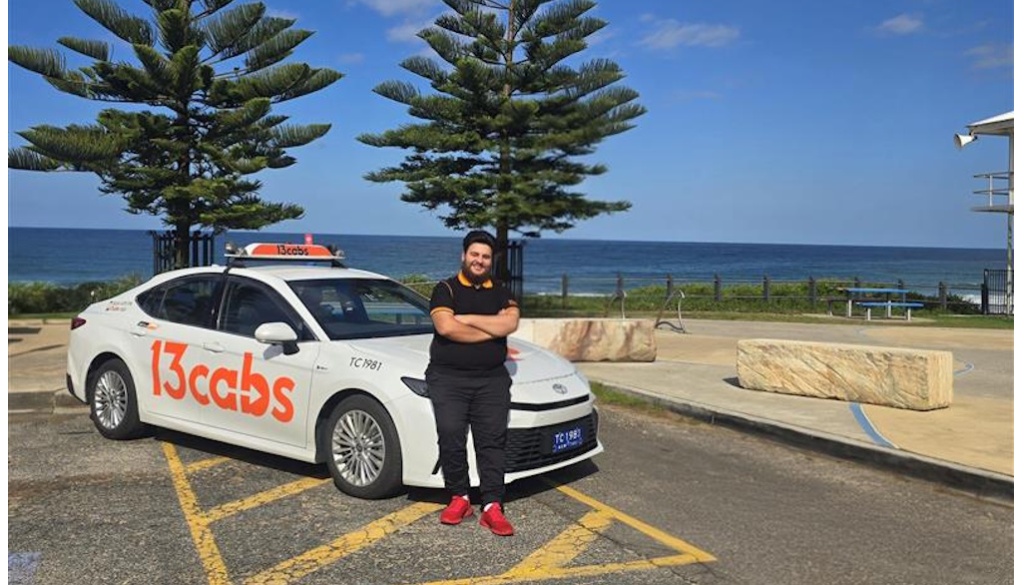
Now a major protagonist in William McInnes’ book[5] Yeah, Nah!: A celebration of life and the words that make us who we are, this much loved linguistic celebrity also makes regular public appearances — popping up everywhere from car sales adverts to the branding initiatives of condom companies. It’s prominently adorned on earrings, signet rings, necklaces, T-shirts and even features in beautifully intricate needlework embroideries.
What’s ‘yeah-nah’ anyway?
"Yeah-nah” (or its more formal version “yeah-no”) is one of those highly idiosyncratic expressions dotted through our speech. Its functions have to do with hedging, politeness and solidarity, but they are complex and pinning them down is tricky. As you’d expect — it is after all the fall-out of the hidden thought processes of humans interacting with other humans.
Here are some examples to illustrate just some of its duties.
You might want to decline someone’s kind offer of assistance: “Do want a hand?” — “Yeah-nah, I’ll be fine.” To simply say “no” would be blunt.
You might want to agree with a negative question: “So you didn’t get the Taylor Swift tickets?” — “Yeah-nah, we were too slow.” A simple “yes” or “no” would be ambiguous.
You might want to indicate enthusiastic agreement: “So you enjoyed Taylor Swift?” — “Yeah-nah, she was fantastic.” The effect of “no” is to reinforce “yes” by knocking on the head any possibility of contradiction.
You start talking after a lull in the conversation: “Yeah-nah, I was hoping to go to the concert.” “Yeah-nah” strengthens rapport with your conversational partner; it suggests interest or support.
You’re under pressure to accept a compliment, but at the same time want to appear modest. “You played brilliantly today” — “Yeah-nah, I was lucky really.” “Yeah” acknowledges the compliment (not to would seem ungrateful), and the following “nah” effectively softens its impact.
Read more: Brekkies, barbies, mozzies: why do Aussies shorten so many words?[6]
So which one did Taylor Swift’s dancer use?
The “yeah-nah” starring in the Eras tour is one of the newest functions, sometimes dubbed the “shutdown” use: an intense, sarcastic form of disagreement, which effectively shuts down the topic altogether (“Would you give me your tickets for Saturday night’s concert?” “Yeah, nah”.) The “yeah” sarcastically feints at an agreement that is clearly not possible, before the crystal-cold clarity of the disagreement is issued: “nah”. Curiously, this use has earlier and stronger documentation in US English[7], and only more recently has it been found in Australian English.
“Shutdown” uses have proliferated on Twitter[8] since at least 2018 (and, yes, that an intense form of disagreement should gain momentum on Twitter is perhaps the least surprising part of this story). The strong strand of internet language feeding the development of this function is perhaps why newer studies[9] have found this form of “yeah-no” is used predominantly by younger people.
A little surprising, really — in most other functions, Baby Boomers have been documented to be the most prolific users of “yeah-no”.
You belong with me — language binds us
Language is all about communicating (of course), but it’s also about defining the gang — and never underestimate the significance of this second function. Members of Swift’s fandom are known for weaving her song lyrics (“blank space, baby”, “red lip classic”) into their conversations. These fragments of lyrics become a kind of “clique”, or in-group recognition device — “if you’re quoting Taylor Swift, that connects us”[10].
Swift is certainly aware of the power of language when it comes to creating bonds, and not just through relatable lyrics and themes. She is brilliant at acknowledging local culture and using colloquial phrases to connect with her audiences. And she nailed it with “yeah-nah”.
References
- ^ first ever study (www.tandfonline.com)
- ^ was branded with disparaging labels (www.theage.com.au)
- ^ Yeah, nah: Aussie slang hasn't carked it, but we do want to know more about it (theconversation.com)
- ^ it might even have come first (theconversation.com)
- ^ William McInnes’ book (www.hachette.com.au)
- ^ Brekkies, barbies, mozzies: why do Aussies shorten so many words? (theconversation.com)
- ^ documentation in US English (itre.cis.upenn.edu)
- ^ Twitter (commons.emich.edu)
- ^ newer studies (becauselanguage.com)
- ^ “if you’re quoting Taylor Swift, that connects us” (www.wired.com)