From crickets in Melbourne to grasshoppers in Cairns, here’s what triggers an insect outbreak
- Written by: David Rentz, Adjunct Professorial Research Fellow, School of Marine and Tropical Biology, James Cook University
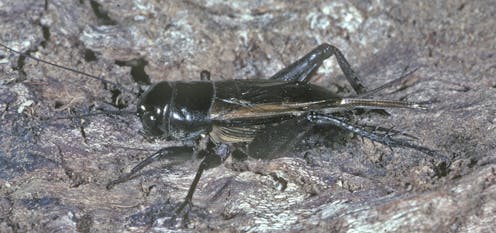
In recent weeks, Melburnians have reported thousands of crickets showing up in large numbers after dark[1], flying into homes and shops and taking up residence.
The insect in question is the widespread, native black field cricket[2] (Teleogryllus commodus).
Some media reports have described[3] the swarms as a “plague”. This is not quite accurate, because scientists in Australia reserve that term for serious pests such as mice and some locusts[4]. It’s best to call the present phenomenon an “outbreak”.
So what triggers these outbreaks, and how can we best live alongside insects as they go through these cycles of boom and bust?
Why the crickets moved to Melbourne
Black field crickets are not usually pests – the insects belong here and their song is that of the Australian bush. Crickets are a valuable food source for birds, reptiles and mammals.
Males sing every night by rubbing their wings together. They can easily be distinguished from females by the absence of the needle-like organ called an ovipositor that the females use for laying eggs.
Black field crickets are notorious for breeding in large numbers[5] then flying to new sites at night.
Recent unseasonal and persistent rain fostered the growth of plants and insects, supplying ample food for the crickets. This is the most likely trigger for the extraordinarily large numbers we’re seeing.
The crickets may have flown in on persistent winds, or maybe the city lights attracted them[6]. Nocturnal insects use light to work out which way is up, so they find artificial light confusing[7].
Cooler weather will help keep crickets in their natural habitat, where they belong. The hot weather would have stimulated their movement and spurred them on, because crickets are more active when it’s warm.
Tips for dealing with the crickets
Crickets are naturally attracted to light sources during the night. This can lead them to enter indoor spaces – often through small openings such as cracks around doors, or through windows or vents.
Keeping crickets out of your home can be challenging. Start by turning off outdoor lights and closing curtains and blinds. Seal entry points and install insect screens.
Changing outdoor lights from bright white to yellow will also help to deter insects.
If crickets do enter your home, they can easily be caught in a jar and taken outside.
A lack of humidity means crickets don’t survive indoors for more than a few days. Females require soil to lay their eggs, which means they won’t breed inside the home.
As an aside, if you fancy a cricket as a pet, they can be kept alive for a few weeks in a takeaway plastic container with some air holes. Captive crickets should be provided with a source of water such as a wet cotton ball in a jar lid. They can be fed muesli and a bit of apple, which provides another source of moisture. The water and the moist food raises the humidity to a suitable level.
Read more: Australian endangered species: Schayer's Grasshopper[8]
Other insects swarm, too
Rain often triggers insect outbreaks.
In Far North Queensland, where I live, we had almost 2 metres of rain in less than a week during Cyclone Jasper[10]. And the rain persists. This has caused some insects that normally occur in small numbers to reproduce abnormally.
Cairns is a favoured destination for multiple grasshopper species[11] that thrive in warm, wet conditions. They have been known to trouble Cairns Airport, but authorities there now have a good Wildlife Hazard Management Plan[12] in place.
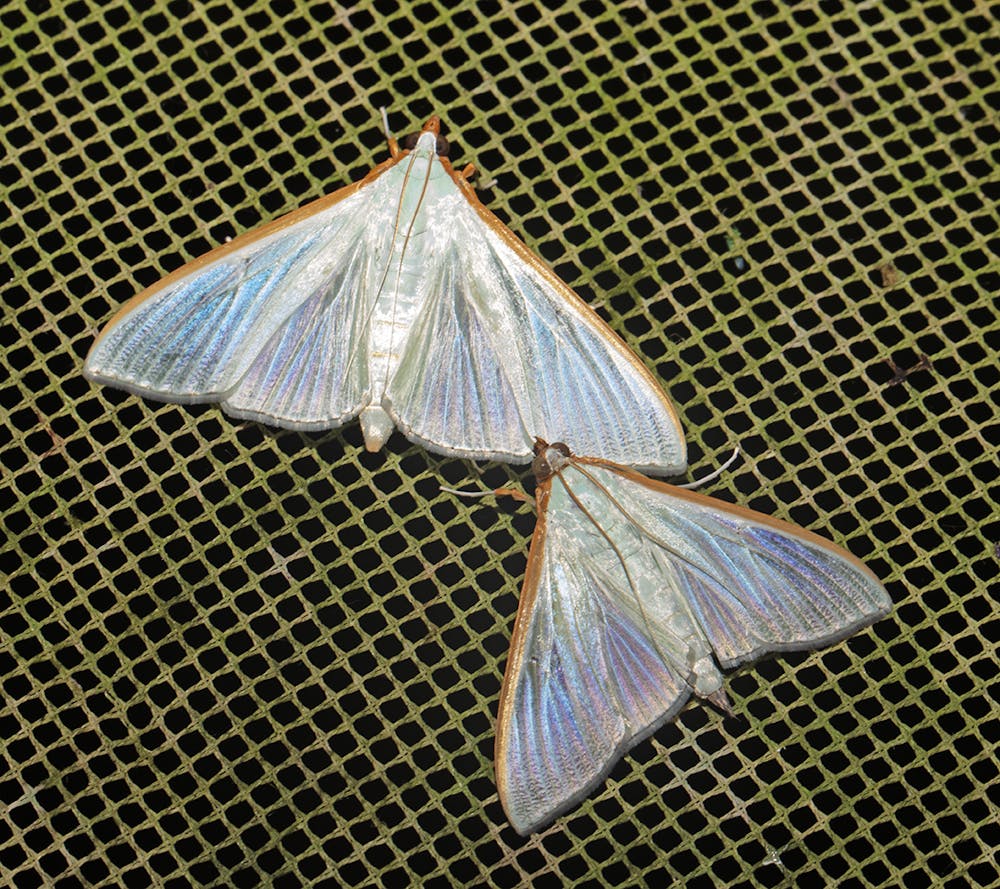
In Canberra, huge numbers of bogong moths[13] have been known to infiltrate Parliament House for few weeks en route to the Australian Alps, where they spend the summer. The moths reproduce during wet years[14] and the following season, they migrate in great numbers.
The widespread little Upolu meadow katydid (Conocephalus upoluensis) also breeds in large numbers after good rain[15]. Adults fly to lights, often in their hundreds, and can be seen at outback petrol stations and cafes. As with most of these outbreaks, their presence is shortlived.
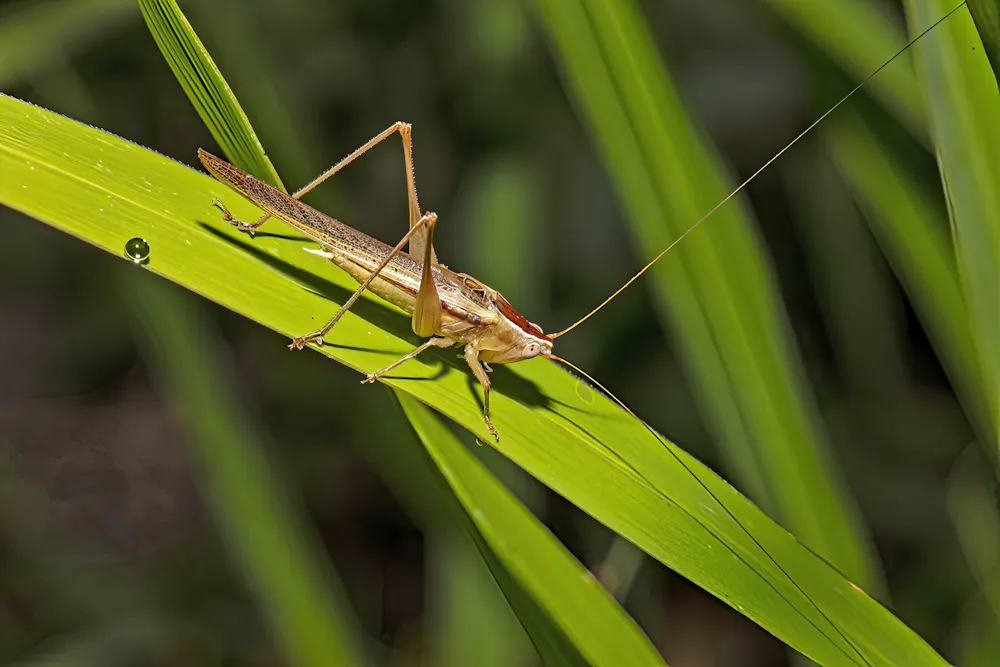 Katydids or bush crickets also breed up in response to rainy weather.
David Rentz
Katydids or bush crickets also breed up in response to rainy weather.
David Rentz
Read more: Australian endangered species: Katydids[16]
Looking ahead
Under climate change, plagues of some insects such as locusts are expected to worsen[17] as a result of increased heat and extreme rains.
However, climate change is also expected to lead to declines[18] in some insect species. This compounds other harms caused by humans such as habitat loss and pollution.
Those pressures mean insect populations may be moving into new, populated areas in search of more favourable conditions.
All that said, we can expect insect outbreaks to happen again. My advice for those in Melbourne is just to wait until the crickets move on – and in the meantime, enjoy the spectacle of nature.
Read more: A great year to be a cabbage white butterfly: why are there so many and how can you protect your crops?[19]
References
- ^ large numbers after dark (au.news.yahoo.com)
- ^ black field cricket (australian.museum)
- ^ described (www.news.com.au)
- ^ locusts (www.agriculture.gov.au)
- ^ notorious for breeding in large numbers (www.publish.csiro.au)
- ^ city lights attracted them (www.nature.com)
- ^ artificial light confusing (www.scientificamerican.com)
- ^ Australian endangered species: Schayer's Grasshopper (theconversation.com)
- ^ David Rentz (bunyipco.blogspot.com)
- ^ Cyclone Jasper (gpm.nasa.gov)
- ^ multiple grasshopper species (www.cairnspost.com.au)
- ^ Wildlife Hazard Management Plan (www.cairnsairport.com.au)
- ^ bogong moths (parlinfo.aph.gov.au)
- ^ reproduce during wet years (www.abc.net.au)
- ^ breeds in large numbers after good rain (www.publish.csiro.au)
- ^ Australian endangered species: Katydids (theconversation.com)
- ^ worsen (www.nytimes.com)
- ^ declines (www.jcu.edu.au)
- ^ A great year to be a cabbage white butterfly: why are there so many and how can you protect your crops? (theconversation.com)