Why and how often do I need to wash makeup brushes and sponges?
- Written by: Enzo Palombo, Professor of Microbiology, Swinburne University of Technology
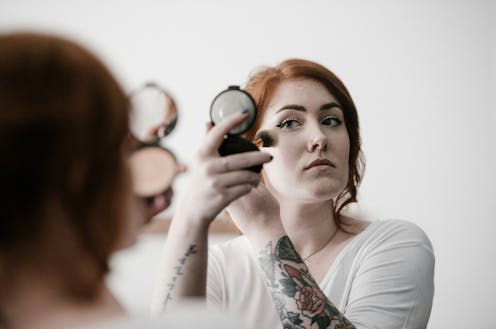
From the bristles of brushes to the porous surfaces of sponges, your makeup kit can harbour a host of bacteria and fungi.
These potentially hazardous contaminants can originate not only from the cosmetics themselves, but also from the very surface of our skin.
So, how can we keep things hygienic and avoid microbial growth on makeup brushes and sponges? Here’s what you need to know.
Read more: What is micellar water and how does it work?[1]
How do germs and fungi get in my brushes and sponges?
Germs and fungi can make their way into your makeup kit in lots of ways.
Ever flushed a toilet with the lid open with your makeup brushes nearby? There’s a good chance faecal particles[2] have landed on them.
Perhaps a family member or housemate has used your eyeshadow brush when you weren’t looking, and transferred some microbes across in the process.
Bacteria that trigger a pimple outbreak can be easily transferred from the surface of your skin to a makeup brush or sponge.
And tiny little mites called Demodex mites, which have been linked to certain rashes and acne, live on your skin, as well, and so may end up in your sponge or brushes.

Read more: Invisible skin mites called Demodex almost certainly live on your face – but what about your mascara?[4]
Bacterial contamination of lip cosmetics[5], in particular, can pose a risk of skin and eye infections (so keep that in mind if you use lip brushes). Lipsticks are frequently contaminated with bacteria such as Staphylococcus aureus, E. coli, and Streptococcus pneumoniae.
Low-quality cosmetics are more likely to have higher and more diverse microbial growth compared to high-quality cosmetics[6].
Brushes exposed to sensitive areas like the eyes, mouth and nose are particularly susceptible to being potential sources of infection.
The range of conditions caused by these microorganisms includes:
In severe cases, infections can lead to invasion of the bloodstream or deep tissues.
Commercially available cosmetics contain varying amounts and types of preservatives aimed at inhibiting the growth of fungi and bacteria.
But when you apply makeup, different cosmetics with unique formulations of preservatives can become mixed. When a preservative meant for one product mixes with others, it might not work as well because they have different water amounts or pH levels.
So preservatives are not foolproof. We also need to observe good hygiene practices when it comes to brushes and other cosmetics applicators.
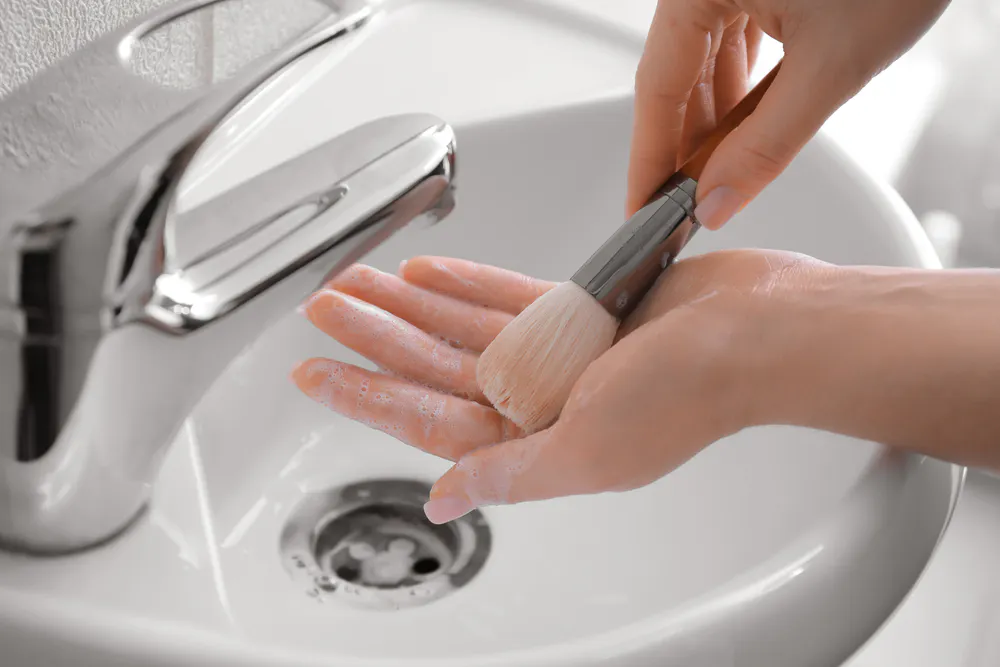 You don’t need to use micellar water to clean your brushes.
Pixel-Shot/Shutterstock[7]
You don’t need to use micellar water to clean your brushes.
Pixel-Shot/Shutterstock[7]
Keeping brushes clean
Start with the basics: never share makeup brushes or sponges[8]. Everyone carries different microbes on their skin, so sharing brushes and sponges means you are also sharing germs and fungi.
If you need to share makeup, use something disposable to apply it, or make sure any shared brushes are washed and sterilised before the next person uses it.
Clean makeup brushes by washing with hot soapy water and rinsing thoroughly.
How often? Stick to a cleaning routine you can repeat with consistency (as opposed to a deep clean that is done annually). Once a week[9] might be a good goal for some, while others may need to wash more regularly if they are heavy users of makeup.
Definitely wash straight away if someone else has used your brushes or sponges. And if you’ve had an eye infection such as conjunctivitis, ensure you clean applicators thoroughly after the infection has resolved.
You can use bactericidal soap, 70% ethanol or chlorhexidine solutions to wash. Just make sure you wash very thoroughly with hot water after, as some of these things can irritate your skin. (While some people online say alcohol can degrade brushes and sponges, opinion seems to be mixed; in general, most disinfectants are unlikely to cause significant corrosion.)
For some brushes, heating or steaming them and letting them dry may also be an effective sterilisation method once they are washed with detergent. Microwaving sponges isn’t a good idea because while the heat generated by a domestic microwave would kill microbes, it would need temperatures approaching 100°C for a decent period of time (at least several minutes). The heat could melt some parts of the sponge and hot materials could be a scalding hazard.
Once clean, ensure brushes and sponges are stored in a dry place away from water sources (and not near an open toilet).
If you’re having makeup applied professionally, brushes and applicators should be sterilised or changed from person to person.
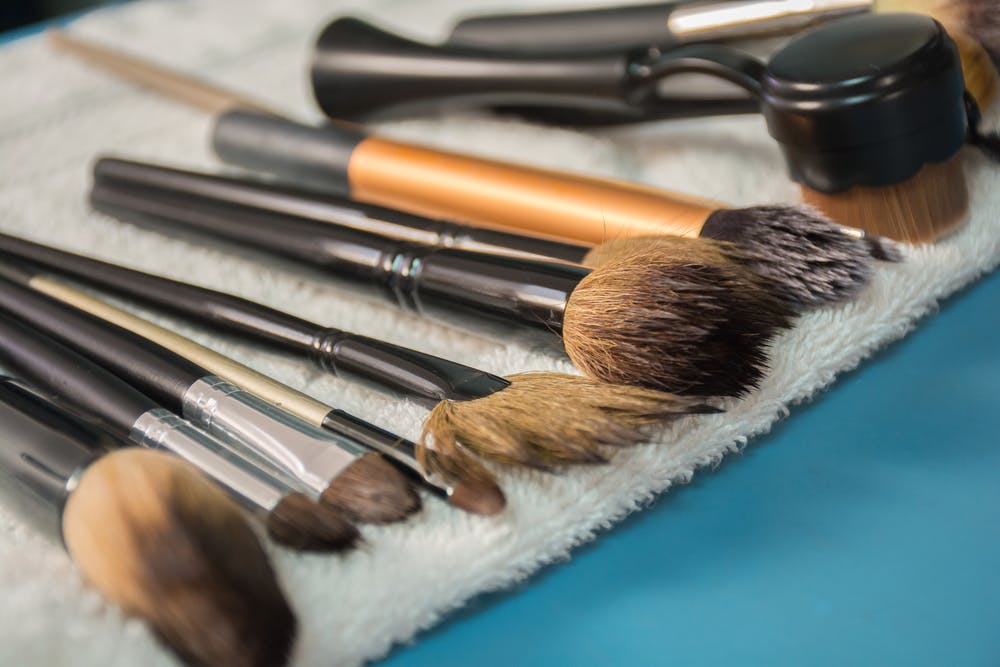 Dry brushes thoroughly after washing.
prachyaloyfar/Shutterstock[10]
Dry brushes thoroughly after washing.
prachyaloyfar/Shutterstock[10]
Should I wash them with micellar water?
No.
Not only is this expensive, it’s unnecessary. The same benefits can be achieved with cheaper detergents or alcohol (just rinse brushes carefully afterwards).
Disinfection methods such as using bactericidal soap, 70% ethanol, or chlorhexidine are all very good at reducing the amount of microbes on your brushes and sponges.
Read more: What is micellar water and how does it work?[11]
References
- ^ What is micellar water and how does it work? (theconversation.com)
- ^ faecal particles (theconversation.com)
- ^ Chay_Tee/Shutterstock (www.shutterstock.com)
- ^ Invisible skin mites called Demodex almost certainly live on your face – but what about your mascara? (theconversation.com)
- ^ lip cosmetics (pubmed.ncbi.nlm.nih.gov)
- ^ high-quality cosmetics (www.sciencedirect.com)
- ^ Pixel-Shot/Shutterstock (www.shutterstock.com)
- ^ share makeup brushes or sponges (www.semanticscholar.org)
- ^ Once a week (www.aad.org)
- ^ prachyaloyfar/Shutterstock (www.shutterstock.com)
- ^ What is micellar water and how does it work? (theconversation.com)
Read more https://theconversation.com/why-and-how-often-do-i-need-to-wash-makeup-brushes-and-sponges-220280