Australia’s ‘learning by doing’ approach to managing large mines is failing the environment
- Written by: Matthew Currell, Professor of Environmental Engineering, School of Engineering, Griffith University
High-profile legal disputes, such as the current case[1] between coal giant Adani and the Queensland government, show Australia’s approach to managing large mining projects is flawed.
Many projects are allowed to go ahead even though the environmental impacts are uncertain. The idea is any damage to the environment can be managed along the way. This has been the norm[2] for large coal mines and gas developments in Australia since 2013. That’s when legislation known as the Water Trigger[3] came into effect – ironically, to protect water resources from these industries.
But our research[4] shows this approach – known as “adaptive management” – often creates more problems than it solves. This is particularly true when it comes to groundwater, where impacts are difficult to predict in advance, and monitoring may only detect problems when it is too late to act.
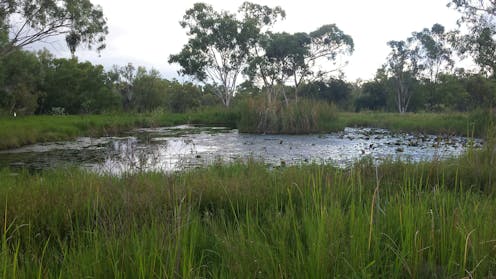
These problems include depleting or contaminating groundwater, drying up springs of major cultural and ecological significance[5], altering river flows and reducing water quality. There are worrying signs the Adani mine is putting the Doongmabulla springs at risk[6].
What is adaptive management?
Adaptive management seeks to address uncertainty in environmental impact assessments. The approach can be broadly summarised as “learning by doing[7]”.
The original intention was to allow decisions to be made about development proposals without full certainty about the environmental impacts. Ongoing monitoring and continuously updated modelling is then supposed to improve the knowledge base over time. This should help identify new or improved management strategies.
Environmental objectives are supposed to be clearly outlined at the outset. Objectives may include the protection of a key habitat, water resource or region of high ecological significance.
Establishing these objectives is a lengthy process of consultation with groups who have a stake in the project, such as people who live nearby and Traditional Owners with deep connections to the land. These discussions are meant to continue throughout the project as new data and knowledge come to light.
However our research[8] shows adaptive management is often poorly suited to managing impacts on groundwater. This is especially true in cases where:
there are long lag times between project activity (such as groundwater extraction lowering the water table before pit excavation) and the full effects on the groundwater system[9]
the impacts could be irreversible, meaning actions taken to address a change in the condition of the environment may come too late to stop permanent damage.
Protecting Doongmabulla Springs
The Adani coal mine was embroiled in many years of controversy about potential impacts on water, climate and endangered animals[10]. When it began operating, scientists warned it was too close to the sacred Doongabulla Springs and risked permanently drying them up[11].
Our analysis[12] published in 2020 found problems with the miner’s reported understanding of the groundwater system supporting the Doongmabulla Springs[13]. Little effort was made to plan specific actions to protect the springs if monitoring later showed such action was required.
We argue Adani’s use of adaptive management, which the environment minister accepted in approving the mine[14], was not fit for the agreed purpose of protecting the springs.
The Queensland Department of Environment, Science and Innovation appeared to echo these views[15] in the Supreme Court last month.
The legal action was brought by Adani in 2023, after the Department refused to accept updated groundwater modelling the company had to submit within two years of opening the mine. Instead, the Department issued an Environment Protection Order[16], which prevents any underground mining until the company:
can demonstrate to the satisfaction of the department that the activity can be conducted in a way that does not exceed the approved impacts
This followed a review[17] by CSIRO and Geoscience Australia. The review found the company’s groundwater model was “unable to support a robust uncertainty analysis and therefore confidence in the range of predicted impacts is low”.
In court, Department staff testified[18] that deficiencies in modelling and gaps in groundwater monitoring mean the “risk of potential impacts (which are potentially irreversible) to the [Doongmabulla] springs is increased while [mining] continues”.
This echoes similar warnings[19] by groundwater researchers prior to the initial approval of the mine.
These springs are vital to the cultural life of the Wangan and Jagalingou people, who testified to the United Nations[20] that the loss of these springs would decimate their culture.
A way forward
Protracted reform of Australia’s environmental laws[21] provides an opportunity to establish clear criteria for when adaptive management can be used.
We argue alternative, more precautionary approaches should be adopted when there is a long interval between the mining activity and potentially irreversible damage.
For example, limits should be placed on the mine’s location, size and water extraction rates. This should be informed by detailed upfront research into the site’s water systems, geology and the ecosystem’s tolerance for changes in water levels and quality.
If adaptive management is to be used in mining projects, there must be a reasonable prospect (and a clear mechanism) to detect and prevent environmental harm. There must also be clarity around when project activities must cease. In line with best practice adaptive management, guidance should be provided to ensure miners clearly outline:
- how monitoring data will be used, in an ongoing process of revising both impact predictions and management strategies
- what specific actions will be taken, and at what point in time if data show unpredicted greater than expected impacts
- how stakeholders will be involved throughout the process of setting and reviewing environmental objectives and monitoring criteria.
Unless these issues are urgently addressed, the “learning by doing” approach will continue to put Australian ecosystems and water resources at risk.
References
- ^ current case (www.abc.net.au)
- ^ norm (www.dcceew.gov.au)
- ^ Water Trigger (www6.austlii.edu.au)
- ^ our research (www.sciencedirect.com)
- ^ cultural and ecological significance (globalwellnessinstitute.org)
- ^ putting the Doongmabulla springs at risk (www.abc.net.au)
- ^ learning by doing (nap.nationalacademies.org)
- ^ research (www.sciencedirect.com)
- ^ groundwater system (www.usgs.gov)
- ^ water, climate and endangered animals (envlaw.com.au)
- ^ risked permanently drying them up (fac.flinders.edu.au)
- ^ analysis (www.nature.com)
- ^ Doongmabulla Springs (sacredland.org)
- ^ approving the mine (www.dcceew.gov.au)
- ^ echo these views (www.abc.net.au)
- ^ Environment Protection Order (apps.des.qld.gov.au)
- ^ review (environment.desi.qld.gov.au)
- ^ Department staff testified (apps.courts.qld.gov.au)
- ^ similar warnings (www.sciencedirect.com)
- ^ to the United Nations (wanganjagalingou.com.au)
- ^ Protracted reform of Australia’s environmental laws (www.dcceew.gov.au)