Biden’s withdrawal will place enormous attention on the Democratic convention in August. Here’s what to expect
Written by: Rodrigo Praino, Professor & Director, Jeff Bleich Centre for Democracy and Disruptive Technologies, Flinders University
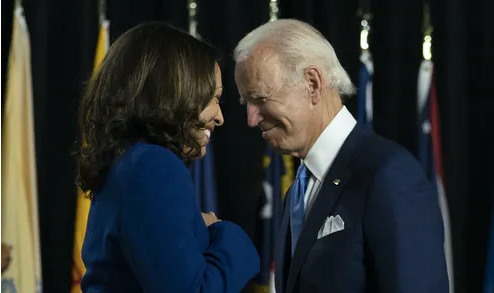
Joe Biden has announced he will no longer contest the 2024 US presidential election. He has thrown his support instead behind his vice president, Kamala Harris.
In most countries, including Australia, such a decision would trigger a meeting of party number-crunchers behind closed doors, where the party would select a new candidate and announce the decision to the rest of the country.
Not in America.
How nominees are selected
American political parties arguably have the most transparent system to select candidates running for office in the world. This very transparency, which many cherish as an additional democratic feature of the American political system, makes the next steps a bit more complicated today than some may be acknowledging.
In brief, any party member who wants to run for president of the United States must run for “primary” elections. Each party holds their own primaries — or caucuses — and whoever wins those becomes the party’s candidate at the general election.
The process, however, is indirect: when voters vote for a candidate during a primary election, their vote actually triggers the selection of a party delegate who is pledged to vote for that candidate during the party convention. The party’s nominee is then formally selected at the convention.
The Democratic party has around 4,700 delegates. Of these, around 3,800 delegates were pledged to nominate Biden for president and are now essentially free agents. Biden’s endorsement of Harris might convince some of them to support her bid, but they are under no obligation to do so. This situation is unprecedented in modern US elections. The current presidential nominating system based on widespread primary elections took shape in the 1970s. Since then, it has worked virtually flawlessly, with candidates from both parties collecting pledged delegates during the primary season and receiving the nomination during each party’s convention. The last time that any of the two major American parties held an “open convention” – that is, a convention where there is no individual with enough pledged delegates to be considered the presumptive party nominee and instead the delegates choose the candidate with a free vote – was the Democratic National Convention of 1968. Nothing like this has happened since. So what happens now? Harris is definitely running to secure the party’s nomination. Several prominent Democrats have also endorsed her candidacy. But she is not the official Democratic candidate yet, and has some way to go in order to secure the nomination. According to the party rules, at this stage any member of the Democratic party can gather signatures from at least 300 delegates from a minimum of six states to run for the top spot on the Democratic ticket. This means, theoretically, that there could be up to 15 people seeking the Democratic nomination, including Harris, although it is highly unlikely that such a large number of contenders will enter the field now. So far, no other potential candidate has expressed a clear intention to run. Should there be more than one candidate, the party rules state that each candidate has the right to give a 20-minute speech in front of the convention, before the delegates vote on the nominee. If a small number of contenders emerged, such a process could be managed effectively. If a large number of contenders were to emerge, however, then the process could quickly become messy, resulting in multiple ballots before a candidate is selected. From August 19-22, Democrats will gather in Chicago for their national convention. Interestingly, Chicago was also the city where the Democrats gathered during the last properly contentious convention in 1968. That year, President Lyndon Johnson announced on March 31 that he was not going to run for re-election. A few days later, on April 4, Martin Luther King Jr. was assassinated in Memphis. Then on June 6, right after winning the California primary election during his presidential bid, Robert F. Kennedy was assassinated. When the Democratic delegates gathered in Chicago, they nominated the vice president, Hubert Humphrey, who had not run in any of the primary elections and caucuses that took place that season. Anti-Vietnam war protests also triggered a number of riots and protests around Chicago, so the process was extremely volatile. We don’t know yet if 2024 is going to be an open convention or not. But we know that many have been arguing that, if Biden stepped down, there should not be a “coronation” of Harris, but rather a democratic process that selects the next candidate. Harris has also stated that she wants to “earn and win” the nomination. Donations also appear to have been flowing in record numbers[1] towards the Democratic cause since Biden’s announcement. There is now a very delicate balancing act unfolding between keeping the democratic nature of the nominating process intact and ensuring that the Democratic party is quickly united if it has any chance of beating Donald Trump in November. References^flowing in record numbers (thehill.com)