Drone food delivery is spreading across Australia. Research suggests we will eat more junk food as a result
- Written by: Rebecca Bennett, PhD Student, Associate Research Fellow, Deakin University
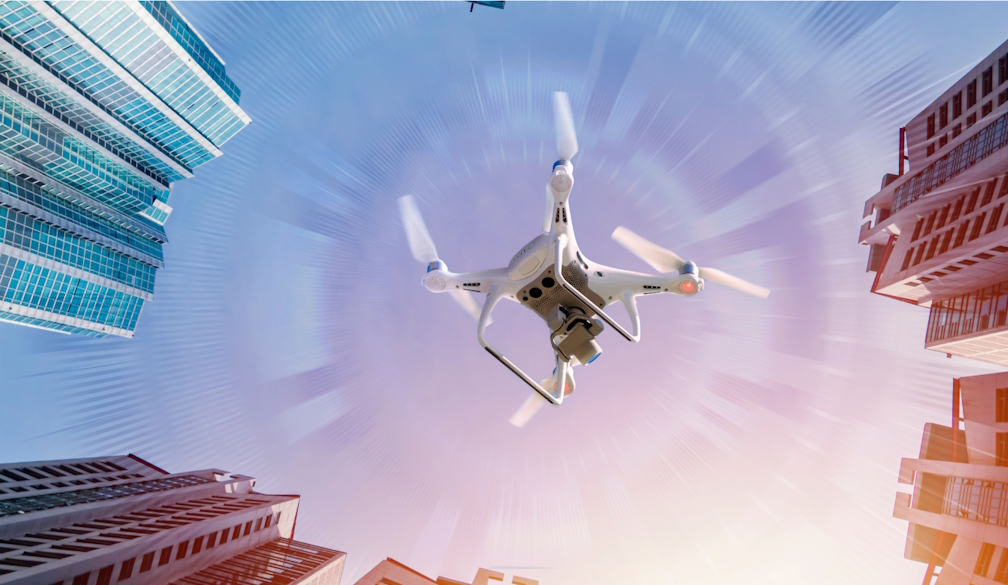
Last week, a drone delivery company called Wing (owned by Google’s parent company, Alphabet) started operating in Melbourne[1]. Some 250,000 residents in parts of the city’s eastern suburbs can now order food from cafes and restaurants via the DoorDash app and have it brought to them in minutes by a small aircraft.
This is the first large-scale rollout of autonomous food delivery in Australia. What does it mean for our food ordering, and our health? Research (including ours) into online food delivery platforms suggests this extra convenience may come at a cost to public health.
Online food delivery is booming – but most of it’s unhealthy
In Australia, more than 7 million people[2] use food delivery services such as DoorDash and UberEats. The typical users are 25–34-year-olds in capital cities.
The online food delivery industry is growing rapidly. In 2023, DoorDash generated US$8.6 billion (A$13.1 billion) in revenue[3], increasing from US$885 million (A$1.4 billion) in 2019.
Research has shown that the food available and promoted through Australian online food delivery platforms is mostly unhealthy[4], and more unhealthy food is available in areas of socioeconomic disadvantage[5]. Our own research has also shown that unhealthy foods are also more likely[6] to be promoted with discounts and higher visibility than healthy options on these platforms.
Autonomous delivery promises greener convenience
At the moment, most food delivery is carried out by humans. However, delivery via robots and drones is on the rise.
This is often referred to as “autonomous delivery”, but these machines are not truly autonomous. Instead they have some human supervision[7], much like a “self-driving” car. Wing says it has up to 50 drones[8] being supervised by a single human pilot.
Autonomous food deliveries are operating in the United States, United Kingdom, and parts of Europe and Asia. Robots loaded with food have travelled along footpaths in Los Angeles[9] and elsewhere in the US, as well as the UK, Finland and Estonia[10]. Due to the small scale, the potential public health impacts of autonomous delivery are currently not well understood.
Beyond greater convenience, autonomous delivery has been hailed as an eco-friendly alternative[11] to traditional methods, as a small electric quadcopter produces significantly less carbon emissions than a delivery van. One study found the environmental footprint of drone delivery is roughly one-sixth that of motorbike delivery[12]. One robot manufacturer claims a delivery with one of its devices uses less energy than boiling a kettle[13].
Australians think they will use drone delivery to eat more junk
Drone deliveries have been operating in Australia on a small scale since 2017[14]. Wing has trialled a handful of locations in Queensland[15] and Canberra[16], but has faced resident complaints[17] and bird attacks.
What do people think about drone delivery? Research suggests the Australian public has generally positive attitudes towards the idea.
Australians surveyed in one study believe drones would allow for lower delivery costs[18] due to replacing human drivers. Another study found Australians say they would likely use autonomous delivery for groceries, fast food and alcohol[19].
However, survey respondents also believed the availability of drone delivery might lead to more consumption[20] of unhealthy food and alcohol.
Given unhealthy foods saturate online food delivery platforms, the enthusiasm for drone delivery raises serious public health concerns[21].
Drone delivery may further concentrate power in the food industry
Online food delivery platforms are primarily operated by large, multinational technology companies. Powerful companies have faced criticism for their influence over the food system[22], the marketing of unhealthy food[23], and treatment of gig economy workers[24].
If drone food delivery becomes widespread, it is likely to further concentrate power in the hands of a few online food delivery companies and the big tech firms operating the drone services. Efforts by large companies to sway political decision-making[25] in favour of commercial interests are increasing, and growing concentration in the food industry has led to companies prioritising profits[26] over the health of their customers.
In Australia, Wing – one of only two companies[27] licensed to make drone deliveries, with the other[28] focused on medical supplies – has been an active contributor[29] to the drafting of new drone regulations. The company is also getting in on the ground floor of drone air traffic management software[30].
As autonomous delivery becomes more common, we may well see people using it to consume more unhealthy food and alcohol – unless delivery platforms begin to promote health as well as convenience.
References
- ^ started operating in Melbourne (www.theage.com.au)
- ^ more than 7 million people (www.roymorgan.com)
- ^ US$8.6 billion (A$13.1 billion) in revenue (ir.doordash.com)
- ^ mostly unhealthy (www.mdpi.com)
- ^ areas of socioeconomic disadvantage (www.mdpi.com)
- ^ more likely (onlinelibrary.wiley.com)
- ^ some human supervision (futuretransport-news.com)
- ^ up to 50 drones (www.commercialuavnews.com)
- ^ footpaths in Los Angeles (spectrumnews1.com)
- ^ the UK, Finland and Estonia (www.starship.xyz)
- ^ eco-friendly alternative (www.sciencedirect.com)
- ^ one-sixth that of motorbike delivery (www.mdpi.com)
- ^ boiling a kettle (www.starship.xyz)
- ^ since 2017 (www.parliament.act.gov.au)
- ^ Queensland (www.theguardian.com)
- ^ Canberra (www.abc.net.au)
- ^ resident complaints (theconversation.com)
- ^ allow for lower delivery costs (www.sciencedirect.com)
- ^ groceries, fast food and alcohol (www.sciencedirect.com)
- ^ more consumption (www.sciencedirect.com)
- ^ serious public health concerns (theconversation.com)
- ^ influence over the food system (globalizationandhealth.biomedcentral.com)
- ^ marketing of unhealthy food (journals.plos.org)
- ^ treatment of gig economy workers (compass.onlinelibrary.wiley.com)
- ^ sway political decision-making (journals.sagepub.com)
- ^ prioritising profits (www.nature.com)
- ^ two companies (www.casa.gov.au)
- ^ the other (swoop.aero)
- ^ active contributor (www.infrastructure.gov.au)
- ^ drone air traffic management software (wing.com)