I’ve been sick. When can I start exercising again?
- Written by: Ken Nosaka, Professor of Exercise and Sports Science, Edith Cowan University
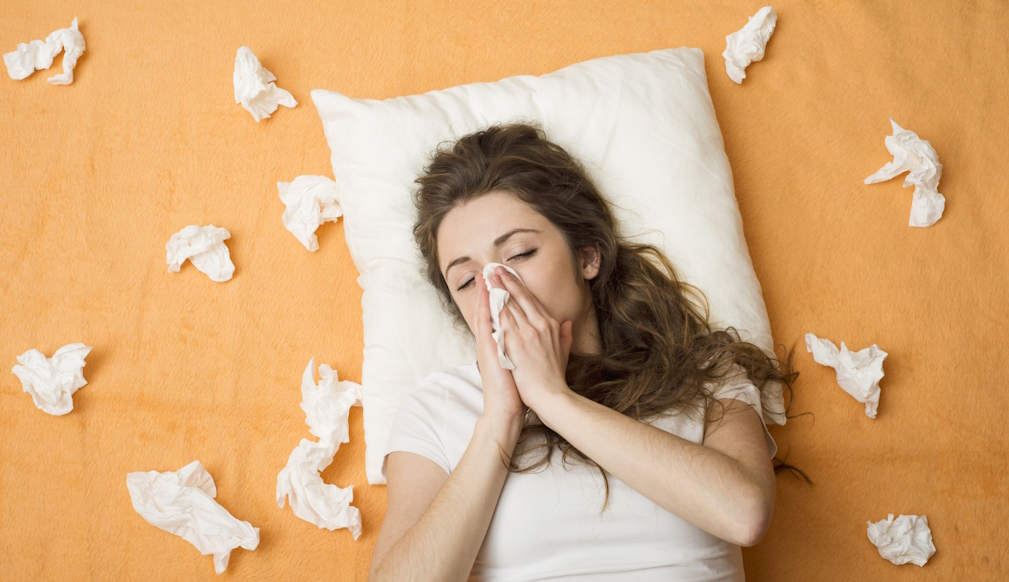
You’ve had a cold or the flu and your symptoms have begun to subside. Your nose has stopped dripping, your cough is clearing and your head and muscles no longer ache.
You’re ready to get off the couch. But is it too early to go for a run? Here’s what to consider when getting back to exercising after illness.
Exercise can boost your immune system – but not always
Exercise reduces the chance[1] of getting respiratory infections by increasing your immune function and the ability to fight off viruses.
However, an acute bout of endurance exercise may temporarily increase your susceptibility to upper respiratory infections, such as colds and the flu, via the short-term suppression of your immune system. This is known as the “open window” theory.
A study[2] from 2010 examined changes in trained cyclists’ immune systems up to eight hours after two-hour high-intensity cycling. It found important immune functions were suppressed, resulting in an increased rate of upper respiratory infections after the intense endurance exercise.
So, we have to be more careful after performing harder exercises than normal.
Can you exercise when you’re sick?
This depends on the severity of your symptoms and the intensity of exercise.
Mild to moderate exercise (reducing the intensity and length of workout) may be OK if your symptoms are a runny nose, nasal congestion, sneezing and minor sore throat, without a fever.
Exercise may help you feel better by opening your nasal passages and temporarily relieving nasal congestion.
However, if you try to exercise at your normal intensity when you are sick, you risk injury or more serious illness. So it’s important to listen to your body.
If your symptoms include chest congestion, a cough, upset stomach, fever, fatigue or widespread muscle aches, avoid exercising. Exercising when you have these symptoms may worsen the symptoms and prolong the recovery time.
If you’ve had the flu or another respiratory illness that caused a high fever, make sure your temperature is back to normal before getting back to exercise. Exercising raises your body temperature, so if you already have a fever, your temperature will become high quicker, which makes you sicker.
If you have COVID or other contagious illnesses, stay at home, rest and isolate yourself from others.
When you’re sick and feel weak, don’t force yourself to exercise. Focus instead on getting plenty of rest. This may actually shorten the time it takes to recover and resume your normal workout routine.
I’ve been sick for a few weeks. What has happened to my strength and fitness?
You may think taking two weeks off from training is disastrous, and worry you’ll lose the gains you’ve made in your previous workouts. But it could be just what the body needs.
It’s true that almost all training benefits are reversible[4] to some degree. This means the physical fitness that you have built up over time can be lost without regular exercise.
To study the effects of de-training on our body functions, researchers have undertaken “bed rest” studies, where healthy volunteers spend up to 70 days in bed. They found[5] that V̇O₂max (the maximum amount of oxygen a person can use during maximal exercise, which is a measure of aerobic[6] fitness) declines 0.3–0.4% a day. And the higher pre-bed-rest V̇O₂max levels, the larger[7] the declines.
In terms of skeletal muscles, upper thigh muscles become smaller by[8] 2% after five days of bed rest, 5% at 14 days, and 12% at 35 days of bed rest.
Muscle strength declines more[9] than muscle mass: knee extensor muscle strength gets weaker by 8% at five days, 12% at 14 days and more than 20% after around 35 days of bed rest.
This is why it feels harder to do the same exercises after resting for even five days.
But in bed rest studies[11], physical activities are strictly limited, and even standing up from a bed is prohibited during the whole length of a study. When we’re sick in bed, we have some physical activities such as sitting on a bed, standing up and walking to the toilet. These activities could reduce the rate of decreases in our physical functions compared with study participants.
How to ease back into exercise
Start with a lower-intensity workout initially, such as going for a walk instead of a run. Your first workout back should be light so you don’t get out of breath. Go low (intensity) and go slow.
Gradually increase the volume and intensity to the previous level. It may take the same number of days or weeks you rested to get back to where you were. If you were absent from an exercise routine for two weeks, for example, it may require two weeks for your fitness to return to the same level.
If you feel exhausted after exercising, take an extra day off before working out again. A day or two off from exercising shouldn’t affect your performance very much.
References
- ^ reduces the chance (www.ncbi.nlm.nih.gov)
- ^ study (pubmed.ncbi.nlm.nih.gov)
- ^ Laker/Pexels (www.pexels.com)
- ^ reversible (journals.lww.com)
- ^ found (journals.physiology.org)
- ^ aerobic (my.clevelandclinic.org)
- ^ larger (journals.physiology.org)
- ^ become smaller by (doi.org)
- ^ Muscle strength declines more (journals.physiology.org)
- ^ Olly/Pexels (www.pexels.com)
- ^ bed rest studies (iaaspace.org)
Read more https://theconversation.com/ive-been-sick-when-can-i-start-exercising-again-233130