Presidential battle showcases the differences between US political system and ours
- Written by: Michelle Grattan, Professorial Fellow, University of Canberra
Australia has a much better-functioning governmental system than the United States, but for political tragics it’s the American scene that’s the riveting must-watch this year.
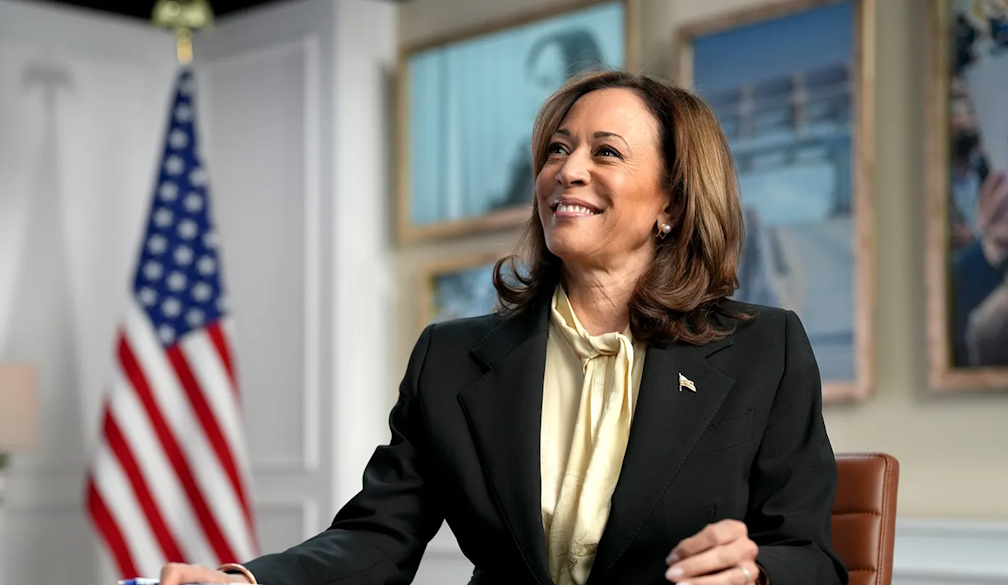
The battle between Donald Trump and Kamala Harris showcases the differences between presidential and Westminster systems, and the contrasts between the US and Australia in money, campaigning and razzmatazz.
Australia is moving towards capping federal election spending – in the US, it’s off the charts. Australian party conferences are mind-numbing, albeit in Labor’s case with the odd gritty moment. In the US, they’re Hollywood extravaganzas.
Voters in both countries share the modern cynicism that characterises western democracies, although the US is further down the road of disillusionment. In the US, it’s all about “getting out the vote”; Australia’s (highly desirable) compulsory voting drives the debate towards the centre.
Current Australian politics lacks real excitement (no, it won’t come with next year’s federal campaign); high drama infuses US politics, now even more than is usual in a presidential election year.
Star power is absent in Australia, likely for the better. Definitely for the better, there is no Trump-type figure vying for the top job.
But Joe Hockey, Australia’s former ambassador to the US and now a lobbyist in Washington, who has been at this week’s Democratic National Convention, does find some likeness between Harris and Prime Minister Anthony Albanese.
Asked on The Conversation podcast[1] who would be Harris’ match on the Australian political spectrum, Hockey says she has “very similar views to Anthony Albanese”, whom he describes as Australia’s “first left-wing Labor prime minister”.
Notably, he doesn’t suggest a match-up with Julia Gillard, a woman from the left. “I think Julia Gillard had to pander to the right in the Labor Party more than Anthony Albanese has had to. And that’s because she had the constant threat of Kevin Rudd, whereas prime minister Albanese hasn’t got that threat”.
If Harris wins in November, we can assume Albanese will be anxious to secure an early visit to Washington, although this might be difficult before his own election, due by May.
For now, Albanese’s immediate attention has to be laser-like on the local.
The just-finished parliamentary sitting saw the government tick off some of its to-do list. At the same time, Albanese’s performance was lacklustre in question times that focused primarily on visas for Gazans and national security.
Workplace Relations Minister Murray Watt secured, with opposition support after some amendments, his bill to begin bringing the CFMEU’s construction division under control. Predictably, the defiant union is considering whether to mount a court challenge.
Bill Shorten finally saw his NDIS reform legislation passed. This also came courtesy of a deal with the Coalition, as well as another with the states and territories. The latter was achieved with a helping hand from South Australian Premier Peter Malinauskas, a pragmatist who is shaping up as one of the most impressive politicians in country.
An agreement with the opposition on aged care legislation was close but not formally sealed; the introduction of this legislation will now have to wait for the September sitting.
Bipartisanship on NDIS reform and aged care is important to both sides. The government wants to limit opposition for reforms that have losers and could cost votes. The Coalition wants difficult changes in place by the time it reaches power (whenever that may be) rather than needing to undertake them itself, with the political costs that would involve.
There’s another area where the government and opposition are in broad agreement, although it hasn’t come to a head yet. That is reform of gambling advertising. Each side supports limited reform, that would leave some room for advertisements on commercial television – neither favours a total ban.
Labor is due to announce its policy within weeks but its unwillingness to go to a full ban has upset some backbenchers. So did the government’s briefing stakeholders before caucus members.
There’s a broader question here. The government makes a big point about “consultation” with stakeholders, which is all to the good. But that has also involved a rigorous use of non-disclosure agreements (NDAs). Those briefed have to abide by strict confidentiality. This limits the amount of information in the public domain ahead of decisions, and also the ability of these stakeholders to publicly debate the issues. From the government’s point of view, hands are conveniently tied.
In question time in the past fortnight, the opposition’s near-total concentration on the government’s hasty granting of visitor visas to Gazans came with risks. The Coalition departed from the bread-and-butter issues of more concern to most voters.
But the tactic did expose Albanese as somewhat slipshod in his answers (for example selectively quoting the ASIO chief) and once again scratched at the issue of Labor’s processes and competence in the contested immigration area.
It did bring forth one piece of positive news for Immigration Minister Tony Burke. In his Sydney seat of Watson, Burke has a large Muslim population and faces a Muslim candidate who’s running as an independent. Peter Dutton’s tough stand on Gazan refugees (he wants them all banned for the time being) suggests there is no chance the Liberals would preference the Muslim candidate over Burke, ensuring he is a shoo-in.
One effect of the deals between the government and opposition on several big issues has been to push the Greens (as well as other Senate crossbenchers) to the margin.
The Greens have played hardball on legislation, seeking to differentiate themselves from Labor, which they threaten in some urban seats.
The party hit a high-water mark in 2022. It is hard to judge whether its increasing radicalism (especially on Gaza) will take it forwards or backwards in 2025. For some voters who might be attracted to the Greens, progressive independents are a competing option.
Back at the Democratic National Convention, Hockey wasn’t the only Australian observer watching keenly in Chicago. Labor’s Deputy Senate Leader Don Farrell has also been there, at the invitation of the National Democratic Institute, in his capacity as special minister of state.
“This forum, held in the sidelines of the Democratic National Convention, brings together world leaders, officials and organisations with an interest in protecting our democratic institutions,” he said ahead of the visit.
“I’m very privileged to be the first Australian minister invited to a Democratic convention and a witness to the great celebration of American democracy,” he told Sky on Wednesday. Pressed on what he was doing there, Farrell, who is also trade minister, said, “Fortuitously, there’s an opportunity to speak with all of my counterparts in trade and commerce”. He was also, he said, talking to Republicans.
A prudent bet each way.
References
- ^ The Conversation podcast (theconversation.com)