Social media age ban all to the good, but can Albanese deliver before election?
- Written by: Michelle Grattan, Professorial Fellow, University of Canberra
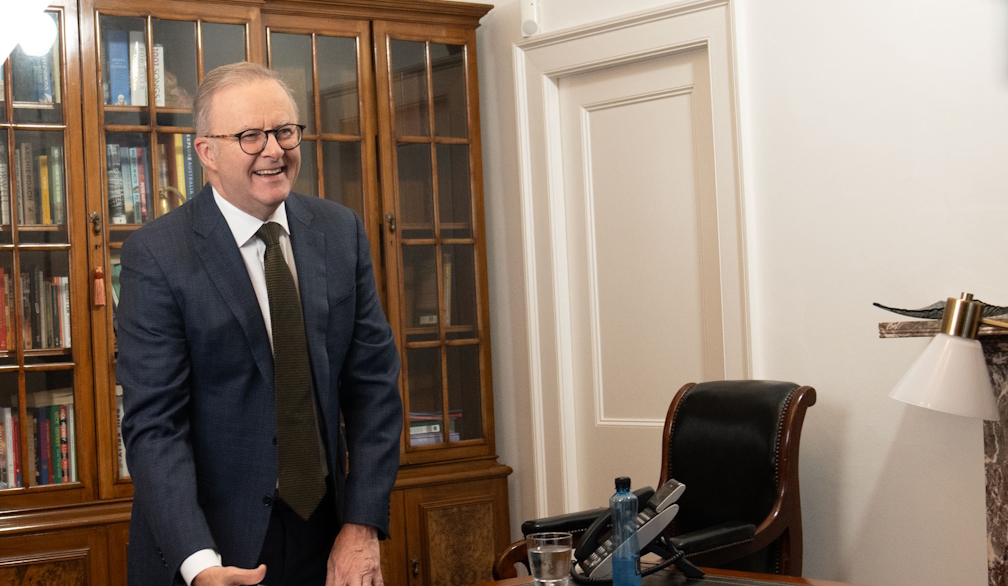
Prime Minister Anthony Albanese has been late out of the blocks on a ban on children accessing social media. Now that he has promised to act, pledging to introduce legislation this year, the question is whether it will be passed before the election.
Listening to the “dorothy dix” questions from the Labor side during Tuesday’s question time, it was hard to avoid thinking an embattled government had lit on something popular to push that would usefully distract from other, more negative issues.
This is not to argue against a ban, just to wonder at the timing of the sudden federal enthusiasm, especially when the government is already struggling with its legislative agenda.
It is not just the bills already introduced. Think of what we haven’t seen – gambling reform and big changes to electoral donations and spending, for starters, and quite a bit more.
South Australian Premier Peter Malinauskas has led on a social media age ban, as indeed, has the federal opposition. The Coalition on Tuesday was quick to highlight its advocacy months ago.
Albanese realises social media is a real concern among many parents, and that the federal government has been running behind community opinion.
In its race to catch up, the government has been gifted some advantages by South Australia’s pioneering effort.
Crucially, the SA government commissioned former High Court Chief Justice Robert French to prepare a detailed framework for its proposed state legislation.
While that was directed to the state’s plans, French had an eye to the federal scene because Malinauskas always believed a national regime was the most effective way to go.
So the feds could, relatively easily, pick up the French framework as the basis for a federal bill. But that still leaves a lot of other things to work through.
There will be debate around the appropriate age for the ban (the federal government doesn’t like the term “ban” – it prefers “minimum age for access”). The SA plan would have those under 14 blocked, with parental consent required for those 14 and 15. Albanese was unable to be definite on an age for the federal legislation, although he said his personal preference was 16.
Communications Minister Michelle Rowland said “there is intense debate in the community at the moment about what that age should be”.
Rowland said the government remained open to what the age should be. It would be informed by “a number of pieces of work we’re doing,” she told Sky.
“We’ll continue to have this conversation about age.” She even agreed one option was to legislate the ban and impose the age subsequently.
Listening to Rowland, one would think the government had a lot more time than it has given itself. She casts the Albanese announcement as much in terms of the messaging as the specifics of the proposed ban.
What the prime minister has achieved with this announcement is two things. Firstly, to really give some normative value to parents out there who are worried about their kids, who are questioning what is appropriate for their own children.
Secondly, it says that we understand, while all these pieces of work are being done, we need to make sure that young people are kept safe. We need to ensure that every part of the ecosystem does its job: governments, civil society and the platforms themselves. And that second part about the digital platforms themselves doing more is something that the government has been focused on.
Mixed in with the age debate is the federal government’s age assurance trial, funded in the May budget, the technical part of which hasn’t yet started.
The shadow minister for communications, David Coleman, pointed out on Tuesday:
Just today, the government has published on the AusTender website a request for tenders for the ‘Age Assurance Technology Trial 2024’. The tender does not close until October 7. This means that the earliest the trial could actually start would be some time later in October.
The trial will obviously take some time to complete. Rowland said the government would have the results “before the end of the year.”
When there are decisions finalised, the legislation will presumably need a period of consultation. Assuming it can be pulled together for introduction before Christmas, as the PM says, a consultation process or a Senate inquiry, or both, would likely push it into the new year.
The SA plan, so much further advanced, was not expected to be voted into law until next year, and that government does not have an election in sight.
Once the Albanese government gets into 2025, there is hardly any time left to pass legislation. The election is in May at the latest.
The SA government will pause its own plans as it gets behind the federal effort. If Canberra falters, SA would then go ahead later. So might other states.
On a worst case scenario, the risk is the Albanese government fails to have its legislation passed before the election, with great uncertainty left about what would be done, if anything, in the new term of federal parliament. The fallback could be a hodgepodge of state actions.