New research reveals why some Australian dairy farmers are considering leaving the industry
- Written by: Clive Phillips, Adjunct professor Curtin University Sustainability Policy Institute, Curtin University
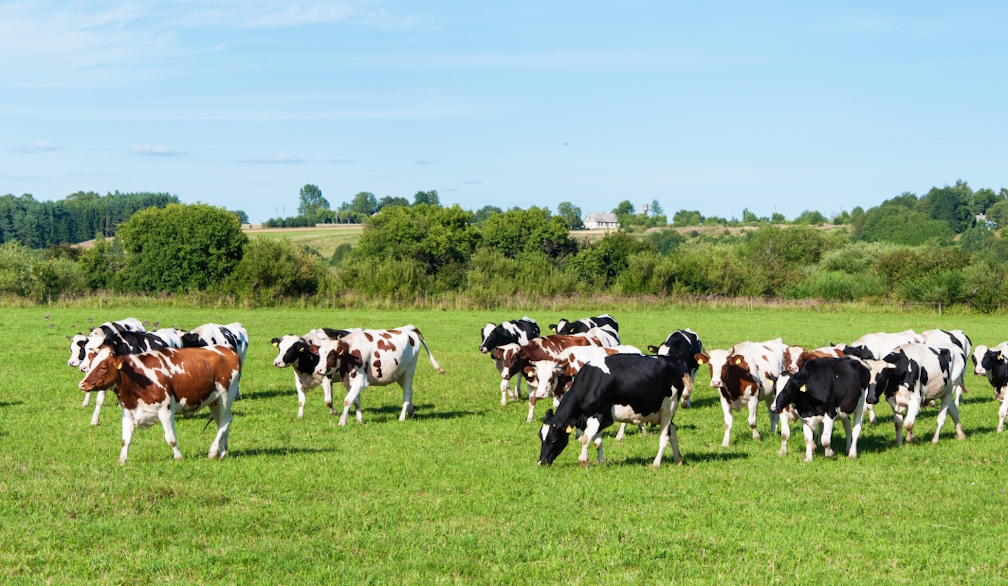
You might think dairy farmers would be enjoying boom times. The dairy industry has been expanding worldwide in response to increasing demand, mainly in the emerging markets of Asia.
But across many developed countries, the number of dairy farmers has in fact steadily declined, as they face growing challenges[1].
In Australia, the number of registered dairy farms fell[2] from 6,308 in 2014 to 4,420 in 2022.
Australia’s dairy farmers have had to grapple with increasing and unstable costs, labour shortages, long working hours and climate extremes[3]. They’re also staring down fierce competition[4] from increasingly popular plant-based milks.
Even so, dairy remains Australia’s third-largest rural industry[5]. The sector employs about 33,500 people and generates more than A$6 billion in farm gate value.
As farmers leave the industry, the herd sizes of those who remain increase[6]. So, too, do the financial pressures. The satisfaction levels[7] of workers in the industry may then decline, putting pressure on families and the cattle they care for.
Our research[8], published in Nature journal Scientific Reports, drew on interviews with 147 dairy farmers to examine these pressures in detail. Our findings paint a sobering picture of low satisfaction with the industry, causing some farmers to consider leaving it.
Our research
Our survey was conducted in 2023 and used a mixed methods approach – obtaining both quantitative and qualitative responses to gain a detailed understanding of farmers’ difficulties.
Most dairy farmers (72%) said they faced major challenges – mostly increasing costs, drought and floods.
Long working hours and low incomes created mental strain for 69% of farmers or their families. Bigger farms with more workers had a more intense working environment, leading to more stress.
As one farmer put it:
Dairy farming is pretty hard yards.
Nearly all farmers (97%) emphasised that animal welfare was not at risk, saying animals had top priority in their farming system.
Only about 20% recognised long term issues like climate change uncertainty, lack of or insufficient subsidies and grants, and changing consumer demand, as major challenges.
Openness to alternatives
More than half of dairy farmers surveyed were open to exploring other agricultural enterprises, mostly cropping and beef. However, several recognised that their land was not suited to these alternatives.
Over a third (36%) were open to transitioning away from dairy to horticulture or other business ventures. Financial assistance and technical advice were seen as the most important forms of support required to do so.
The most common reasons for considering a transition were ageing or health problems (16% of all farmers), followed by labour shortages (12%) and increasing costs (12%).
Some were concerned about rezoning of agricultural land, the threat of disease, and increased paperwork.
However, those more upbeat about dairy thought the “grass” probably wouldn’t be any “greener” on the other side of the fence, with alternative industries likely subject to similar pressures.
The key characteristics of farmers who were interested in transitioning to other agricultural or horticultural industries were their low level of satisfaction with dairy farming, openness to alternatives, and willingness to receive support.
Those interested in transitioning away from dairy farming were more likely to believe that dairy farming in Australia was not sustainable.
Among those intending to transition, it was mostly foreseen that it would take place in the long-term, as they got older.
However, many farmers (64%) were not interested in transitioning away from dairy – even if government support and assistance were provided.
Many cited a long-standing family commitment to dairy farming and higher profits than other agricultural enterprises, necessary because of many farmers’ indebtedness to the bank.
Dairy under pressure
Longer-term pressures on the dairy industry may create a need for government involvement in the transition. These include declining milk sales[11] and growing demand for plant-based alternatives[12].
As if that was not enough competition, a new technology, precision fermentation[13] threatens to produce milk and casein for cheese without cows.
The technology mirrors that developed for cultured meat, except that yeasts and bacteria are used to manufacture the proteins and fats in milk. In future, this could potentially be done at a fraction of the cost of using dairy cows.
Some major dairy companies have already [14]invested[15] in the technology.
It is also necessary to achieve a reduction in cows’ contribution to climate change. The Australian government has committed to a 43% reduction[17] in 2005 emissions by 2030, building to net zero by 2050.
Australia has also joined the Global Methane Pledge[18] to collectively reduce methane emissions by at least 30% below 2020 levels by 2030.
Moving forward
Farmers need help in finding alternatives to dairy farming. Governments bear a responsibility for sustainable food production.
If they help farmers to plan long term, beyond the immediate difficulties, they can transition gradually into enterprises that will meet the anticipated future public demand for healthy, plant-based food produced in sustainable agricultural systems.
Poor farmer welfare often impacts negatively on their animals, as acknowledged in the One Welfare concept[19], an extension of the One Health[20] movement.
References
- ^ challenges (www.abc.net.au)
- ^ fell (www.statista.com)
- ^ climate extremes (cdn-prod.dairyaustralia.com.au)
- ^ competition (cdn-prod.dairyaustralia.com.au)
- ^ third-largest rural industry (www.agriculture.gov.au)
- ^ increase (onlinelibrary.wiley.com)
- ^ satisfaction levels (www.researchgate.net)
- ^ research (www.nature.com)
- ^ StockMediaSeller/Shutterstock (www.shutterstock.com)
- ^ Choksawatdikorn/Shutterstock (www.shutterstock.com)
- ^ declining milk sales (www.agriculture.gov.au)
- ^ plant-based alternatives (cdn-prod.dairyaustralia.com.au)
- ^ precision fermentation (www.forbes.com.au)
- ^ already (www.abc.net.au)
- ^ invested (www.afr.com)
- ^ Strahlengang/Shutterstock (www.shutterstock.com)
- ^ 43% reduction (www.aofm.gov.au)
- ^ Global Methane Pledge (minister.dcceew.gov.au)
- ^ One Welfare concept (kb.rspca.org.au)
- ^ One Health (www.who.int)