Alfred forces Albanese into budget of risks and opportunities
- Written by: Michelle Grattan, Professorial Fellow, University of Canberra
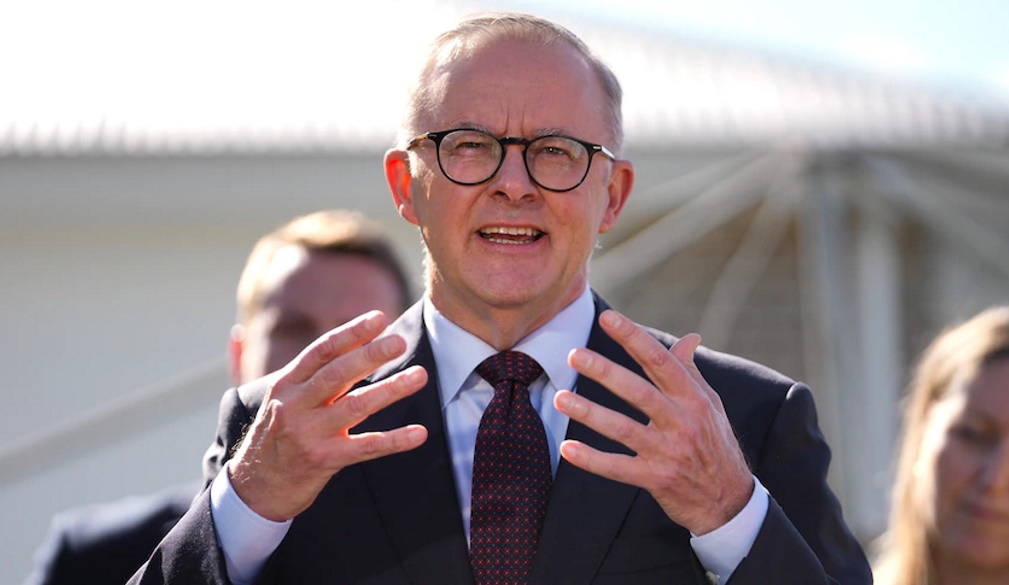
The “maybe” March 25 budget is now a definite, the government’s hand forced by Cyclone Alfred.
Anthony Albanese held open his option of calling an April 12 poll this weekend until the battering winds and waves and certain flooding made totally clear on Friday what had been obvious to many people from the start. Announcing an election on the back of a cyclone would be madness.
But the prime minister couldn’t quite bring himself to admit the April poll had been in his sights, although that was widely acknowledged within the government. He told the ABC late Friday, “I have very clearly said for a long period of time that we announced last year we’d produce a budget on March 25. That certainly is my clear intention, and has been.”
Which doesn’t exactly fit with quite a few people around the government, who had been on election alert, being left discombobulated by the turn of events.
This unavoidable budget presents opportunities and risks for the government.
It will frame the campaign that follows for a May election (the options are May 3, 10 or 17), and elevate the status of measures it contains (likely to include more relief for energy bills) from campaign promises.
It will also put front and centre the treasurer, Jim Chalmers, the government’s best communicator.
On the downside, as many have said, it will highlight a string of deficits. But independent economist Chris Richardson points out these numbers would have come out anyway, either in an economic statement the government probably would have brought down if there was no budget or (compulsorily) in the Pre-election Economic and Fiscal Outlook (PEFO) prepared by Treasury and Finance and released in the campaign.
Richardson also argues that, deficits notwithstanding, the government will have good news to emphasise in the budget, about falling inflation and strong employment, plus revenue improvements since the mid-year budget update in December.
The government has already been announcing big spending items this year so it can’t afford, if it is being responsible, to throw too much more money around on March 25.
The pressures on the budget will be increased by the costs imposed by Alfred. Albanese said on Saturday, “This will have an impact on the national economy – there’s no question about that. Already it’s having an impact.”
The prime minister adopted a particularly high profile in the days leading up to and during the cyclone (even though state governments carry the big loads). The message is his government is here to, and able to, support people in times of trouble and need. There is the opportunity to use the experience of the cyclone to make this a more general theme in the budget – that the government has your back. That’s assuming the aftermath of the cyclone is not filled with stories of things going wrong.
Many in the commentariat are likely to approach the budget with a mindset of scepticism, just because it will be an election budget. This means the publicity around it might be more negative than positive.
Budget week will give opposition leader Peter Dutton the traditional reply on the Thursday night. Depending on how he handles himself, this could be a useful platform for him. On the other hand, an unconvincing speech would be damaging.
Then there are the Senate estimates hearings. These can be dangerous for a government, affording the opposition a forum to pull the budget apart and in practice to range more widely in quizzing officials.
We saw last week how potent Senate hearings can be, when they exposed details around the Chinese Navy’s live-fire exercise in the Tasman Sea. The hearings revealed the extent to which Australia had been caught short.
Back in the government’s engine room at the weekend, they say most of the major decisions for the budget have been taken. The focus will turn to last minute tinkering, and the messaging and cosmetics. But before he gets to that, Chalmers on Saturday was out and about in his Brisbane community of Logan, where the preoccupation remained the aftermath of now ex-tropical cyclone Alfred.